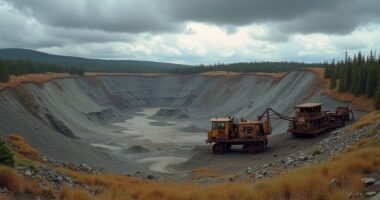

Investors are rolling up their sleeves, urging nickel giants to address deforestation and human rights with the fervor of a caffeinated squirrel organizing acorns. Nickel mining, especially in Indonesia and the Philippines, is almost like a rock concert where everyone forgot to clean up. Toxic waste spills and land grabs affect local communities while threatening ecosystems. Yet, with a mix of sustainable charm and the power of regulatory bass lines, the industry could hit all the right notes. Curious about the future mix?
Quick Overview
- Investors demand mining giants address deforestation impacts and human rights concerns in nickel extraction regions.
- Growing pressure on companies to adopt sustainable and ethical mining practices.
- Regulatory frameworks are essential to enforce environmental and human rights standards in nickel mining.
- Community engagement strategies are vital for addressing displacement and ensuring benefits sharing.
- International collaboration is needed to eliminate unethical practices in the nickel supply chain.
Understanding the Global Nickel Mining Landscape and Investor Influence
In the exhilarating world of global nickel mining, imagine a bustling bazaar brimming with potential and power. Indonesia and the Philippines lead the dance, controlling over 60% of global production. Indonesia, the ringleader, churns out 2.2 million tonnes, asserting dominance like a heavyweight champion. Industrial transformations over two decades have catapulted Southeast Asia to the forefront. Meanwhile, traditional players like Canada find themselves in supporting roles. The emergence of these new producers is underscored by a marked shift in production dynamics, with their share surging from a mere 10.1% in 2000. With the market soaring to USD 184.9 billion by 2036, nickel’s allure is undeniable. Amidst this frenzy, investors and mining giants navigate a landscape as dynamic as a rollercoaster at a carnival. Responsible mining operations increasingly recognize that sustainable forest management practices must be integrated into extraction planning to preserve biodiversity and maintain the ecological integrity of surrounding regions. An important driver in this thrilling market is the expansion of battery manufacturing, particularly for Class 1 nickel used in electric vehicles, which continuously fuels demand and strategic shifts.
Environmental and Human Rights Implications of Nickel Mining
With nickel glittering like a precious metal in the global mining spotlight, let’s shift our gaze from the bustling bazaar to where the backstage reality unfolds.
The staggering land footprint of nickel mining, possibly 500 times larger than on record, leaves ecosystems gasping for breath. In Indonesia, up to 1.2 million acres of lush forests face the guillotine. High-pressure acid leaching wastes and toxic cocktails contaminate waters, turning once-pristine lakes into chemical concoctions. In the Philippines’ Caraga Region, communities swap farmland for washboards of pollution and fear. The demand for nickel is expected to rise significantly, with predictions of an annual need of 2-5 million metric tons by 2050, driven by its role in energy transitions. The environmental symphony falters, orchestrated by smelters emitting sulfurous melodies of doom. As biomass carbon emissions from vegetation clearing are often overlooked, their true impact needs to be considered in carbon accounting to fully understand nickel mining’s effects. Beyond extraction, sustainable forest management practices and restoration efforts offer pathways to offsetting some of the ecological damage caused by expanding mining operations in biodiverse regions.
Crafting Solutions: Steps Toward Responsible and Sustainable Mining
Imagine orchestrating a symphony of solutions where responsible and sustainable mining takes center stage. It’s like a dazzling magic trick: pull regulatory rabbits from hats, set carbon emission limits, and gather a glittering array of renewable power options. True magic, though, lies in community engagement—shaking hands with local heroes, sharing benefits like a neighborly potluck, and crafting training programs. As the demand for green nickel increases, companies are focusing on protecting biodiversity throughout their operations. Given Indonesia’s significant contribution to global nickel production, addressing environmental impacts there is crucial. Meanwhile, market forces conjure “clean vs. dirty” nickel wizards, encouraging sustainable choices. International partners join in, harmonizing tunes across borders to prevent shady practices. Mining operations that disturb natural habitats can benefit from ecosystem restoration strategies that help rebuild species diversity and ecological balance in affected areas. Imagine a world where mining giants transform into sustainability champions, leveling up like video game characters. Voilà!