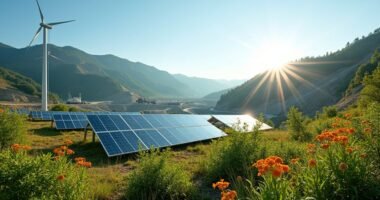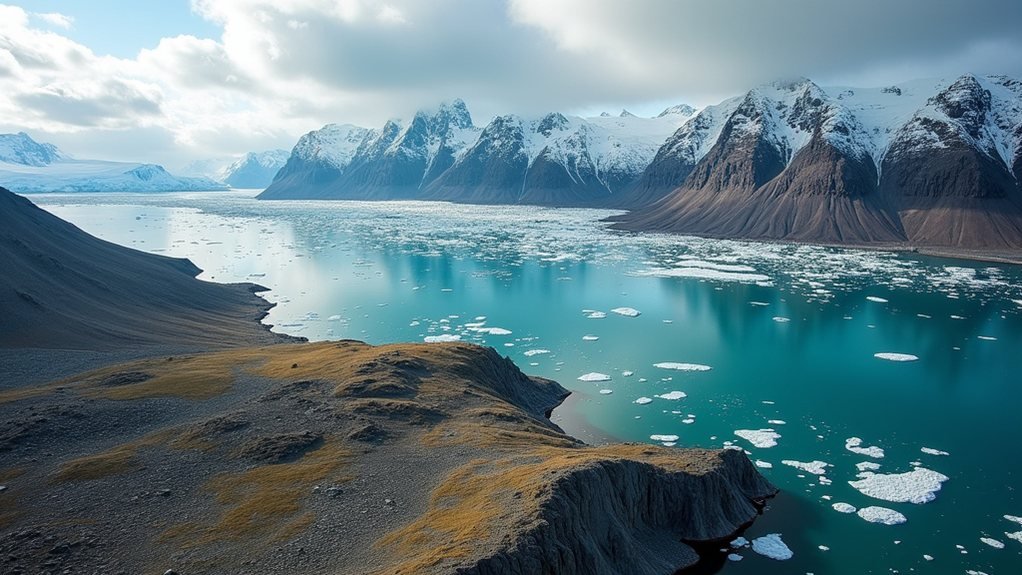

Donald Trump’s renewed interest in Greenland’s minerals is like hunting for buried treasure. He’s got his eye on rare earth elements, essential for gadgets, while also spicing up U.S.-China mineral competition. However, mining’s dirty secret—pollution—looms large, like a dragon waking from its nap. Greenlandic laws prioritize eco-friendliness over corporate ambitions, adding twists to the tale. Balancing profit and preservation isn’t a walk in the park, but that’s what makes this story worth watching.
Quick Overview
- Trump’s interest in Greenland’s minerals focuses on countering China’s monopoly and securing resources crucial for technology development.
- Greenland’s mining regulations demand strict environmental monitoring, highlighting pollution risks associated with mineral extraction.
- The Mineral Resources Act emphasizes safety, sustainability, and community involvement, prioritizing environmental protection over corporate interests.
- Debates arise over conflicts between Greenlandic and international mining laws, affecting regulatory frameworks and business operations.
- Continuous stakeholder engagement and adaptive monitoring practices are essential for mitigating environmental risks in Greenland’s mining sector.
Why Is Trump Targeting Greenland? Economic and Geopolitical Motivations
Greenland isn’t just a sprawling island blanketed by ice and myths of marauding Vikings; it appears to be the world’s hottest property in the domain of rare earth minerals. Enter Mr. Trump’s master plan: the U.S. wants a slice of Greenland’s rare earth pie. With elements like lithium essential for gizmos and gadgets, Greenland is akin to a cinematic treasure chest. Trump sees security as much as economics, swatting away non-NATO miners like pesky flies. In 2025, America is eyeing a $120 million investment, framing it as a crawl space opportunity under China’s looming mineral monopoly. Greenland’s government oversees domestic matters, creating a complex landscape of self-determination where any acquisition or development requires consent from the Greenlandic people, as they navigate between resource opportunity and environmental preservation. Greenland could become a pawn in America’s Arctic chessboard. The strategic geolocation of Greenland near the U.S. and Canada makes it an invaluable asset for naval operations, adding to its appeal in the geopolitical tug-of-war.
What Are the Risks? Navigating Environmental Concerns in Greenland Mining
While many envision Greenland as a land of ice and Viking sagas, the island’s depths hold a very different tale—one where rare earth minerals like lithium create a treasure map of both promise and peril.
Imagine a treasure guarded by a dragon named Pollution: this beast spews dust, spreads toxic chemicals, and leaves heavy metals in its wake.
Greenland’s past mines whisper tales of disaster, where inadequate studies led to ghostly contamination – the invisible fingerprints of ignorance. Yet, nestled among these scars are uranium sidekicks, posing the radioactive riddle. Modern mining, however, is subject to stringent environmental monitoring to ensure such calamities do not repeat themselves.
In the Arctic, permafrost adds a slippery layer to manage waste rock’s filthy secrets. Recent environmental studies have highlighted the critical lessons learned from legacy mine sites, emphasizing the need for adaptive site-specific monitoring to mitigate further pollution. Before any extraction begins, proposed mining projects must undergo an environmental impact assessment to systematically evaluate potential risks to surrounding ecosystems and communities.
How Do Regulations Impact Mining? Greenlandic vs. International Laws
Imagine you’re an explorer, not unlike those adventurous Vikings of yore, but you’re trading the fearsome dragon of pollution for the labyrinth of legal codes.
Greenland’s Mineral Resources Act 2009, for instance, is a robust legal beast ensuring mining practices are safe, sustainable, and aligned with best international practices. It grants the government exclusive control over resources, promoting community involvement and environmental protection. The recent arbitration decision underscores the emphasis on local decision-making in environmental protection, reflecting Greenland’s focus on environmental sustainability over corporate interests. Lack of solid regulatory foundation continues to deter potential investors, highlighting the need for more comprehensive details in mining regulation.
Contrast this with the often-conflicting international mining laws, which can seem like a bureaucratic fog. In Greenland, public land ownership empowers communities, while international rules might leave mining companies maneuvering through treacherous legal waters. This principle aligns with the broader concept of food sovereignty, where communities retain the right to define their own ecological and cultural policies, including those governing land and resource use.
Talk about a Viking adventure!