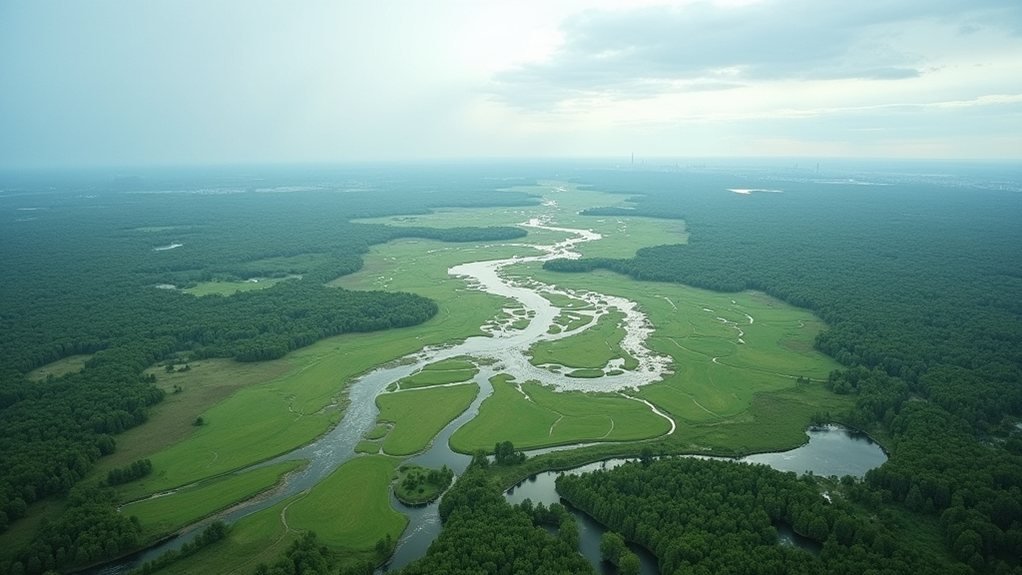

Ontario plans to merge 36 conservation authorities into 9 regional agencies by March 2026, aiming to streamline environmental management and bolster flood resilience. This reorganization hopes to eliminate bureaucratic delays, ensuring quicker permits and better climate adaptation. However, concerns linger about local knowledge being overshadowed and accountability slipping. Think of it like upgrading from a cluttered toolbox to a well-organized workshop, but some fear losing their favorite hammer. Stay tuned for how this transformation might shake out!
Quick Overview
- Ontario plans to reduce the number of conservation authorities from 36 to 9 by March 2026 to improve operational efficiency.
- The merger aims to streamline permit approvals and enhance flood management capabilities across diverse landscapes.
- Critics raise concerns about potential loss of local knowledge and diminished accountability in environmental protection efforts.
- A $20 million budget has been allocated by the government to support the amalgamation process and ensure effective transition.
- Comprehensive environmental assessments and local involvement will be crucial for maintaining ecological standards post-merger.
Why Amalgamation Is Crucial for Ontario’s Environment
Though one might think that merging 36 conservation authorities in Ontario is akin to herding cats—a chaotic endeavor at best—the reality is that such amalgamation is essential for the province’s environmental health.
Fragmented data systems led to permit approval delays that felt like waiting for a sloth to cross the road. By consolidating these authorities, Ontario can streamline operations, enhancing flood management and climate resilience.
With a centralized digital platform, consistent standards will make approvals swifter and simpler, ultimately providing more resources for conservation efforts. Understanding environmental impact across lifecycles will enable these merged authorities to make more informed decisions about land use and development projects. It’s time to cut the chaos and put nature back in the driver’s seat—a win-win for everyone!
Essential Characteristics of Regional Conservation Agencies
Regional conservation agencies play a pivotal role in preserving Ontario’s natural heritage, and their characteristics can vary widely.
Governed by municipal representatives, these agencies take charge of protecting communities from floods and other natural hazards, all while balancing human wants and environmental needs—think of them as a referee in nature’s game.
Their operations are watershed-based, tackling unique local challenges.
With funding primarily from municipal levies, these agencies combine science and traditional knowledge to offer programs like nature education and water management.
They aim to keep our waters pristine, ensuring safe adventures in conservation areas—after all, nature is best enjoyed clean and green!
As water scarcity becomes an increasing concern, these agencies also implement conservation techniques to promote sustainable water use across their jurisdictions.
Addressing Concerns About Conservation Authority Amalgamation?
As the province of Ontario sets out on the ambitious quest to merge its 36 independent conservation authorities into just nine, many are left pondering the implications of such a drastic change.
Critics argue this consolidation might weaken local flood management and environmental safeguards, like turning a vigilant superhero into a sleepy sidekside.
Consolidating conservation authorities may transform dedicated guardians into mere background characters in environmental protection.
Local leaders express concern about losing essential watershed knowledge, while some municipalities fear the loss of accountability.
With a $20 million budget earmarked for this shift, the government aims to streamline services, but only time will tell if efficiency trumps the ecological wisdom scattered across Ontario’s diverse landscapes.
Comprehensive environmental impact assessments should evaluate the potential effects of this merger before the provincial government proceeds with implementation.