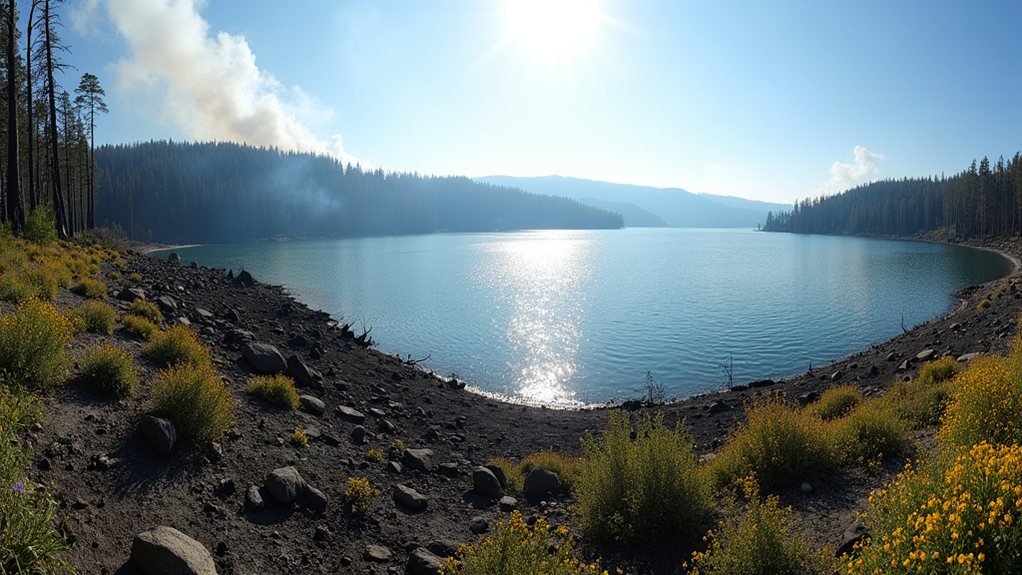

Wildfires in Canada aren’t just flame throwers; they’re sneaky saboteurs of drinking water quality. A recent University of British Columbia study highlights how these blazes introduce a cocktail of heavy metals and harmful chemicals into our water systems. Months later, heavy rains can wash this toxic ash downstream, complicating the task of water treatment facilities, especially in smaller communities. The journey to safe drinking water is a winding road, and there’s much more to uncover about its twists and turns.
Quick Overview
- A UBC study highlights the increased risk of water contamination in Canada following wildfires, particularly from heavy metals and hydrocarbons.
- Water quality issues can persist for years after wildfires, necessitating extensive monitoring and long-term mitigation strategies.
- Smaller communities often struggle with the financial burden of maintaining clean drinking water post-wildfire, facing higher operational costs.
- Federal investments aim to bolster water systems and infrastructure, especially for First Nations, which are crucial for water quality management.
- Engaging the public in water literacy and Indigenous stewardship is vital for community involvement and resilience against wildfire-related water risks.
Recognizing Water Risks From Wildfires
How often do we stop to think about the unseen dangers lurking in our water after a wildfire?
Surprisingly, these threats don’t just show up right after the flames are extinguished; they can emerge months or even years later.
Wildfires introduce a cocktail of nasty contaminants, like heavy metals and polycyclic aromatic hydrocarbons, into our water systems, especially when heavy rains wash ash into nearby rivers.
It’s a bit like stirring a bucket of ash in a bathtub—messy and concerning.
With recent Canadian wildfires burning over 15 million hectares, understanding these delayed risks is vital for protecting communities’ drinking water.
Protecting the land areas that drain into our water bodies—known as watersheds—is crucial for maintaining clean water supplies and preventing contamination after wildfires.
Assessing Wildfire Management Effects on Drinking Water?
When it comes to understanding the effects of wildfire management on drinking water, one could liken the situation to steering through a complicated board game, where every move (or decision) counts.
Post-wildfire, water quality is often a slow-motion train wreck—contaminants like nitrogen and lead linger, sometimes washing into rivers long after flames die down.
Think of ash as a mischievous ghost, re-emerging when stirred. Treatment plants, despite their best efforts, struggle, requiring more funds and chemicals to cope with these surprises.
Smaller communities, akin to players with fewer resources, can find themselves at a significant disadvantage in this tricky game.
Understanding these impacts requires examining the entire product lifecycle, from the initial extraction of materials through manufacturing, distribution, use, and eventual disposal of treatment infrastructure and chemical inputs.
Implementing Long-Term Water Protection Strategies in Canada
Implementing long-term water protection strategies in Canada is akin to piecing together a massive jigsaw puzzle where every piece, ranging from policy reforms to community initiatives, plays an essential role in creating a coherent picture.
Recent federal investments, such as $650 million for freshwater systems and $85 million for independent oversight, highlight commitment to this intricate task.
Prioritizing conservation and smarter irrigation helps reduce demand, while addressing First Nations’ water systems remains critical—nearly half need upgrades.
Engaging the public through water literacy and Indigenous stewardship adds another layer, ensuring everyone contributes to this key resource’s future—because who doesn’t want clean water, right?
Adopting sustainable water management approaches can help communities build resilience against threats to their drinking water supplies.