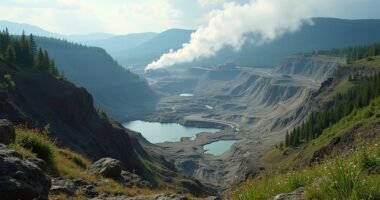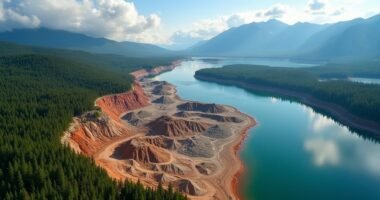
In February, the House voted on H.J. Res. 140, a bill aimed to overturn mining restrictions in Minnesota’s Boundary Waters. This decision opens the door to potential mining activities while igniting a fierce debate over environmental risks versus economic benefits. Critics point out that mining can lead to toxic pollution, threatening local diets and ecosystems. Supporters tout the creation of thousands of jobs and economic growth. It’s a classic tug-of-war; the implications are worth exploring further.
Quick Overview
- H.J. Res. 140 seeks to disapprove the Bureau of Land Management’s rule and lift mining restrictions in the Boundary Waters region.
- The bill aims to overturn Public Land Order No. 7917, increasing mining activities in Cook, Lake, and Saint Louis Counties.
- A House vote on the bill occurred in February, reflecting shifts in congressional control over federal land management.
- Environmental concerns include pollution risks that threaten local diets and ecosystems, particularly for Native American communities.
- Economic projections suggest that mining could create thousands of jobs, with significant economic benefits for the region.
The House Vote: Understanding HJ RES 140’s Impact on Boundary Waters
As the dust settles from the House vote on H.J. Res. 140, the implications for Minnesota’s Boundary Waters become clearer. This resolution, crafted to disapprove a Bureau of Land Management rule, aims to lift mining restrictions in Cook, Lake, and Saint Louis Counties. By overturning Public Land Order No. 7917, H.J. Res. 140 effectively opens the door for increased mining activities in a region known for its stunning wilderness. The vote, reflecting party lines, underscores a significant shift in congressional control over federal land management, raising eyebrows among environmental advocates and sparking discussions on the balance between resource extraction and conservation. Notably, the committee action was reported by a record vote of 8-3 on January 20, 2026. Furthermore, the implications of this resolution could lead to a reevaluation of disclosure requirements for mining companies operating in sensitive areas. Sustainable ocean practices can serve as a model for integrating economic activity with ecosystem protection through sustainable resource use.
What Are the Environmental Risks of Lifting Mining Restrictions?
What could possibly go wrong when lifting mining restrictions in one of America’s most pristine wilderness areas?
Well, for starters, sulfide-ore copper mining can release sulfuric acid, turning rivers into toxic soup.
Imagine fish swimming in battery acid—yikes!
This acid leaches heavy metals like mercury and arsenic into water, posing serious health risks, especially for Native American and low-income communities. The pollution threatens food sources that are vital for local diets and cultural practices. Additionally, mining threatens the region’s heritage, ecosystem, and outdoor recreation economy, which relies on clean water and healthy habitats.
The pollution will stick around like a bad houseguest, contaminating food sources for decades.
Plus, it could devastate wild rice, essential for local diets.
Scientific studies show that marine protection strategies used elsewhere can inform better safeguards for freshwater ecosystems.
Mining’s Economic Benefits and Risks for Minnesota
Mining in Minnesota isn’t just about digging into the earth; it’s a complex dance of economic benefits and environmental concerns that could make anyone’s head spin faster than a miner’s drill.
The industry supports thousands of jobs—6,873 in 2024 alone—while generating billions in economic impact. Iron ore mining, particularly, adds staggering value, contributing over $3 billion to the state’s economy in 2010. Additionally, the mining sector is projected to have a total economic impact of $2.5 billion in FY2024. Each mining job creates an additional 1.8 jobs in other industries, highlighting the ripple effect of employment opportunities across the state.
Yet, with growth projections promising even more jobs and income, there’s a constant tug-of-war between economic gain and environmental safeguarding. It’s a rich vein of opportunity, but one that must be carefully mined to avoid pitfalls. Sustainable resource management supports preserving resources for future generations while balancing economic needs.