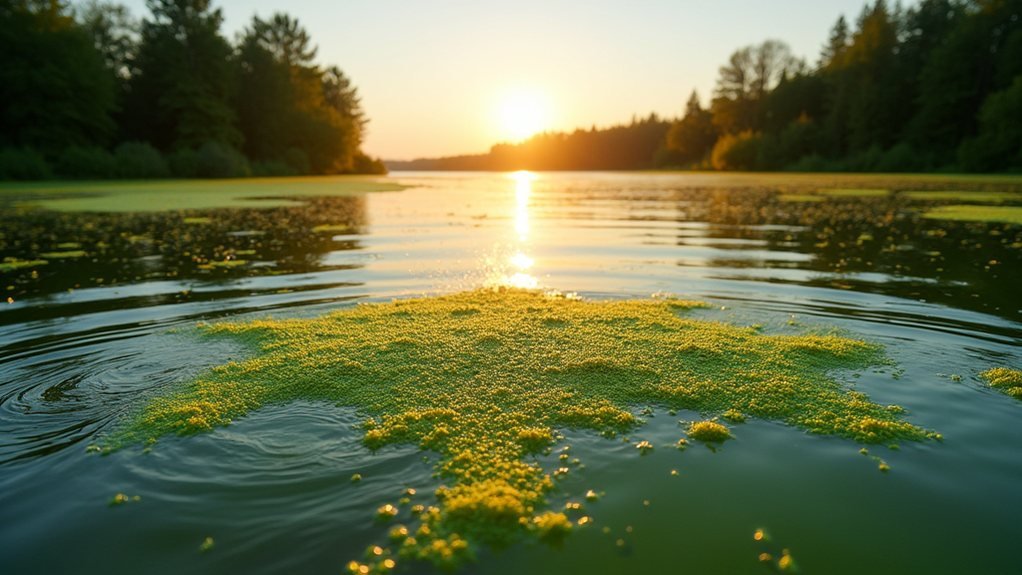

Lake Winnipeg is grappling with a toxic algae bloom crisis, largely fueled by rising phosphorus levels and climate change. Surprisingly, viruses that infect algae like Microcystis aeruginosa play an intriguing role in this ecosystem drama. They can alter algal behavior, sometimes releasing toxins post-infection — think of them as the unexpected party crashers! Research is ongoing to strike a balance between harnessing these viruses for bloom management and the potential toxin risks they pose. Curious how this all unfolds?
Quick Overview
- Research is exploring viruses that infect Microcystis aeruginosa to manage toxic algae blooms in Lake Winnipeg effectively.
- Viral interactions with algae may provide insights into predicting harmful bloom events and their associated toxins.
- Ongoing studies aim to balance the benefits of viral infections against the risks of toxin release during algal blooms.
- Innovative strategies, including viral research, are essential for improving the ecological health of Lake Winnipeg by 2026.
- Monitoring and understanding viral dynamics could enhance management practices for nutrient runoff and algae control in Lake Winnipeg.
The Alarming Rise of Algae Blooms in Lake Winnipeg
As summer fades and the leaves begin to turn, Lake Winnipeg transforms from a picturesque getaway into a scene that could rival a sci-fi thriller—with algae blooms spreading like an unwanted plot twist.
Since the 1990s, these blooms have become a regular feature, escalating dramatically as phosphorus levels doubled in just a decade. Research shows that high nutrient levels often stem from human pollution, further contributing to the growth of these blooms. Reducing waste at the source and prioritizing waste prevention can help lower nutrient runoff into waterways.
Algal blooms have surged since the 1990s, fueled by a troubling doubling of phosphorus levels in just ten years.
By September 2023, a staggering 8,400 square kilometers of the lake were engulfed, impacting one-third of its area. This rapid rise in algal coverage threatens not only recreational activities but also the delicate ecosystem, making Lake Winnipeg the world’s most threatened freshwater lake. Viruses infecting algae can further exacerbate these harmful blooms, altering algae growth and mortality rates.
What Causes Algae Blooms?
The science behind algae blooms in Lake Winnipeg might sound like a plot twist in a nature documentary, but it’s a tale with serious implications.
These blooms thrive on excessive phosphorus, often a byproduct of human activities like over-fertilization and livestock production.
Imagine a party where nutrients like phosphorus and nitrogen crash in from agricultural runoff and untreated sewage, turning the lake into a toxic brew. Wetlands serve as natural filtration systems that can help mitigate this influx of nutrients, but their destruction exacerbates the problem.
Climate change and wetland drainage only add to the chaos, accelerating algae growth.
With the North End Water Pollution Control Centre leading the phosphorus charge, Lake Winnipeg faces a persistent invitation to this unwelcome algae party.
Unfortunately, the water quality has deteriorated over the last 30 years, making the situation even more critical. Natural water conservation measures like restoring wetlands can reduce nutrient loads and improve long-term resilience.
The Role of Viruses in Managing Toxic Algae Blooms
While many might picture viruses as villains lurking in dark corners, they could actually play a surprising role in managing toxic algae blooms. Viruses infecting Microcystis aeruginosa disrupt the old narrative, releasing harmful microcystin-LR toxins when they burst.
Think of it as a party crasher that leaves a mess behind. However, these viral interactions also influence algal metabolism, which may help predict and manage harmful blooms. Recent studies show that high levels of the toxin microcystin-LR are released post-infection, raising concerns for water safety. Additionally, the discovery of over 230 novel giant viruses highlights the complexity of these interactions and their potential impact on aquatic ecosystems.
With over 230 novel giant viruses discovered, researchers are finding potential in these microscopic players. Balancing their benefits against toxin risks is essential, making ongoing research crucial for cleaner waters and healthier ecosystems. A coordinated marine protection approach that includes monitoring, habitat restoration, and fisheries management can improve ecosystem resilience.