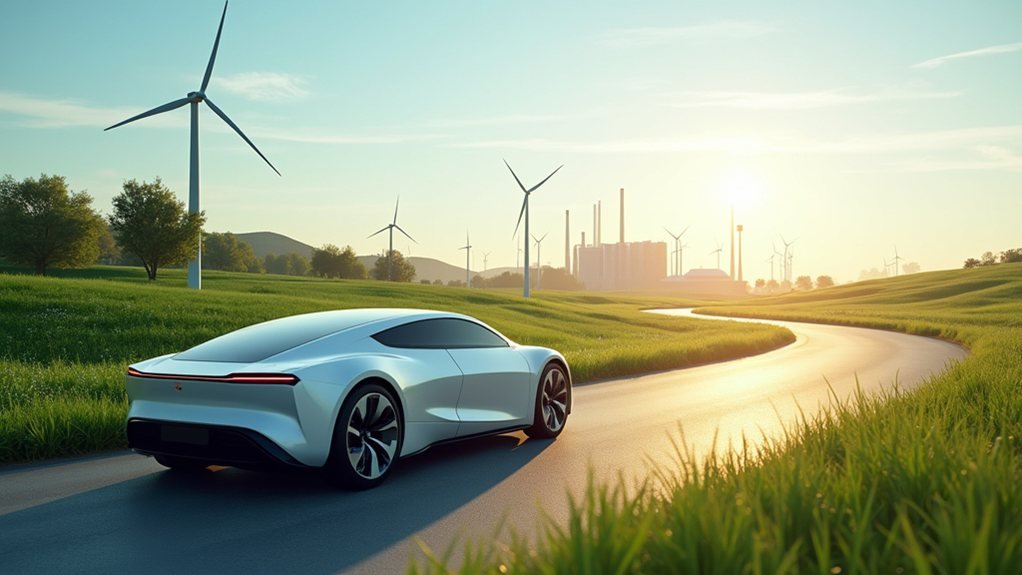

Mark Carney has revamped climate regulations in response to the auto industry’s turmoil, emphasizing a fresh approach to emission standards. The new rules prioritize electric vehicles while still considering hybrid models, which some see as a twist of fate. Despite an initial dip in EV sales, the push for 75% electric vehicle sales by 2035 aims for greener streets. The auto industry’s mixed reactions reveal just how tricky this balancing act is. Curious about the industry’s future?
Quick Overview
- Carney’s revised climate rules shift focus to blended fleet average targets, moving away from strict electric vehicle mandates.
- The new standards require internal combustion vehicles to lower emissions while promoting zero-emission vehicles to achieve sustainability goals.
- Aiming for 75% electric vehicle sales by 2035, the government encourages innovation with a 10% annual emissions reduction strategy.
- The automotive industry shows mixed reactions, with financial support seen as crucial but environmental advocates criticizing the retreat from stringent regulations.
- Infrastructure upgrades and renewable energy integration are essential to accommodate the growing demand for electric vehicles and support climate initiatives.
Key Changes in New Emission Standards You Should Know About
In a world where climate change discussions often feel as overwhelming as trying to solve a Rubik’s Cube blindfolded, the latest revisions to emission standards bring a rejuvenating sense of clarity.
The shift from Electric Vehicle Availability Standards to blended fleet average targets signals a fresh start. Think of it as a diet plan for cars—internal combustion vehicles must slim down emissions, while electric vehicles strut in as zero-calorie options. A zero-emission vehicle generates approximately 60 tons of lifetime CO2 credits, making the transition not just beneficial for the environment but also economically advantageous for automakers. In light of the new strategy, the government now aims for 75% EV sales by 2035, promoting a more sustainable automotive landscape.
With a tightening schedule promising a 10% annual reduction, it’s like a fitness coach pushing everyone towards healthier habits. Stricter standards ahead encourage innovation, ensuring a greener future without the dreaded mandate hangover. The revisions also align with broader shifts toward renewable energy and low-carbon technologies to support the cleaner grid necessary for electric vehicles.
Impact of Emission Standards on EV Sales and Infrastructure
The shifting landscape of emission standards has sparked a fascinating ripple effect on electric vehicle (EV) sales and infrastructure, creating a scene that’s part chess match, part rollercoaster ride.
In 2025, EV sales dipped 2%, largely due to the expiration of tax credits, leaving consumers in a purchasing frenzy before the deadline. While Tesla retained a commanding 46.2% market share, brands like Acura and Honda faced staggering declines—nearly 98% in Q4 alone! This drop in sales was significantly influenced by the tax credit expiration, which led to a surge in advance purchases in September. Despite the decrease, 2025 was the second-best year for EV sales in the US, highlighting the ongoing demand for electric vehicles.
Meanwhile, global trends show a growing appetite for EVs. As infrastructure struggles to keep pace, the future remains uncertain, yet exciting for the EV landscape. Renewable sources like solar power are increasingly considered when planning charging infrastructure and grid upgrades.
Industry Responses: Support and Criticism
Amidst the whirlwind of shifting climate regulations, the automotive industry has found itself at a crossroads, with responses ranging from enthusiastic support to sharp criticism. Many manufacturers welcomed financial packages and tax reductions, viewing them as lifelines for adaptation. However, environmental advocates lamented the retreat from stringent electric vehicle mandates, fearing it could derail Canada’s climate ambitions. The new flexible standards, while appealing to some, risk encouraging hybrids over fully electric models. As industry players navigate this delicate balance, the stakes remain high—ensuring both environmental integrity and economic viability in a rapidly evolving landscape. The new strategy introduced by Prime Minister Carney aims for 75% EV sales by 2035, which reflects a compromise between climate goals and industry adaptability. In addition, the government has allocated $3 billion from the Strategic Response Fund to support the auto sector’s growth. Businesses can align their operations with the Sustainable Development Goals to measure and communicate their contributions to long-term resilience.