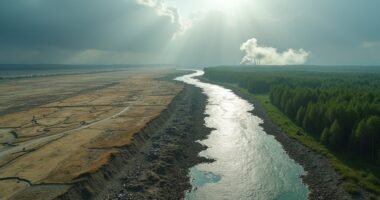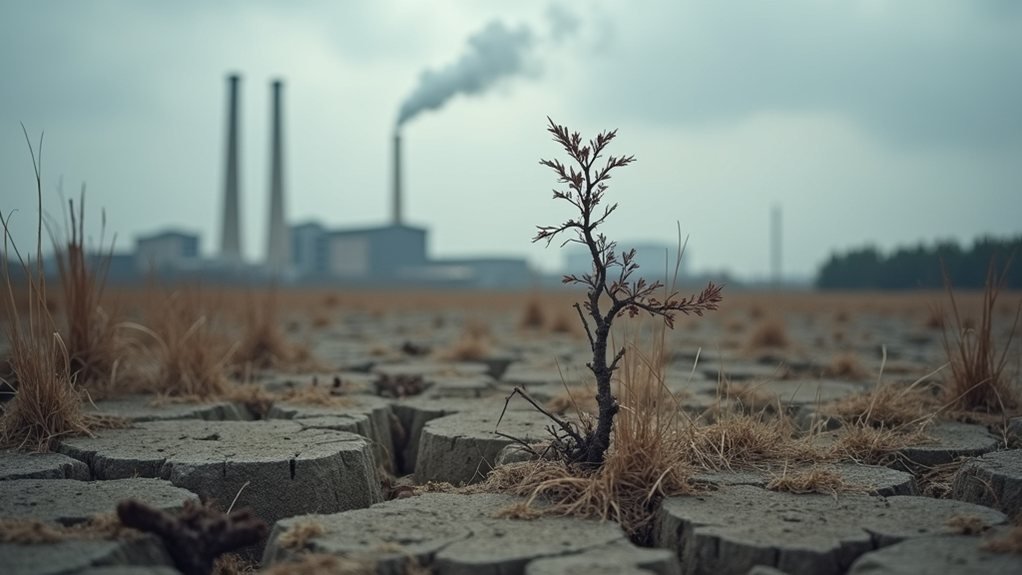

The Auditor General’s recent report sounds the alarm: Canada is set to miss its 2030 emissions reduction targets. With a plan that boasts a lofty 40-45% reduction, the country is instead on track for a choppy 4°C warming scenario. Shifting timelines, insufficient measures, and a lack of clear accountability have left Canada gasping for breath while its emissions drift upward. The stakes couldn’t be higher, and there are steps to take that could steer this ship in the right direction.
Quick Overview
- Canada’s emissions reduction plan is projected to fall short by 34% of the 2030 target due to insufficient measures.
- Delays in implementing critical policies, such as the oil and gas emissions cap, hinder progress towards targets.
- Less than half of the planned measures have established implementation deadlines, leading to fragmented efforts.
- Current trajectories suggest Canada is on a path toward a 4°C temperature increase, misaligned with climate goals.
- A coordinated national strategy is urgently needed to address accountability and enhance emission reduction efforts across sectors.
Canada’s 2030 Emissions Target Overview
As Canada strides toward its ambitious 2030 emissions target, it finds itself traversing a complex landscape of environmental commitments and economic realities.
Enshrined in the *Canadian Net-Zero Emissions Accountability Act*, the goal is to slash emissions by 40-45% below 2005 levels by 2030, with a long-term vision of net-zero by 2050.
However, current projections show emissions hovering around 504 to 520 Mt, landing Canada 31.5-33.5% below 2005 levels—quite the gap! Canada’s 2030 emissions gap is projected to be between 49 Mt to 102 Mt above the target. With an interim milestone of 20% reduction by 2026, achieving these targets will require not just plans but serious action, like trying to herd cats, but with more at stake. Recent assessments indicate that current and proposed policies can achieve 85 to 90 percent of the 2030 target if effectively implemented. Businesses can help close the shortfall by combining aggressive emissions reduction strategies with high-quality offsets.
What Are the Key Shortcomings in Canada’s 2030 Emissions Target Plan?
What happens when ambitious goals meet the reality of half-baked plans? Canada’s 2030 Emissions Reduction Plan is a classic case.
With insufficient mitigation measures, it’s projected to miss its target by a staggering 34%. Delays in critical policies, like the oil and gas emissions cap, further undermine its effectiveness. Furthermore, less than half of the plan’s measures have deadlines for implementation, highlighting a significant lack of urgency. The current trajectory suggests that Canada is on track for a 4°C pathway instead of achieving its climate goals.
Add to that flawed modeling—think overly optimistic assumptions without a peer-reviewed check—and you’ve got a recipe for disaster.
Fragmented accountability means no one is in charge, leaving high-potential measures languishing. Without a coordinated effort, Canada risks warming the planet by 4°C instead of hitting its climate goals. Coordinated national sector strategies are needed to align policies across energy systems and economic sectors.
Actionable Steps for Improving Canada’s Emission Reductions
Canada’s ambitious 2030 emissions targets may seem like a lofty mountain to climb, but with the right plan and determination, there’s a solid path to the summit. To tackle this, Canada must finalize critical policies, like methane regulations and an emissions cap on fossil fuels, while phasing out coal exports. Stopping new oil projects and ending fossil fuel subsidies can help too. Investing over $1 trillion in clean electricity infrastructure and doubling capacity will electrify the nation. Ultimately, by committing to significant reductions in methane and hydrofluorocarbons, Canada can chart a more sustainable course—one step at a time! Achieving these goals will require a 40% reduction in GHG emissions below 2005 levels by 2030. Moreover, the implementation of climate mitigation measures and adaptation strategies will be prioritized to support this transition. Natural systems like wetlands and forests can be protected and restored to assist carbon storage and resilience, emphasizing nature-based solutions.