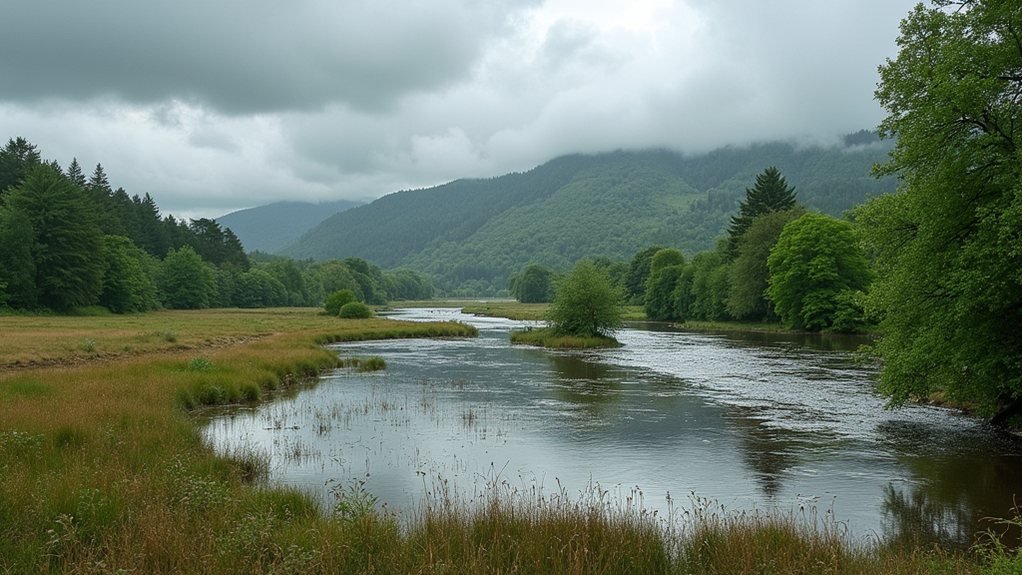

Aboyne has recently been drenched, recording a staggering 376 mm of rainfall in just six weeks. That’s like filling over 100 bathtubs! This exceptional deluge has raised alarms about potential flooding, soil erosion, and even threats to agricultural lands. With the River Dee swelling and trees at risk from waterlogged roots, the local environment faces quite the makeover. It’s a wild reminder of how nature can turn up the volume unexpectedly—stick around to discover the broader impact on the area!
Quick Overview
- Aboyne recorded an extraordinary 376 mm of rainfall over a six-week period, exceeding typical thresholds for significant weather events.
- The recent deluge has heightened the risk of flooding, particularly at Castle Park, due to saturated soils.
- Erosion and waterlogged soil from the rainfall threaten agricultural fertility and may lead to infrastructure damage along the River Dee.
- This extreme weather pattern emphasizes urgent environmental challenges, including potential biodiversity loss and ecosystem changes.
- Implementing watershed protection strategies is essential to mitigate future flooding and enhance ecosystem resilience in the affected areas.
The Rain Shadow Effect in Northeast Scotland
As the moist air rolls in from the Atlantic, it encounters the Grampian Mountains, creating a fascinating meteorological phenomenon known as the rain shadow effect.
Moist Atlantic air meets the Grampian Mountains, giving rise to the intriguing rain shadow effect.
This occurs when moist air rises over the windward side, shedding its humidity as rain. On the leeward side, descending air gets all snug and warm, absorbing moisture and leaving behind dry conditions. In Northeast Scotland, this means areas like Aberdeen enjoy considerably less rainfall compared to their western counterparts. It’s like a cozy blanket on a chilly night—great for some, not so much for others, as the land transforms from lush to almost desert-like. The rain shadow effect is influenced by the elevation and orientation of the Grampian Mountains, which significantly impacts local climate patterns. This elevation leads to areas like Glendessary receiving over 3500mm of rainfall, while regions in the east remain much drier. Climate scientists note that such regional differences are amplified by broader atmospheric circulation patterns.
Precipitation Comparison: Aboyne vs. Nearby Locations
While some might assume that all of Scotland is drenched in rain, a closer look reveals a dramatic contrast in precipitation levels, particularly between Aboyne and its nearby counterparts.
Aboyne’s rainfall soared to an astonishing 107 mm from February 1 to 8, while Strathpeffer barely registered 0.6 mm in the same period. This disparity is particularly striking considering that Aboyne recorded 82.4 mm of precipitation from February 1 to 6, highlighting the extreme weather patterns affecting the area. September is also notable for its total precipitation of 76mm, showcasing the variability in rainfall throughout the year.
Aultbea and Aviemore were even drier, with just 1 mm each after prolonged dry spells.
This stark difference highlights the rain shadow effect at play, where Aboyne’s climate dances with moisture while its neighbors remain parched, proving that not all Scots are weathered equally. An additional factor influencing local rainfall patterns is orographic lift, which causes moist air to rise over terrain and drop precipitation.
What 376mm of Rain Means for Aboyne’s Environment
Aboyne’s recent deluge of 376 mm of rain isn’t just a soggy inconvenience; it’s a wake-up call for the local environment.
Aboyne’s staggering 376 mm of rain serves as a stark reminder of the urgent environmental challenges ahead.
This extraordinary rainfall, surpassing the once-in-200-year event threshold, risks flooding Castle Park and strains infrastructure.
As soils become saturated, erosion threatens topsoil and reduces agricultural fertility, while the River Dee swells dangerously.
Waterlogged roots may spell doom for trees, and invasive species could thrive in disturbed areas.
The changing landscape may lead to new wetland ecosystems, but at the cost of biodiversity and carbon storage.
In short, Aboyne faces a wet, wild, and worrisome future.
Protecting watershed areas through land stewardship and buffer zones can help maintain clean water and healthier ecosystems by reducing runoff and sedimentation protecting watersheds.