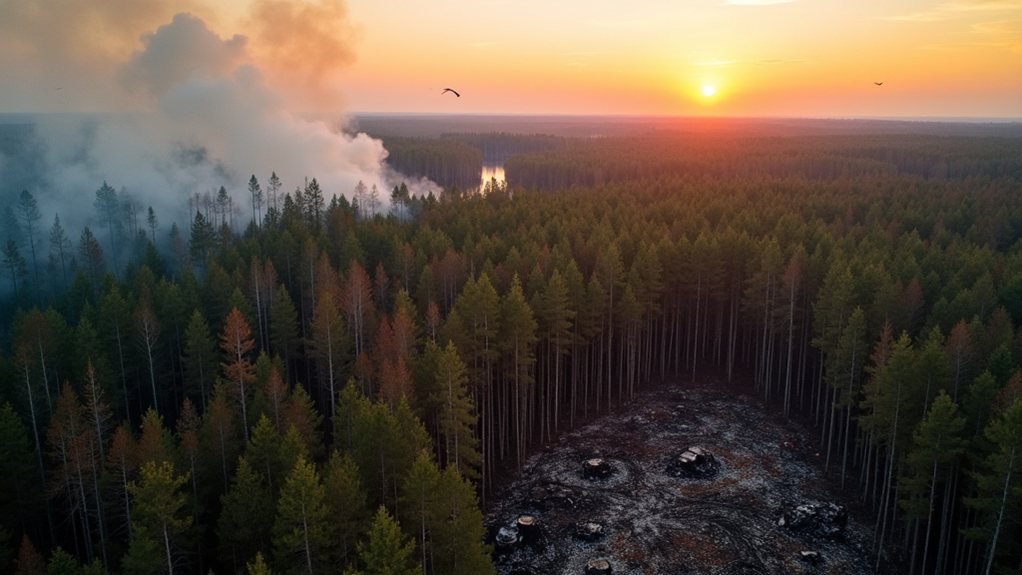

After the UK phased out coal, the country turned to biomass energy, controversially sourcing wood pellets from places like Louisiana. This shift is meant to cut emissions, but it raises eyebrows. Burning these pellets often leads to deforestation and emits more CO2 than coal—yes, you heard that right! It’s a classic case of “out of the frying pan, into the fire.” The complex world of biomass energy is definitely worth exploring further!
Quick Overview
- The UK’s transition from coal to biomass led to increased demand for wood pellets sourced from forests, including those in Louisiana.
- Deforestation and habitat loss in Louisiana are consequences of sourcing wood pellets for biomass energy production.
- Burning wood pellets emits more CO2 than coal, raising concerns about the environmental impact of biomass energy.
- The health risks associated with burning wood pellets may mirror those experienced from coal smoke, particularly in marginalized communities.
- The sustainability of biomass energy is challenged by its impact on forests and competition with food production.
Why the UK Transitioned From Coal to Biomass Energy
As the UK commenced its journey from coal to biomass energy, it wasn’t merely a case of trading one fuel for another; it was more like swapping out an old, creaky bicycle for a shiny new e-bike—both get you where you need to go, but one does it with a lot less huffing and puffing. The Electricity Market Reform of 2012, alongside the ambitious Climate Change Act, pushed for significant emissions reductions. By 2020, coal’s share plummeted to under 2%, with renewables leading the charge. The ongoing transition toward a low-carbon system is supported by legislative and regulatory changes that emphasize decarbonization efforts. The 2024 coal phase-out commitment illustrated a clear shift toward a cleaner, more sustainable energy future, leaving coal in the dust. Notably, the UK has become the first G7 country to phase out coal power, marking a significant milestone in global energy transition efforts. This shift also reflects growing awareness of how greenhouse gases drive global warming and the need to cut emissions.
What Are the Environmental Impacts of Biomass Energy From Wood Pellets?
While the promise of biomass energy from wood pellets may seem like a green solution to the world’s energy needs, the reality is more akin to a double-edged sword.
Sourcing these pellets leads to deforestation, habitat loss, and even a rise in air pollution. In fact, burning wood pellets emits more CO2 than coal! Carbon emissions from biomass depend heavily on management and sourcing practices, highlighting the complexity of this energy source. Additionally, the wood pellet manufacturing process releases harmful pollutants that can exacerbate health issues in surrounding communities. This practice also increases the demand for raw material, intensifying pressure on forests and biodiversity forest management.
This practice fuels health risks, especially in marginalized communities. It’s like swapping one environmental villain for another—trading coal smoke for wood dust.
Though it may sound eco-friendly, the truth is that the impacts ripple through ecosystems, air quality, and climate resilience, leaving much to be desired.
Challenges Facing Biomass Energy’s Sustainability Future
Steering the future of biomass energy feels a bit like trying to solve a Rubik’s Cube while riding a roller coaster—exciting but definitely challenging.
Responsible sourcing presents hurdles, as certified wood pellets compete with food production, risking deforestation. Large-scale operations, while stable, often overlook local needs, leaving small landowners in the dust. The conversion of coal-fired units to sustainably sourced biomass pellets at Drax Power Station highlights the complexities of balancing energy needs with environmental concerns. Community-driven solutions are essential to address specific local needs and foster engagement.
Logistical barriers like high fees and climate unpredictability further complicate matters. Policies frequently miss the mark, offering one-size-fits-all incentives that fail to support community cooperatives.
Technological advancements, like improved biofuel processes, show promise, yet emissions from traditional practices remind us that the path to sustainability is anything but straightforward. Sustainable management of forests through long-term stewardship can help ensure resources remain available for future generations.