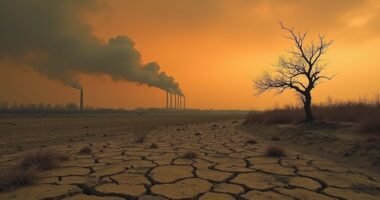

The UK government has faced criticism for suppressing a significant report on climate security and biodiversity loss, which raises alarms about national security. This report highlights the alarming decline in global wildlife and ecosystems. Experts believe that ignoring these issues is akin to sticking one’s head in the sand while the world burns—extremely unwise, to say the least! If you think this is concerning, just wait until you hear about the urgent actions needed to address it.
Quick Overview
- The UK government suppressed the “Global Biodiversity Loss, Ecosystem Collapse and National Security” report due to its perceived negativity.
- Critics claim this suppression reflects avoidance of pressing environmental truths impacting national security.
- Ecosystem collapse is recognized as a significant risk to food and water security in the UK.
- Urgent actions are needed, including the implementation of the Environment Act to mitigate biodiversity loss.
- The suppression contrasts with open discussions on other urgent issues, highlighting a lack of transparency in climate security matters.
Uncover the Hidden Threats of Biodiversity Loss
As the world spins ever faster toward ecological uncertainty, the hidden threats of biodiversity loss lurk like unwelcome guests at a party, quietly dismantling the very fabric of life on Earth.
Since 1970, global wildlife populations have plummeted by 68%, with some freshwater species dwindling by a staggering 84%. This isn’t just a sad statistic; it’s a clarion call for food security. Without pollinators and healthy soils, crop failures loom, pushing agriculture to the brink. Imagine a world where your favorite fruits are as rare as unicorns! In the UK, official indicators show continued deterioration of ecosystems, highlighting the urgent need for systemic change. The collapse of global ecosystems poses a direct threat to UK national security and prosperity. Sustainable forest management that balances resource use and habitat protection is a practical approach to help safeguard both biodiversity and livelihoods, emphasizing sustainable forestry practices.
The stakes are high, and the need for action has never been more urgent.
Government’s Response to Biodiversity Threats: Why Was the Report Suppressed?
In an era where biodiversity loss looms larger than a T-Rex at a tea party, the government’s response to these environmental threats raises eyebrows and questions.
Commissioned by Defra and informed by intelligence agencies, the “Global Biodiversity Loss, Ecosystem Collapse and National Security” report faced a last-minute launch cancellation, deemed “too negative” by Number 10. Protecting species and restoring habitats requires coordinated public policy and long-term planning to reduce risks to society and infrastructure, especially through habitat protection.
Critics, like Caroline Lucas, accuse the government of suppressing vital insights, paralleling this with the transparent discussions on AI and piracy risks.
Critics, including Caroline Lucas, slam the government for stifling crucial insights, contrasting it with open talks on AI and piracy.
As ecosystem collapses threaten food and water security, the silence around the report seems less about optimism and more about avoiding uncomfortable truths. The report highlights critical ecosystems’ stress as a national security risk that could lead to severe consequences for the UK and beyond. The potential for food resource competition by the 2030s underscores the urgent need for proactive government action.
Urgent Actions for Biodiversity and Security
While the clock ticks down on biodiversity and security, a series of urgent actions emerges as essential for safeguarding the future.
The World Economic Forum ranks biodiversity loss as a severe risk, with extinction rates soaring. To combat this, nature-based solutions, like urban trees, are indispensable—imagine them as nature’s air conditioners! Ecosystem collapse threatens not only our environment but also our national security, making these solutions even more critical. Recent assessments highlight that the decline of global ecosystems poses a significant threat to food, water, and health security.
Implementing the Environment Act can curb high-risk imports, while the CAN Bill aims to shrink our ecological footprint. A joined-up emissions reduction strategy by 2030 is critical.
Finally, convening a Citizens’ Assembly for fair food shifts is like getting everyone on board for a much-needed potluck dinner—everyone brings something essential! A coordinated corporate strategy that includes biodiversity impact assessment can guide companies toward measurable conservation outcomes.