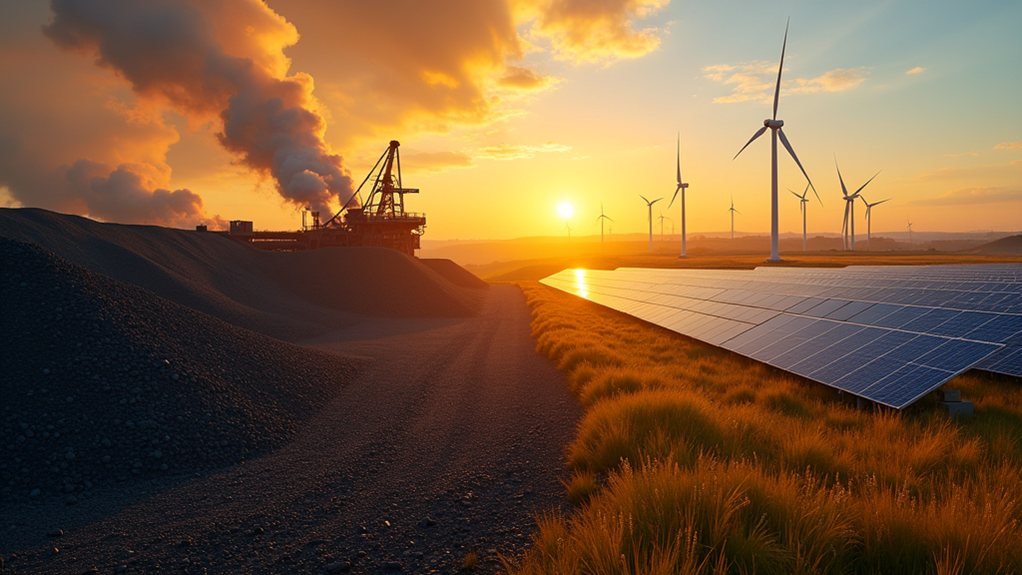

Renewable energy has officially outstripped coal in global electricity generation, a thrilling development for the planet. In the first half of 2025, renewables produced 5,072 TWh compared to coal’s 4,896 TWh. Solar energy gained significant ground, expanding its share from 6.9% to 8.8%. This shift is powered by plunging costs, hefty investments, and supportive policies worldwide. Think of it as Earth’s version of a marathon; renewables are sprinting ahead, while coal is left catching its breath. Stick around to learn what this means for our energy future!
Quick Overview
- In H1 2025, renewables generated 5,072 TWh, surpassing coal’s 4,896 TWh for the first time globally.
- Renewables achieved a 34.3% share of global electricity generation, with solar and wind leading the growth.
- Significant investments in clean energy reached USD 386 billion in H1 2025, driving the shift away from coal.
- China and India are at the forefront of renewable expansion, greatly influencing global electricity trends.
- The transition to renewables is crucial for addressing climate change and is supported by international policies and commitments.
How Renewables Surpassed Coal in Global Electricity Generation
In a stunning twist in the global energy arena, renewables have finally outpaced coal in electricity generation, marking a pivotal moment in the battle against climate change.
In the first half of 2025, solar and wind energy produced 5,072 TWh, eclipsing coal’s 4,896 TWh, giving renewables a 34.3% share of global electricity.
That’s like watching your favorite underdog team win the championship!
Solar alone jumped from 6.9% to 8.8%, while wind held strong at 9.2%. This remarkable achievement is fueled by solar energy’s significant contribution to the overall increase in global electricity demand, highlighting the transformative potential of renewable sources. Fossil fuel generation remained mostly flat, proving that a cleaner, greener future isn’t just a dream but a reality, one sunbeam at a time! The shift has been accelerated by supportive renewable policies and expanding grid integration efforts.
Major Factors Fueling Renewable Energy Expansion
While the world has long relied on traditional energy sources, a remarkable transformation is currently underway, fueled by several key factors that are propelling renewable energy into the spotlight.
Cost declines in solar technology make it cheaper than ever—who knew sunlight could be so budget-friendly? Meanwhile, global investments in clean energy are skyrocketing, with renewables attracting a whopping USD 386 billion in just the first half of 2025. Additionally, over 80% of projected renewable capacity additions through 2030 originate outside the U.S. and EU, highlighting the global nature of this energy shift. Notably, total investment reaches USD 3.3 trillion in 2025, showcasing the immense scale of financial commitment to this sector. COP29 and international climate commitments continue to influence national targets and investment flows, underscoring the role of global policy in accelerating deployment.
Electrification demands surge as electric vehicles and data centers munch on energy, while supportive policies and diverse technologies, like wind and hydropower, create a recipe for an electrifying future.
The energy revolution is here!
Regional Differences in Coal and Renewable Use
As the global energy landscape shifts, the contrast between coal and renewable energy use paints a vivid picture of regional dynamics.
In China and India, renewables are surging past coal, fueled by rapid demand growth and innovative technologies. This surge is expected to drive 60% of global electricity consumption increase in the coming years. As renewables and nuclear are projected to comprise 50% of the global power mix by the end of the decade, their influence is set to expand significantly.
Meanwhile, in the U.S., coal has made a surprising comeback, driven by rising natural gas prices. Solar and wind deployment strategies from the renewables playbook are increasingly considered to diversify generation and reduce price volatility.
Over in the European Union, coal struggles under the weight of high prices, while solar power shines brightly.
Each region tells a unique story, showcasing the complex interplay of energy sources, demand, and policy—a real-life energy soap opera, if you will!