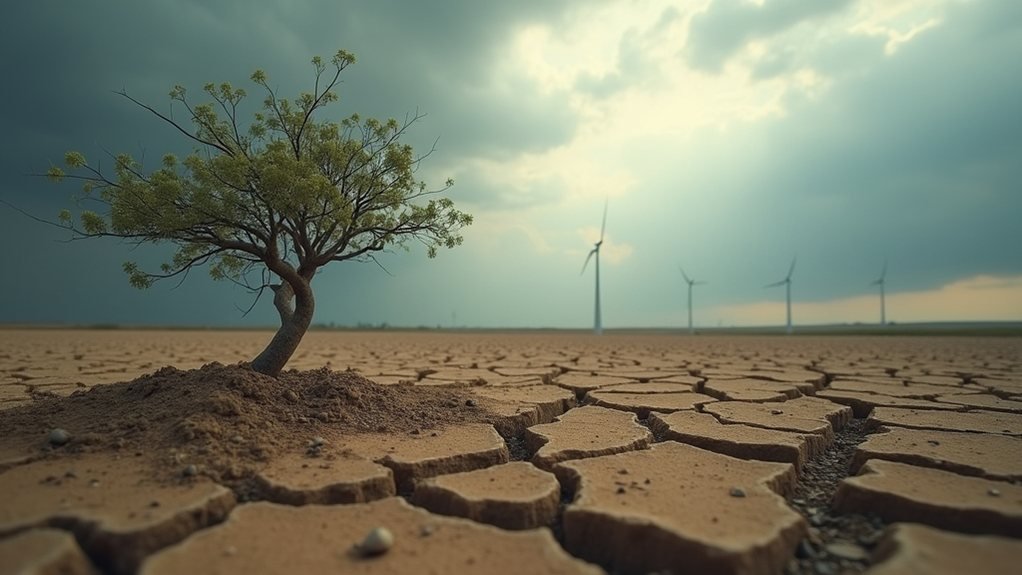

The UK government is reducing climate finance to vulnerable countries by one-fifth, a move that some say could send global climate goals into a tailspin. This cut jeopardizes food security for farmers in struggling regions, highlighting a significant 40% decrease in adaptation funding. Critics fear this retreat will empower rivals like China and leave poorer nations exposed to economic fragility. Buckle up, though—there’s more to this story about the UK’s changing role in climate commitments and global partnerships.
Quick Overview
- The UK plans to reduce climate finance from £11.6 billion to £9 billion, marking a 40% cut in real terms over five years.
- This reduction jeopardizes support for vulnerable countries, threatening food security and agricultural stability in regions most at risk.
- The cuts may weaken the UK’s influence in global climate negotiations and allow countries like China to increase their geopolitical sway.
- Critics argue that reduced funding undermines the UK’s commitment to international climate obligations and threatens the resilience of Small Island Developing States.
- Sustained international cooperation and investment in renewable energy are essential to address climate challenges and support vulnerable communities.
UK Climate Finance Cuts and Their Impact
As the UK government prepares to implement significant cuts to its climate finance budget, one can’t help but feel a twinge of irony—like discovering that your favorite eco-friendly cafe has just switched to single-use plastics.
The proposed reduction sees funding drop from £11.6 billion to £9 billion over the next five years, a staggering 40% cut in real terms. This decision, driven by Treasury limits despite warnings of ecosystem collapse, raises eyebrows. Moreover, this reduction represents a cut of more than 20% from previous levels, which critics argue undermines global climate goals and jeopardizes the UK’s leadership role. Furthermore, these alleged cuts may ultimately undermine the UK’s global influence.
In essence, it’s like promising to save the planet while turning off the lights. A fair transition requires policies that protect workers and vulnerable communities, including investment in equitable job retraining to ensure no one is left behind.
Impacts of UK Climate Finance Cuts on Vulnerable Countries
While the UK government may see its climate finance cuts as a mere budgetary adjustment, the reality is that these reductions hit vulnerable countries like a sudden downpour on a picnic—unwelcome and potentially disastrous.
With the UK importing 40% of its food, climate adaptation funding is essential for farmers in affected regions; without it, crop failures loom, threatening food security. Additionally, these funding cuts represent a 40% reduction in support for climate adaptation, further jeopardizing agricultural stability. The UK’s commitment to supporting SIDS in climate adaptation and resilience underscores the critical need for sustained funding to prevent agricultural and ecological crises.
Meanwhile, weakened environmental protections risk ecosystem collapse, triggering everything from crop failures to infectious diseases.
As the UK retreats, countries like China step in, reshaping geopolitical dynamics and leaving vulnerable nations further exposed to instability and economic fragility. Building local capacity for sustainable water management is crucial to help at-risk communities adapt.
Future of UK Climate Commitments: Strengthening Global Partnerships
In a world where climate change feels like an unwelcome houseguest that refuses to leave, the future of UK climate commitments hinges on the strength of global partnerships.
With a pledge of £11.6 billion, the UK aims to bolster clean energy, adapt to climate impacts, and protect nature. However, a proposed reduction to £9 billion raises eyebrows. The UK insists on “modernising” its approach for better value, yet maintaining international obligations remains essential. Reports suggest the UK government is considering a 40% cut to international climate finance, which could negatively impact vulnerable communities globally. As partnerships strengthen, the UK’s leadership at conferences like COP29 could inspire a collective climate response, proving that together, even the most stubborn houseguests can be managed. In light of this, the UK has committed to tripling adaptation funding by 2025 to ensure that support reaches those most in need. The shift toward renewable energy will be central to meeting those commitments and supporting resilient, low-carbon development.