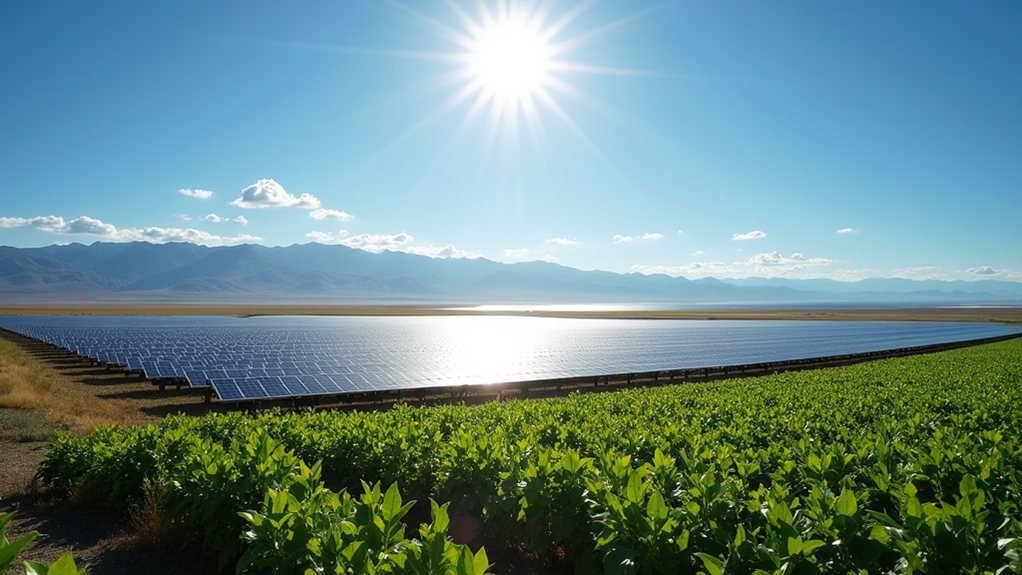

The Valley Clean Infrastructure Plan is gearing up to transform the Westlands region by tapping into the power of solar energy. With the potential to generate up to 21 gigawatts, this initiative not only tackles California’s pressing water shortages but also ignites local economic growth. Picture 9 million homes powered by clean energy! As job opportunities pop up faster than you can say “photosynthesis,” it’s clear that the future looks bright—literally and figuratively— for Westlands. Curious about what’s next?
Quick Overview
- The Valley Clean Infrastructure Plan (VCIP) aims to generate 21 gigawatts of renewable energy in California, including projects in the Westlands region.
- Repurposing 130,000 acres of underutilized farmland for solar energy will enhance energy generation near the Salton Sea.
- The VCIP is expected to create 6,000 construction jobs and 800 permanent positions, boosting the local economy in Westlands.
- The initiative supports California’s goal of 100% clean energy by 2045, addressing both water shortages and economic challenges.
- Long-term leases for landowners in the Westlands promote sustainable land use and community resilience against future water crises.
The Valley Clean Infrastructure Plan: A Response to Water Shortages
As California grapples with the harsh reality of chronic water shortages, the Valley Clean Infrastructure Plan (VCIP) emerges like a knight in shining armor, ready to tackle not just the drought but also the economic fallout it brings.
With over 215,000 acres of farmland already out of production, VCIP aims to repurpose 130,000 acres of underutilized land for solar energy. This initiative not only promises to generate up to 21 gigawatts of power—enough to light up a small city—but also supports local communities by creating jobs and fostering long-term agricultural viability. The project offers long-term sustainability through its reliance on the sun’s endless energy, unlike finite fossil fuel resources. Additionally, the project aligns with California’s ambitious climate targets, turning crisis into opportunity. The VCIP will also help support District growers by allowing them to focus water supplies on productive and resilient lands.
Valley Clean Infrastructure Plan: Harnessing Solar Power for Economic Growth
While California faces ongoing water challenges, the Valley Clean Infrastructure Plan (VCIP) shines a light on how solar energy can transform adversity into opportunity.
By repurposing 136,000 acres of struggling farmland for solar generation, VCIP promises up to 21 gigawatts of renewable energy—enough to power 9 million homes. This plan not only addresses the pressing water crisis but also creates thousands of construction jobs, diversifying Fresno County’s economy. This transition represents an important step in energy sustainability for the region and future generations. Additionally, VCIP projects could generate 20 GW of clean energy statewide, significantly contributing to California’s renewable energy landscape. This initiative aligns with California’s goal of 100% clean energy by 2045.
Repurposing 136,000 acres for solar, VCIP can generate 21 gigawatts—powering 9 million homes with renewable energy.
With long-term leases for landowners and a commitment to environmental compliance, VCIP offers a sunny outlook for both local communities and California’s ambitious clean energy goals. Solar power isn’t just bright; it’s brilliant!
Job Opportunities From the Valley Clean Infrastructure Plan: Transforming the Westlands Region
The Valley Clean Infrastructure Plan is set to create a staggering number of job opportunities, effectively transforming the Westlands region into a bustling hub of renewable energy work.
Over ten years, around 6,000 full-time jobs will spring up during construction, with 800 permanent positions to follow. This plan isn’t just a one-hit wonder; it offers diverse roles, from high-voltage electricians to field engineers, ensuring a place for various skill sets.
As agriculture adapts to water shortages, farmers can lease land for solar projects, creating a win-win. The initiative emphasizes just transition principles that ensure workers from declining industries aren’t left behind during this economic transformation. This initiative aims to deliver 21 gigawatts of clean energy, significantly contributing to California’s energy goals.
It’s a bright future for the Westlands, where clean energy means economic significance and resilience.