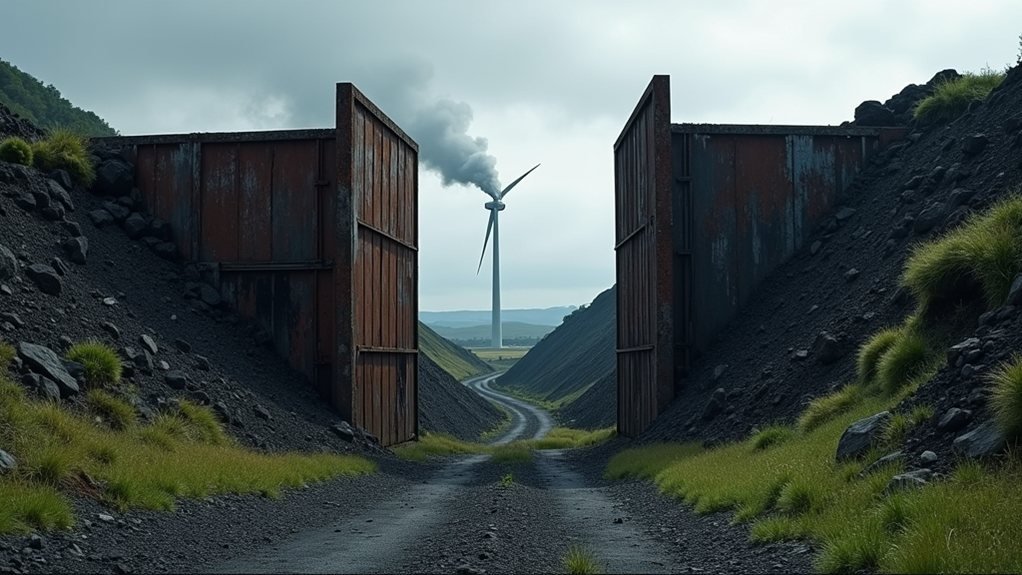

The recent High Court’s decision to block a new coal mine in Cumbria has thrown a wrench in the UK’s climate credibility. With methane emissions contributing to over a quarter of steelmaking’s carbon footprint, the ruling underscores the need for serious environmental assessments. It turns out, the government overlooked significant emissions tied to coal combustion. This misstep mirrors a larger struggle, hinting at a shifting tide in public sentiment toward cleaner energy solutions. Curious about what’s next for coal in Britain?
Quick Overview
- The High Court’s ruling against the new Cumbria coal mine revealed significant flaws in environmental assessments and emissions evaluations.
- Ignoring the greenhouse gas emissions from coal combustion undermines the UK’s credibility in climate leadership.
- The UK government’s commitment to restrict new coal licenses contrasts with the approval of fossil fuel projects, creating public skepticism.
- Public opinion increasingly favors sustainability, highlighting discrepancies in government actions versus climate pledges.
- The legacy of coal mining and the push for cleaner energy indicate challenges for the UK’s global climate leadership credibility.
Emissions Impact: Understanding the Coal Mine’s Climate Consequences
While it might seem counterintuitive to focus on the climate impact of coal mines in an era where the world is sprinting towards renewable energy, understanding these emissions is key to grasping the broader environmental picture.
Methane emissions from coal mining operations can be surprisingly significant, contributing 0.51% of the UK’s greenhouse gases in 2009. Even with impressive reductions over the years, abandoned mines still leak methane, creating a long-term climate burden. Transitioning to clean energy systems represents one of the most effective strategies for cutting emissions across economic sectors.
A new coking coal mine in Cumbria threatens to reverse hard-won progress, potentially releasing more emissions than all existing UK mines combined. The projected increase in UK emissions by 0.4Mt CO2e per year makes it a classic case of “out of the frying pan, into the fire.” This is particularly concerning given that methane emissions from coking coal mines contribute at least 27% to steelmaking’s climate footprint.
Why Did the High Court Quash the Coal Mine Plans?
The recent High Court ruling to quash the plans for a new coal mine in Cumbria has sent shockwaves through the UK’s environmental landscape, raising eyebrows and questions about the future of climate leadership. The court deemed the 2022 approval unlawful, citing significant greenhouse gas emissions from coal combustion—something the Secretary of State conveniently ignored. Additionally, the developer’s claim that Whitehaven coal would merely replace US coal lacked evidence. With the ruling spotlighting failures in environmental assessments, it’s clear: the High Court isn’t just a judge, but a climate-conscious referee in a game of sustainability. This ruling emphasizes the requirement for comprehensive assessment of fossil fuel projects in planning processes. Furthermore, the judgment highlighted the overlooked scope 3 emissions from burning coal, underscoring the need for thorough climate impact evaluations. Proper measurement methods for greenhouse gas emissions across all three emission categories are essential for accurate environmental impact assessments in future development proposals.
What’s Next for Coal in the UK? Exploring Policy and Public Opinion
As the UK grapples with its coal mining legacy, the conversation around future policies and public sentiment is heating up like a kettle left on the stove too long.
With the government pledging to restrict new coal mine licenses and ambitious targets for carbon emission cuts, public opinion is swinging toward sustainability. The Coal Authority’s commitment to achieving net zero by 2030 emphasizes the urgency of transitioning to cleaner energy sources. Additionally, the UK Government’s ownership of coal reserves since nationalization in 1947 underscores the historical significance of this transition.
Five major political parties have united against new coal mining, reflecting a growing climate consciousness. The transition to renewable technologies offers a sustainable path forward while creating new economic opportunities.
Yet, challenges remain, particularly in Wales, where coal policies lag behind.
As the nation eyes a coal-free future, the push for cleaner energy sources may well determine the UK’s role on the global climate stage.