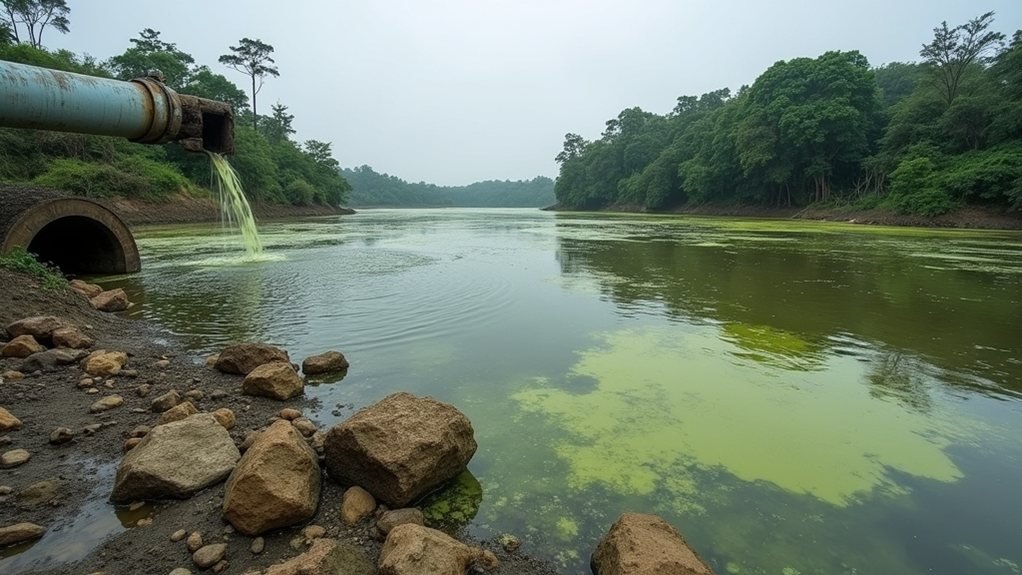

The UK water regulator is stepping up its game against sewage leakage scandals, emphasizing environmental health and accountability. New regulations include a single regulatory body overseeing water companies, which now face potential criminal charges for cover-ups. With £11 billion set aside for storm overflow improvements, these companies must adapt or sink. Rising water bills will hit consumers hard, especially the low-income households, but stronger oversight aims to strengthen public trust. Curious to see how it all plays out?
Quick Overview
- The UK has implemented new regulations to enhance accountability for water companies regarding sewage leakage and environmental protection.
- A dedicated regulator and Chief Engineer will oversee infrastructure checks to prevent sewage spills and improve water quality.
- Water companies face criminal liability for cover-ups, increasing their accountability in addressing sewage leakage issues.
- An £11 billion investment is allocated for storm overflow improvements as part of a broader £60 billion program by 2050.
- Regulatory changes aim to safeguard rivers and restore public trust while reducing the risk of waterborne diseases linked to sewage leaks.
How Sewage Leakage Affects Our Environment and Health
While it’s easy to overlook the consequences of sewage leakage—after all, out of sight often means out of mind—the reality is that these spills can have a profound impact on both the environment and public health.
When untreated sewage seeps into rivers and lakes, it transforms serene waters into toxic soup, breeding bacteria and viruses. Sewage spills can cause gastrointestinal stress in vulnerable populations, further exacerbating the health crisis. Well-maintained sewers are crucial for preventing such leaks and protecting our water sources.
Evaluating the environmental lifecycle of sewage management systems reveals how failures at any stage can lead to cascading ecological damage.
Imagine a fish struggling for oxygen in a polluted pond—it’s not just sad; it’s a health crisis waiting to happen.
A fish gasping for air in toxic waters symbolizes a looming public health emergency.
With millions falling ill from waterborne diseases, sewage spills remind us that neglecting infrastructure is no laughing matter.
It’s time to pay attention before it’s too late.
Key Features of New Water Regulations and Enforcement Measures
The recent overhaul of water regulations in the UK signifies a robust commitment to ensuring cleaner waterways and more accountable water companies—an essential step in the ongoing battle against sewage pollution.
Key features include a single regulator wielding sharper oversight, appointing a Chief Engineer for hands-on infrastructure checks, and implementing a ‘MOT’ approach for maintenance.
With £11 billion earmarked for storm overflow improvements, companies must now plan proactively. Notably, this is part of a broader £60 billion programme aimed at protecting rivers by 2050.
Significantly, executives face criminal liability for cover-ups, ensuring that accountability flows as smoothly as the water they manage. Dedicated supervisory teams are also established for each water company to enhance oversight and support compliance.
This regulatory refresh is a giant leap toward safeguarding rivers and customer trust alike. The regulations also promote water conservation techniques that residents can adopt to support sustainable water management during increasingly common drought periods.
Impacts on Water Companies and Consumers
A staggering shift in the UK water landscape is unfolding, presenting both challenges and opportunities for water companies and consumers alike.
With water bills projected to rise by 36% above inflation, consumers may soon feel the pinch, especially the poorest households. Meanwhile, water companies, burdened by £60.3 billion in debt and facing legal challenges, resemble “zombie” entities struggling to stay afloat. U.K. water companies facing lawsuits totaling £1.6 billion ($2 billion) only adds to their financial woes. The current situation is exacerbated by long-term underinvestment in infrastructure maintenance, further threatening the stability of these companies.
Water bills are set to soar by 36% above inflation, hitting vulnerable households the hardest.
Despite issuing £10.5 billion in green bonds, environmental performance has plummeted. This crisis highlights the need for water companies to adopt sustainable construction practices when rebuilding infrastructure to ensure long-term environmental viability. As regulators crack down, both sides must navigate a turbulent sea of costs and compliance, hoping for clearer waters ahead, or risk sinking deeper into the mire.