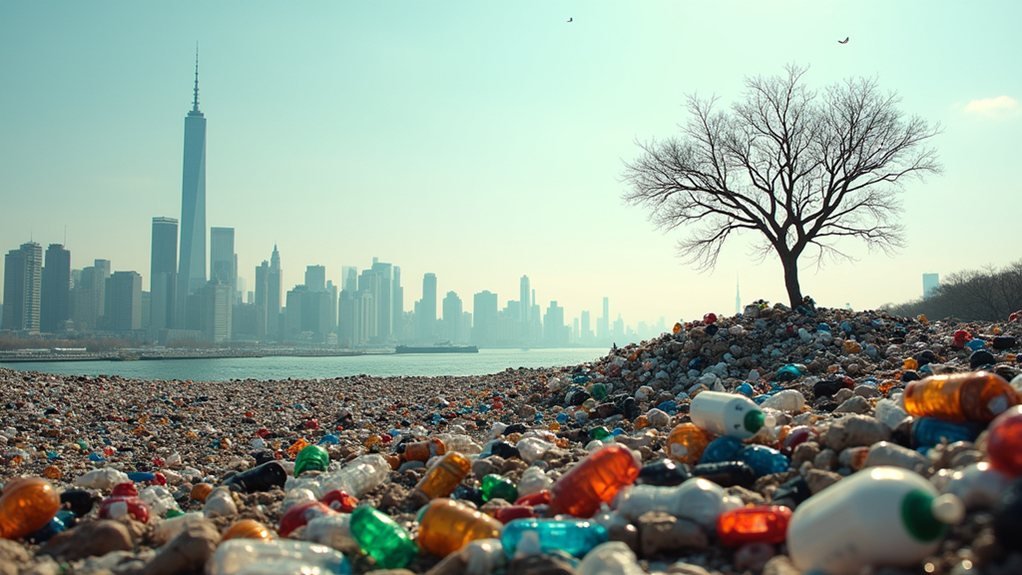

The UK is stuck in a “make, use, throw away” rut, with household waste rising to 25.9 million tonnes in 2023. That’s like a friend who keeps promising to clean up but never does. Surprisingly, 70% of food waste comes from homes, highlighting a serious disconnect between consumption and waste management. Recycling opportunities are plentiful, yet only 44.6% of household waste was recycled. As the country aims for a circular economy, the need for lifestyle changes becomes ever more pressing. Curious about what’s next?
Quick Overview
- The UK generated 191.2 million tonnes of waste in 2020, indicating a persistent wasteful culture despite a decrease from 2018 levels.
- Household waste rose to 25.9 million tonnes in 2023, reflecting ongoing “make, use, throw away” habits among consumers.
- Approximately 70% of food waste comes from households, highlighting a significant area for improvement in waste management practices.
- The UK’s household recycling rate is only 44.6%, with 80% of waste generated being potentially recyclable, revealing untapped opportunities.
- Current plastic recycling stands at just 9%, emphasizing the need for strategies that address waste at the source rather than relying solely on recycling.
Waste Generation Trends in the UK
As the UK navigates the intricate maze of waste management, one might think of waste generation trends like the ever-evolving plot of a riveting mystery novel—full of surprises and unexpected twists.
In 2020, the UK generated an estimated 191.2 million tonnes of waste, a significant drop from 2018’s 222.2 million tonnes. Construction, demolition, and excavation (CD&E) waste dominated, making up 61% of the total. Meanwhile, commercial and industrial waste contributed 21%, with households trailing at 14%. Adopting the waste hierarchy model would significantly reduce these numbers by prioritizing prevention over disposal.
However, by 2023, household waste crept up to 25.9 million tonnes, proving that the “make, use, throw away” culture remains pervasive. This increase coincides with the fact that the UK recycling rate for waste from households reached 44.6% in 2023. Furthermore, it is concerning to note that 70% of food waste comes from households, highlighting the pressing need for change in consumer habits.
Recycling Rates and Disposal Methods
How can the UK transform its waste disposal woes into a recycling renaissance?
With a household recycling rate hovering around 44.6%, the potential lies in the staggering 80% of waste that’s recyclable. Despite commendable efforts, such as an impressive 86.4% recycling rate for paper and cardboard, significant disparities persist—like London’s meager 32.7%. Incineration, a trendy alternative, treated 8.4 million tonnes of waste in 2022, while landfills still gobbled up 14 million tonnes. Notably, 40% of all landfill waste is paper, highlighting the urgency for better recycling practices. The challenge remains: turning those waste mountains into recycling foothills, one bottle, can, and container at a time—because every little bit helps, right? To achieve this, the UK needs to focus on improving plastic recycling rates, as currently only 9% of all plastic ever produced has been recycled. Addressing environmental consequences of plastic pollution requires comprehensive solutions beyond recycling, including reduction at source and improved waste management infrastructure.
Policy Efforts and the Push for a Circular Economy
A remarkable transformation is underway in the UK as it embraces the concept of a circular economy—a clever strategy that aims to keep resources in use for as long as possible, much like a beloved pair of jeans that just won’t wear out. With the forthcoming England Circular Economy Strategy, priority sectors like agrifood and textiles are set to see real change. Extended Producer Responsibility and a Deposit Return Scheme are key tools driving this shift. This approach fundamentally focuses on product redesign to eliminate waste rather than just managing it after creation. Additionally, updates on government procurement standards are being made to favor circular practices. As the UK tackles waste, a more sustainable future is becoming less of a dream and more of a plan. This approach not only addresses waste but also supports economic resilience amid supply chain disruptions.