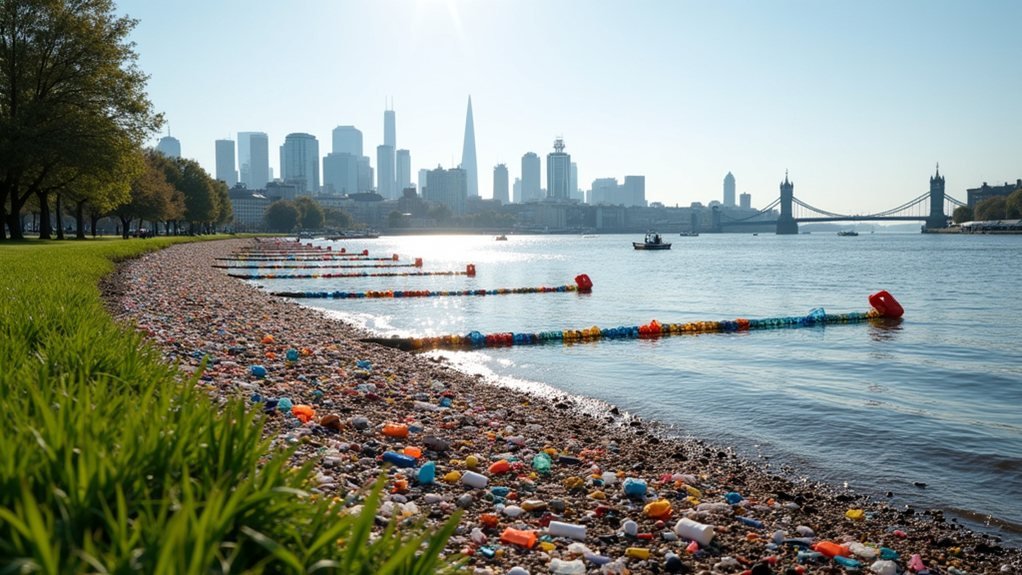

London is stepping up its game in marine conservation, especially against the tidal wave of plastic pollution hitting UK coasts. With 5,000 pieces of debris per mile and a concerning 9.5% rise in pollution, community efforts like the Great British Beach Clean rally thousands to tackle this mess. Policies such as the Global Plastics Treaty aim to address the issue, yet progress is a slow burn. Stay tuned for more about these vital initiatives.
Quick Overview
- London-based initiatives lead thousands of volunteers in the Great British Beach Clean to combat increasing plastic pollution along UK coasts.
- Marine Conservation Society’s Sea Champions organize beach cleans and community outreach to raise awareness about ocean plastic issues.
- Citizen scientists actively monitor rivers, identifying pollution sources to enhance local conservation efforts and engagement.
- Policy measures, including the Global Plastics Treaty, aim to reduce single-use plastics and hold manufacturers accountable for their waste.
- Innovative waste reduction strategies are being implemented alongside cleanup efforts to address plastic pollution at its source effectively.
Scale and Impact of Plastic Pollution in UK Coastal Waters
Imagine this: the UK coastline, a beautiful stretch of land where the sea kisses the shore, is currently home to a staggering amount of plastic pollution—think 60% more than what you’d find inland.
With around 5,000 pieces of marine debris per mile, it’s like a beach party gone wrong, featuring over 150 plastic bottles per mile.
And the situation is worsening, with plastic pollution spiking by 9.5% recently. Over 100 million marine animals die annually from pollution impacts shows alarming levels that threaten marine life, creating a serious ecological hangover for our coastal ecosystems. Microplastics are even more insidious, contaminating waters with concentrations up to 100 times higher than before. Recent data on microplastics shows alarming levels that threaten marine life, creating a serious ecological hangover for our coastal ecosystems. These tiny plastic particles, often invisible to the naked eye, are now entering food chain systems and potentially affecting human health through seafood consumption.
Community Engagement and Volunteer Initiatives
As plastic pollution continues to plague the UK’s picturesque coastlines, communities are stepping up to tackle the challenge head-on.
Initiatives like the Great British Beach Clean rally thousands of volunteers each year, transforming litter into essential data that informs marine policy.
Local groups, such as the Marine Conservation Society’s Sea Champions, empower residents to lead beach cleans and educational outreach.
Meanwhile, citizen scientists monitor rivers, mapping pollution sources that eventually taint coastal waters.
With partnerships sprouting like seaweed, these efforts highlight a shared mission: to restore and protect the beaches and waterways that define the UK’s natural beauty. Oceans are vital for carbon storage, temperature regulation, food source, and biodiversity, making these conservation efforts even more crucial for our ecosystem’s health.
Innovative waste reduction strategies are being implemented alongside cleanup efforts, addressing the problem at its source rather than just managing the symptoms of plastic pollution.
Policy and Technological Advances in Ocean Plastic Reduction
In a world increasingly aware of the perils posed by plastic pollution, the UK is stepping up its game with a cocktail of innovative policies and tech-savvy solutions aimed at curbing ocean plastic. Initiatives like the Global Plastics Treaty and regional bans on single-use plastics are setting the stage for a cleaner marine environment. Alongside these, the Extended Producer Responsibility encourages manufacturers to take charge of their plastic waste. However, while these policies sound promising, implementation delays resemble a “to-do” list that never gets checked off. With a little more urgency, the UK could clean up its coastal act—one bottle at a time. Each year, approximately 11 million tonnes of plastic enter the ocean, highlighting the urgent need for effective action. The UKMS: Framework for achieving Good Environmental Status (GES) in UK seas emphasizes the importance of monitoring marine litter to track progress and drive improvements. These efforts complement broader sustainable fisheries approaches that recognize the interconnection between plastic pollution and overall ocean health.