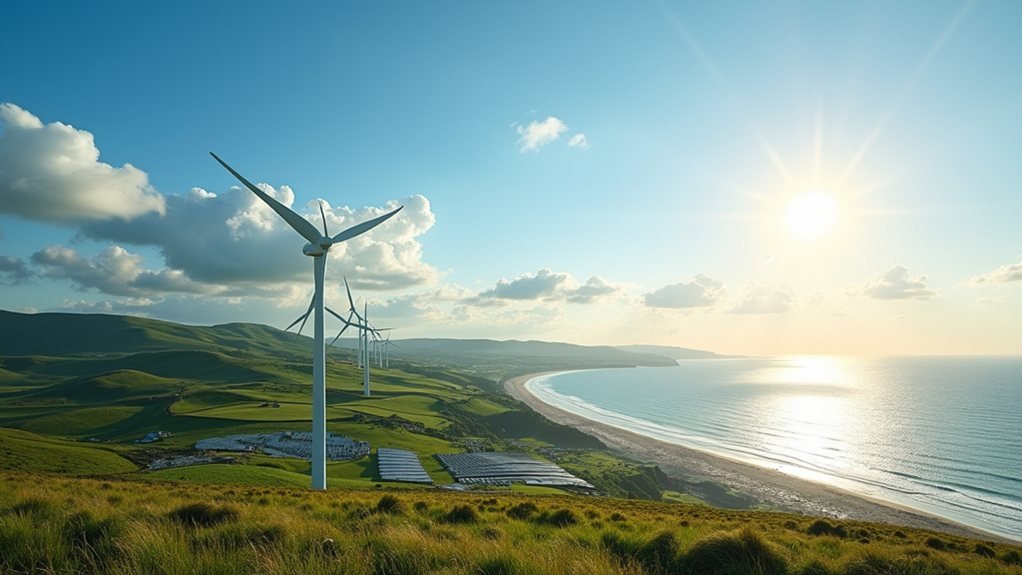

Wind power has officially overtaken fossil fuels in the UK, marking a pivotal moment in energy history. With renewables now generating over half of Britain’s electricity grid, wind energy leads the charge with impressive growth, supplying about 30% of the nation’s needs. It’s like wind turbines have pulled off a surprise victory, outpacing traditional energy sources. And as the UK aims for a greener future, exciting developments in renewables are just around the corner. Curious to learn more about this clean energy revolution?
Quick Overview
- In 2024, renewables accounted for 50.4% of the UK’s electricity generation, marking a significant shift away from fossil fuels.
- Wind power emerged as the leading renewable source, averaging around 30% of Great Britain’s electricity generation in 2023.
- The UK’s installed wind power capacity reached 32 GW, contributing significantly to the renewable energy mix.
- Low carbon sources, including wind, represented 64.7% of overall electricity generation in 2024, emphasizing their importance in reducing emissions.
- Investment plans aim to triple wind installations and upgrade grid infrastructure to enhance renewable integration by 2030.
The Rise of Renewable Energy in the UK
In a remarkable shift that feels almost like a plot twist in a thrilling novel, renewable energy has surged ahead in the UK, claiming a stunning 50.4% of the electricity generation pie by 2024, leaving fossil fuels trailing at 31.8%.
This leap is no small feat, as renewables generated 143.7 TWh in 2024, marking a significant increase from the previous year. The growth is driven by a booming installed capacity of 56.5 GW, with solar photovoltaics leading the charge. This transition represents a crucial step toward carbon emission reduction and a more sustainable energy future. Notably, wind power contributed 29.7% to the UK’s energy mix in the year to January 2025. Additionally, the dominance of low carbon sources in overall electricity generation reached a record high of 64.7% in 2024.
It seems the UK’s energy landscape is transforming faster than a magician’s disappearing act, with renewables taking center stage.
The Impact of Wind Power on the Electricity Mix
How much impact can a gust of wind really have on the electricity mix? Quite a lot, it turns out!
In 2023, wind power averaged around 30% of Great Britain’s electricity generation, making it the leading renewable source. On windy days, it frequently outshines gas, sometimes hitting over 60% of the grid mix. With a capacity of 32 GW split between onshore and offshore, the UK’s wind farms are now a major player, displacing fossil fuels and slashing carbon emissions. Renewable energy sources like wind offer significant environmental benefits through their carbon-free electricity generation and reduced air pollution. In fact, approximately 11,000 operational wind turbines across the country contribute significantly to this renewable energy landscape. Furthermore, the UK holds over one-third of Europe’s offshore wind resource, showcasing its potential for future expansion. However, like a moody teenager, wind can be unpredictable, requiring backup when it decides to take a break.
Future Prospects for Clean Energy Transition
What if the future of energy could be as bright as a sunny day in July?
The UK’s clean energy shift aims for net-zero greenhouse gas emissions by 2050. To meet this ambitious goal, renewable electricity capacity must more than double by 2030. Imagine tripling wind installations and quadrupling solar projects, all while upgrading grid infrastructure like a tech-savvy superhero! Advanced smart grid technologies are revolutionizing how renewable energy is integrated into existing power systems, ensuring reliability despite intermittent generation sources. While the race is on, new investments pour into renewables, promising to outshine fossil fuels. As gas shifts to backup roles, the UK’s energy future gleams, ready to harness nature’s gifts—making those overzealous Christmas lights look like child’s play! Zero-carbon delivery has reached 57% of electricity generation, indicating significant progress towards a sustainable energy landscape. With the target of 50GW offshore wind capacity by 2030, the UK is poised to lead in clean energy technology.