Zombie fires are sneaky beasts, lurking underground in British Columbia, and ready to reignite during the 2026 wildfire season. These fires, fueled by organic soil and peat, can smolder for months, hidden beneath snow or leaves. With climate change cranking up temperatures and drying grounds, their presence is more concerning than ever. Communities need to ramp up their wildfire preparedness to combat these hidden threats. Curious about how to bolster defenses against this fiery menace? Stick around—there’s more to explore!
Quick Overview
- Zombie fires in British Columbia can smolder underground for extended periods, posing a threat to communities in the upcoming 2026 wildfire season.
- Climate change, including rising temperatures and drought, contributes to the persistence of these hidden fires beneath the surface.
- Reignition of zombie fires is likely in spring 2026 due to dry conditions and gusty winds, complicating fire management efforts.
- The unique behavior of zombie fires necessitates improved detection and monitoring systems to mitigate risks effectively.
- Community preparedness, through programs like FireSmart BC, is crucial to reduce vulnerabilities to wildfires and zombie fire threats.
What You Need to Know About Zombie Fires and Their Dangers?
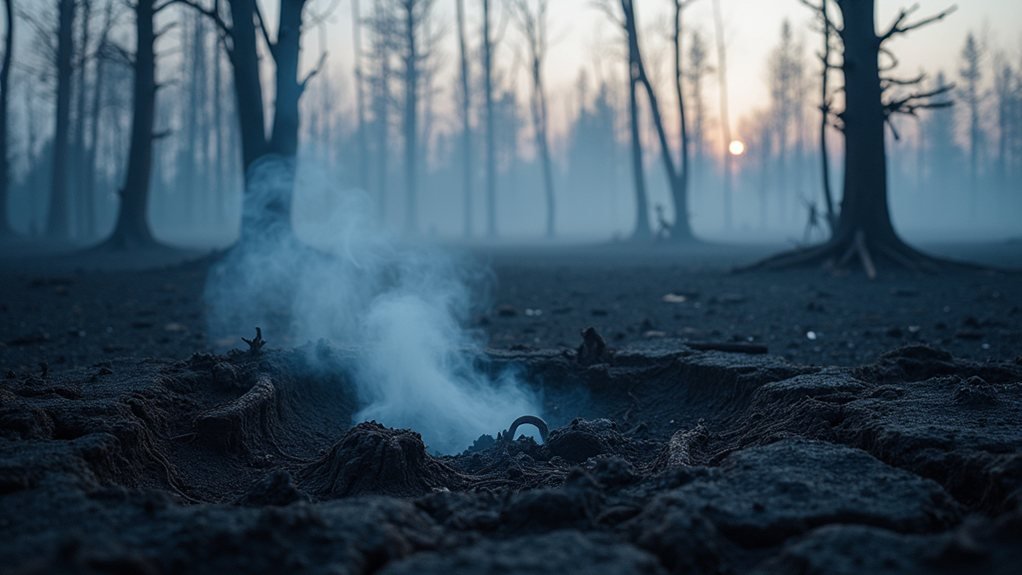
Have you ever wondered how a fire that seems completely extinguished can suddenly flare back to life? Known as zombie fires, these sneaky holdover fires smolder beneath the surface, feeding on organic soil and peat for days, weeks, or even months. They thrive in hidden spots, under snow or leaves, creating a low-temperature smoldering phase that’s hard to detect. When spring arrives, dry weather and gusty winds can reawaken these fiery ghosts, posing serious risks to nearby communities. Climate change contributes to the increasing frequency of these dangerous fires, making their potential impact even more severe. With over 100 active in British Columbia, the dangers are real—unexpected reignitions, respiratory issues from smoke, and economic losses loom large. The unique behavior of these zombie fires necessitates improved detection and monitoring systems to effectively manage their risks. Remote sensing and ground-based surveys are essential tools for early identification of subsurface smoldering.
How Climate Change Drives Zombie Fires in BC
Zombie fires may seem like a horror movie plot, but in British Columbia, they’re a very real threat, and climate change is playing a leading role in this unsettling storyline.
Rising temperatures and prolonged drought conditions create the perfect recipe for underground smoldering. As permafrost melts and organic soils dry, these fires persist deep beneath the surface, waiting for the right moment to reignite. As of September 2025, the wildfire season has already destroyed 834,545 hectares of land, highlighting the urgent need to address this issue. The phenomenon of zombie fires extends the fire season by burning for years, complicating fire management strategies and increasing risks for communities.
Frequent lightning strikes, fueled by extreme weather, spark these hidden threats. Meanwhile, the carbon emissions released contribute considerably to global warming, turning BC into an unwitting star of a climate change thriller that keeps on burning. The feedback between greenhouse gases and warming also accelerates these conditions, contributing to climate feedbacks.
How Communities Can Prepare for 2026 Wildfire Risks
As communities gear up for the 2026 wildfire season, a proactive approach can make all the difference between a safe summer and a smoky disaster.
Programs like FireSmart BC offer practical steps for homeowners to fortify their properties against wildfires, turning neighborhoods into fortress-like sanctuaries. Free home assessments help identify weaknesses—think of it as a health check-up for your house. Implementing fuel management practices in high-risk areas is also crucial for reducing overall wildfire intensity. In 2025, more than 1,350 wildfires burned across B.C., highlighting the urgent need for preparedness.
With over 100 recognized neighborhoods, collaboration is key. Budget investments and new technologies are on the horizon, promising smarter fire predictions. Communities can also adopt water conservation measures to ensure resilient water supplies for firefighting and long-term sustainability.
Join forces at the upcoming Wildfire Resiliency Summit and sprinkle in some humor—because laughter is the best firebreak!