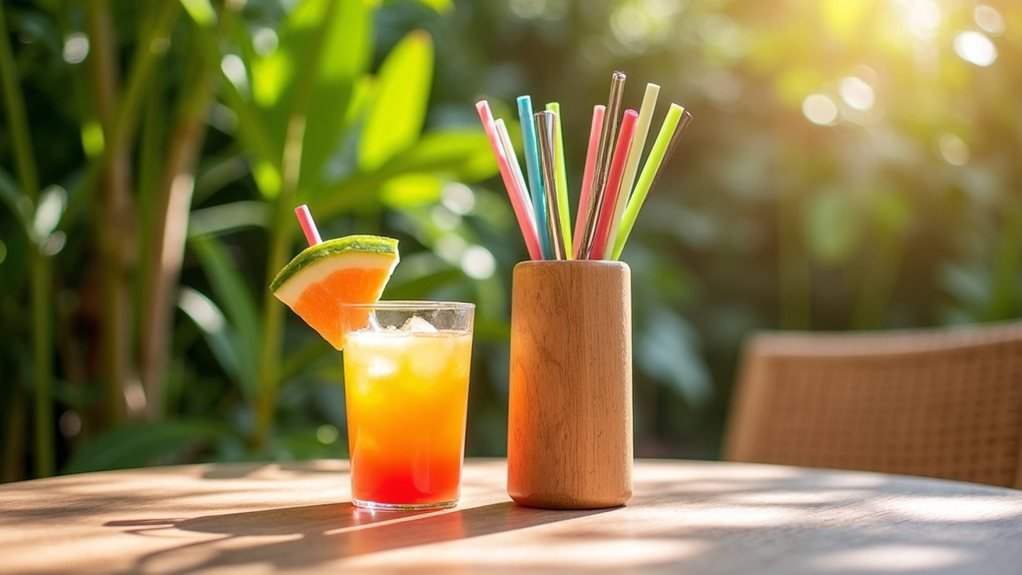

By 2026, fifteen U.S. states are joining the plastic straw ban revolution—think of it as a rally against the villains of plastic pollution. California and New Jersey are leading the charge, asking for straws only upon request, while Illinois and Massachusetts consider outright bans. It’s a bit like a game of dodgeball, and no one wants to be the last one holding a plastic straw. And for those curious about what to use instead, there are plenty of stylish, eco-friendly alternatives on the horizon!
Quick Overview
- By 2026, 19 states have enacted jurisdiction-wide bans on single-use plastic straws, with varying regulations across states.
- Political affiliations play a significant role in the adoption of plastic straw legislation, influencing local decisions.
- California and New Jersey require straws only upon request, promoting reduced plastic use in dining settings.
- Alternatives to plastic straws, such as metal, glass, and bamboo, are gaining popularity as sustainable options.
- Public concern over plastic pollution drives momentum for state-level bans, encouraging comprehensive regulations on single-use plastics.
Understanding Plastic Straw Bans Across the US and Their Impact
As the U.S. gears up for an anticipated wave of single-use plastic straw bans by 2026, one might wonder what’s really stirring beneath the surface of this seemingly simple issue.
With 19 states already enacting jurisdiction-wide bans on single-use plastics, straws have become a focal point. While cities lead the charge, 15 states have opted to retain local control, showcasing a patchwork of regulations. Political affiliations significantly influence the adoption of plastic legislation, highlighting the complexities surrounding these bans. In addition, organizations like Planet Aid are working to raise awareness about the impact of plastic waste and encourage more sustainable practices.
Meanwhile, economic forecasts suggest a decline in plastic straw demand. Yet, despite the fervor, straws only contribute a fraction of plastic pollution, reminding us that while bans are trendy, they may not solve the larger plastic crisis. The pursuit of environmental consequences linked to plastic pollution requires more comprehensive approaches beyond just targeting straws.
Upcoming Straw Regulations in 2026: A State-by-State Overview
The stage is set for a dramatic shift in the landscape of single-use plastic straw regulations across the United States by 2026. States like California and New Jersey have already taken the plunge, requiring straws only upon request. Meanwhile, Illinois and Massachusetts are joining the fray with proposed bans. Local cities, like Atlanta and Santa Fe, are also getting in on the action, opting for more sustainable practices. As public concern over single-use plastics continues to grow, the momentum is undeniable. While some states, like Indiana, remain on the sidelines, the momentum is undeniable. In fact, states that have implemented plastic bag bans have seen a push towards more comprehensive single-use plastic regulations. These regulations align with broader efforts to embrace sustainable living practices that reduce environmental impact while preparing businesses for upcoming international requirements.
What Are the Best Alternatives to Plastic Straws?
What if there were alternatives to plastic straws that not only save the planet but also add a touch of style to sipping?
Enter the world of eco-friendly straws! Metal straws are sturdy companions, endlessly reusable and perfect for portability. These straws encourage a reduction of single-use plastic dependency. Papaya leaf stems offer a natural and unique option, especially for tropical drinks, enhancing the sipping experience with a touch of nature.
Glass straws, with their elegant designs, make sipping a chic affair.
On a budget? Paper straws offer vibrant options and are compostable—though they do soften eventually.
Bamboo straws, handmade and chemical-free, bring a rustic charm.
Finally, colorful silicone straws are soft, kid-friendly, and emit fewer greenhouse gases. All these options contribute to biodegradable alternatives that align with sustainable packaging goals.
Sipping sustainably has never looked so good!