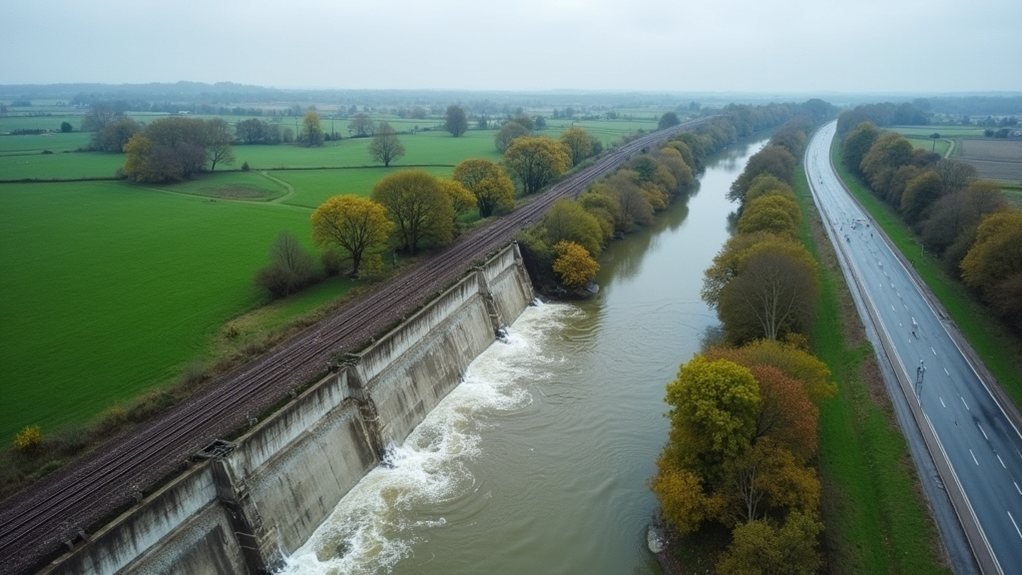

Climate change is shaking up UK infrastructure, causing potential evacuations as it faces rising sea levels, more floods, and extreme heat. Imagine this: 6.3 million homes could be flooded, while railways risk buckling in the heat. Droughts may even dry up water supplies faster than you can say “tap water.” The UK is planting a £10.5 billion flood defense umbrella, but there’s more to the story about fortifying communities against these wild weather antics. Stick around to find out how!
Quick Overview
- Climate change poses significant risks, with 6.3 million homes in the UK vulnerable to flooding and potential evacuations.
- Extreme weather events, like heatwaves and flooding, disrupt transport and utilities, leading to increased evacuation needs.
- The UK government has initiated a £10.5 billion flood defense program to mitigate evacuation risks from rising water levels.
- Infrastructure resilience measures focus on preparing for climate challenges, reducing the likelihood of mass evacuations during severe weather events.
- Public-private partnerships are essential for safeguarding communities and ensuring effective infrastructure planning against climate-induced evacuations.
How Climate Change Is Threatening UK Infrastructure
As climate change weaves its unpredictable tapestry, the UK finds itself grappling with a pressing reality: its infrastructure is increasingly under siege.
Flooding risk has surged, with 6.3 million homes now vulnerable, thanks to rising surface water levels and tidal surges. Meanwhile, summer temperatures could spike by 3-4°C by the 2080s, promising extreme heat that may cause rail tracks to buckle like overcooked spaghetti. Current weather variability adds another layer of complexity, already impacting UK infrastructure performance. The recent increase in sea temperatures only exacerbates the risk of flooding and coastal erosion, threatening critical infrastructure along the coastline.
Add in rising sea levels and windstorms, and the picture becomes dire. Adaptation measures such as waste reduction strategies and resilient planning can help reduce long-term pressures on infrastructure.
The UK’s infrastructure must adapt, or risk becoming a cautionary tale of what happens when nature decides to throw a tantrum.
How Floods, Heatwaves, and Drought Affect Transport and Utilities?
The impact of climate change on the UK’s infrastructure doesn’t stop at crumbling roads and warped railways; it extends to the very systems that keep the wheels of society turning—transport and utilities.
Flooding wreaks havoc, damaging bridges and railways while disrupting ports. Heatwaves cause rail buckling and limit operations at busy docks like London and Dover. With excess deaths from heatwaves on the rise, the strain on public services and infrastructure is becoming increasingly evident. Moreover, the increasing frequency of extreme weather events leads to more severe disruptions in transport and utilities.
Droughts crack the ground, deteriorating rail tracks and impairing water supplies for cooling power stations. Together, these elements create a perfect storm, straining the interconnected web of transport and utilities, leading to delays and outages that can leave communities in a lurch. There is also growing emphasis on water conservation and sustainable management to reduce risks to these critical systems.
Effective Strategies for Adapting Infrastructure to Climate Risks
While adapting infrastructure to climate risks might sound as thrilling as watching paint dry, it’s essential for safeguarding communities and ensuring smooth operations. The UK is rolling out strategies like the £10.5 billion flood defense program and the Third National Adaptation Programme, setting clear milestones to tackle climate challenges. Officials from multiple UK governmental departments are collaborating to ensure that local highway enhancements and resilient rail strategies are on the table, too. By fostering public-private partnerships and integrating adaptation objectives into business plans, the UK aims to future-proof its infrastructure. It’s like preparing for a rainy day—except with a £1 billion umbrella and a team of climate-savvy engineers ready to pivot! Notably, the conference hosted by Westminster Forum Projects will further explore these vital topics. The plans also emphasise strengthening critical assets and systems through infrastructure resilience measures to reduce disruption from extreme weather.