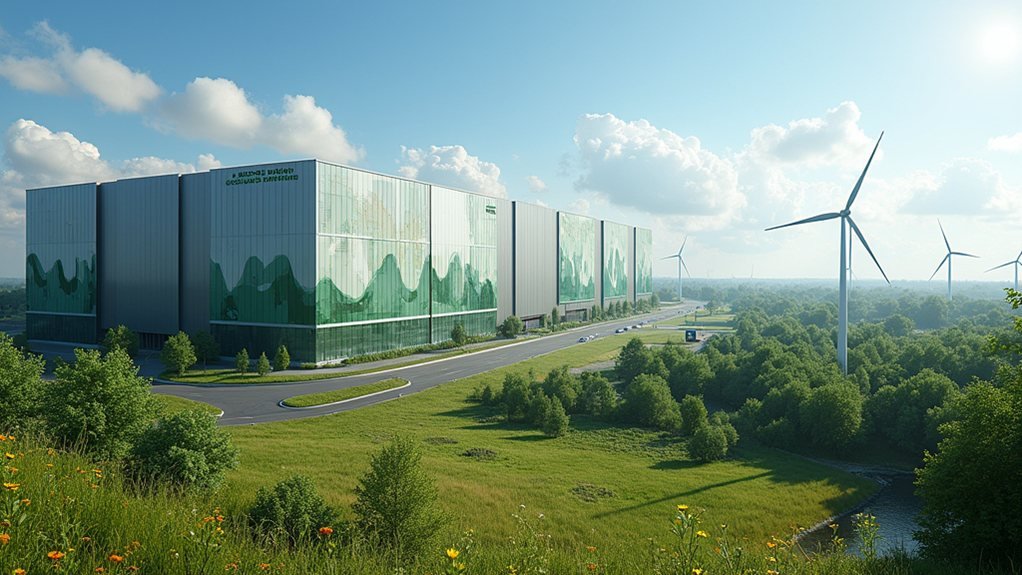

The UK is witnessing a showdown of titanic proportions with hyperscale data centres gobbling up more power than a teenager’s phone at a concert. Communities are raising eyebrows and banners, concerned about the eco-crunch and local land squeeze. As these energy behemoths snarl at climate goals, protests bloom like daisies in spring, with green campaigns catching fire. With humor, strategy, and a pinch of fervor, activists push for sustainable solutions while the plot thickens in this architectural drama.
Quick Overview
- Growing protests highlight the environmental risks of UK hyperscale data centres, focusing on emissions and excessive resource consumption.
- Campaigns advocate for sustainable data centre practices, demanding integration of renewable energy and low-impact technologies.
- Activists call for binding legal standards to enforce climate-friendly data centre operations and accountability.
- The expansion of data centres threatens valuable farmland and green belts, sparking community and environmentalist opposition.
- Public awareness initiatives aim to inform communities about the negative impacts of unchecked data centre growth.
How Hyperscale Data Centres Affect Our Communities
Picture a bustling town square, brimming with life and energy.
Now imagine that dynamic backdrop overshadowed by a sprawling hyperscale data centre, guzzling power like it’s going out of style. With enough energy to light up an entire town, these leviathans are eyeing UK soil. Over 140 such projects are poised to demand about 50GW of electricity. As hyperscale AI data centres grow, they pose a serious threat to the UK’s climate targets. In contrast to their impact, integrating trees with crops in sustainable land use systems can help mitigate environmental degradation and support biodiversity.
But that’s not all; they chug more water than your average elephant. Local resources strain under this demand, leaving communities anxious and farmers grumpy.
Data-centre-induced land grabs threaten cherished green belts. Residents are increasingly concerned about the proliferation of data centres and their impacts on community interests. It’s a delicate ballet, communities pirouetting under pressure.
Legal and Environmental Roadblocks for Data Centre Expansion
When it comes to expanding hyperscale data centres, the UK finds itself traversing a labyrinthine landscape of legal and environmental obstacles.
Energy use is a behemoth, mocking efforts to go green. Post-2028, the sun-settled Torness nuclear station will pull the plug on 1.12GW of base power, escalating power puzzles. As hyperscale centres require dual power feeds and backup generators for continuous operation, it exacerbates the strain on an already burdened grid. The government’s failure to enforce climate mitigation commitments in approving such projects underscores the pressing need for reform in regulatory practices and highlights the necessity for robust environmental assessments before advancing these large-scale operations. The increasing threat of climate change, evidenced by rising global temperatures and extreme weather events, amplifies the urgency for more sustainable practices within the data centre industry.
Ireland’s data centres guzzle 22% of its energy, ensuring the UK watches with both envy and apprehension.
Scottish planning sites, many unfittingly green, pose ecological queries.
Regulatory frameworks lack teeth, with calls for binding standards echoing like an unresolved chord.
Meanwhile, green belts and farmland face a structural tangle.
Effective Campaign Strategies to Drive Sustainable Solutions
How can one invigorate the colossal world of data centers towards a path of greenness without seeming like an overzealous eco-warrior waving a solar panel?
Begin with energy-efficient hardware and canny cooling systems that treat power like a coveted resource. Data centers now use more energy than some entire countries, highlighting the urgent need for sustainable practices. Backup diesel generators lead to the emissions of harmful pollutants, emphasizing the critical need for emissions compliance. Data centers need to go green or go home – Google-style, with solar integration marrying nature and tech like a digital Romeo and Juliet. Implementing passive design techniques can further drive energy savings by harnessing natural conditions to reduce reliance on active systems.
Imagine a place where fossil fuels are the embarrassing concert tee of the energy world. Policies and renewables should align like a great jazz duo, orchestrating efficiencies and mesmerizing stakeholders with the harmony of sustainable growth.