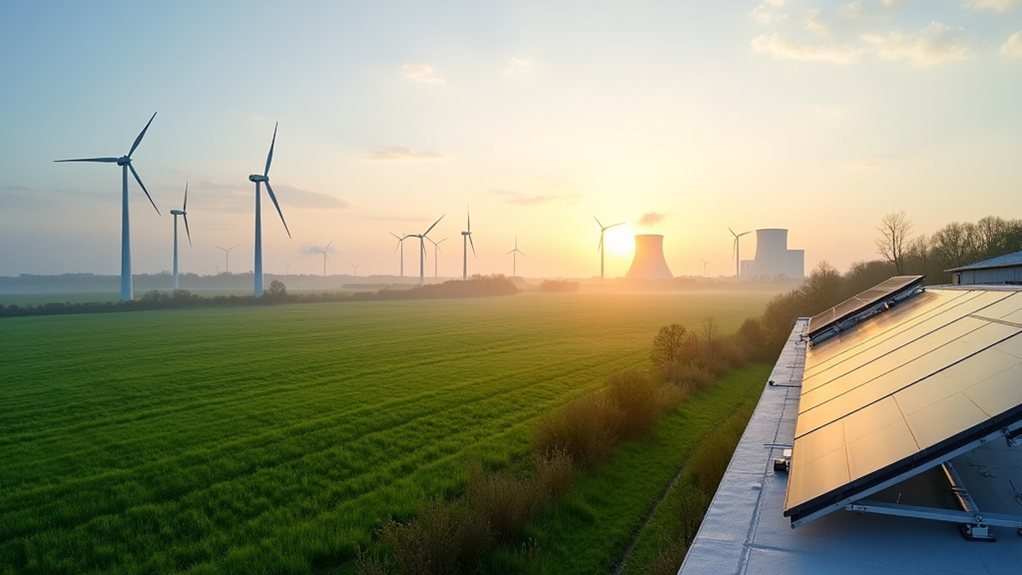

By March 2026, the UK is steadily moving toward energy independence, fueled by a dynamic blend of renewables and nuclear power. With renewable sources expected to supply nearly half of its electricity, innovations like battery storage are key. Meanwhile, nuclear energy is set to boost its contribution from 15% to 25%. This exciting shift not only enhances energy security but also curbs reliance on fossil fuels. Curious about what’s next in this green revolution? There’s more to discover!
Quick Overview
- UK aims for 47% electricity from renewables by 2025, enhancing energy independence and security.
- Nuclear energy is projected to increase from 15% to 25% by 2050, supporting clean energy goals.
- Climate strategies emphasize reducing fossil fuel dependency to meet national climate targets.
- Innovations in energy storage are crucial for grid stability, facilitating the integration of renewables and nuclear.
- John Kerry’s involvement may focus on international collaboration for energy independence and climate action in the UK.
How Renewables Are Shaping the Future of UK Energy
In recent years, the UK has seen astonishing developments in its energy landscape, with an impressive 47% of electricity coming from renewable sources in 2025—talk about a sunlight-soaked revolution!
Wind energy, the undisputed heavyweight champ, contributed nearly 30% to the mix, while solar power is shaking things up with a remarkable 18% growth spurt.
As grid stability concerns nudge innovations in battery storage, the UK is gearing up for an energy transformation—like upgrading from a bicycle to a turbo-charged electric scooter!
With ambitious capacity targets on the horizon, the renewables game is only just beginning.
Beyond wind and solar, hydro energy sources continue to play a vital role in diversifying the UK’s renewable energy portfolio.
Who’s ready for the ride?
Why UK Energy Independence Matters Now
Energy independence for the UK is no passing fad; it’s becoming a matter of national importance that resonates with challenges in energy security, economics, and climate goals.
As the UK is projected to import 15% of its energy by 2060, tapping into domestic resources is essential. With an untapped 456 billion cubic meters of gas in the UK Continental Shelf, it’s like having a hidden treasure chest.
Reducing reliance on fossil fuels to 25.7% of the energy mix is progress, but more is needed. Securing energy independence directly impacts job creation, lowering bills, and achieving ambitious climate targets.
The transition to renewable energy sources can further strengthen the UK’s energy autonomy while addressing environmental concerns.
How Nuclear Energy Supports UK’s Clean Energy Objectives
Nuclear power stands as a cornerstone of the UK’s ambition to achieve clean energy goals, like the sturdy foundation of a well-built house.
Currently, the UK generates 15% of its electricity from nuclear, with a modest goal of elevating this to 25% by 2050.
Key projects like Hinkley Point C and Sizewell C signal a commitment to revitalizing the aging reactor fleet, which averages 37.7 years.
New technologies like Small Modular Reactors (SMRs) promise to integrate seamlessly with renewables, making sure the energy mix is both robust and resilient.
Small modular reactors offer a flexible approach to nuclear deployment, with reduced construction times and the ability to replace retiring coal plants through innovative coal-to-nuclear conversion projects.
In the grand mix of energy sources, nuclear is the steady heartbeat.