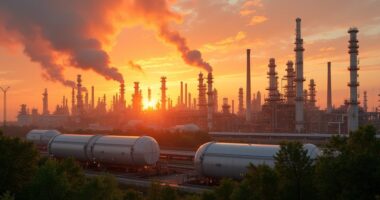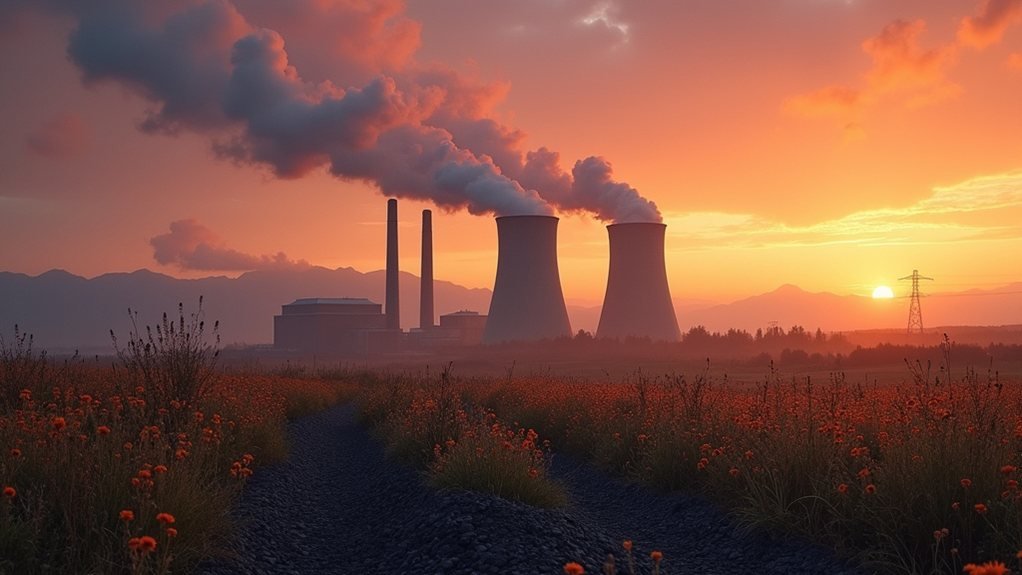

The Trump administration’s rollback of coal plant air pollution rules surprisingly revealed that most plants could already meet stricter standards with existing technology. Imagine imposing a diet on someone who’s already slim—pointless, right? Despite the sugar-coated claims of saving costs, the real cost is environmental and health risks, with mercury emissions posing the greatest threat. Many coal plants become as economically viable as VHS tapes compared to modern renewables. Stick around, more insights await.
Quick Overview
- The repeal of Trump’s coal rule increased emissions of harmful pollutants exempting plants from key standards.
- Many coal plants could comply with stricter regulations due to existing technology.
- Economic arguments favoring coal over renewables are weakening as solar and wind become more cost-effective.
- Health risks from increased emissions disproportionately affect vulnerable populations and public health.
- Strong emission regulations, when enforced, have historically reduced pollution effectively.
Impact of Trump’s Coal Rule Repeal on Emissions
How does the repeal of Trump’s Coal Rule crank up the volume on emissions, you ask? By dialing up pollutants like mercury and soot to concert-level decibels.
The 2024 Mercury and Air Toxics Standards (MATS) no longer reign over coal plants, now poised as the greatest domestic emitters of these nasties. They’re allowed to belch out toxins—mercury, arsenic, heavy metals—like an uninvited karaoke star. Monitoring equipment used to track pollutants gives insight into how these toxins impact air quality over time. The repeal of the Endangerment Finding weakens U.S. climate action, further complicating efforts to regulate emissions from industries like coal, and underlines the broader shift towards climate denial policies. This repeal, coupled with the broader deregulatory agenda that mandates eliminating regulations, puts forth an environment where emissions from coal plants are not just tolerated, but effectively encouraged.
While children and vulnerable populations face health risks, the dirtiest plants dodge cleanup. Plus, with mercury emissions potentially doubling, these coal plants are like rock stars of pollution, amplifying the air, water, and food chain disturbances.
Economic vs. Health Consequences of Policy Repeal
Balancing the tightrope walk between economic gain and public health can seem as tricky as juggling knives while riding a unicycle. The EPA claimed that rolling back mercury standards would save $78 million annually. They described these changes as a win-win, promising cheaper energy bills. In reality, many coal plants were already more expensive to run than to replace with renewables. The cost of solar and wind power has declined significantly, making coal plants less economically viable. Moreover, responsible forest management practices can maintain biodiversity while providing necessary resources, highlighting how industries can achieve sustainability without undermining health and environmental standards. However, on the flip side, the health consequences linger like an unwelcome guest. Without estimating health-related costs, the rollback removed vital protections, amplifying mercury emissions impacts. Meanwhile, utilities passed unexpected maintenance costs to ratepayers, countering the promise. It’s like rearranging deck chairs on the Titanic, hoping for a better outcome that never quite materializes.
Coal Plants’ Capacity for Stricter Standards
While balancing the scales between economic and health impacts is like trying to serve a multi-course meal at a circus, the conversation now shifts to coal plants and their capability to juggle stricter standards. During the U.S. government’s shutdown from Dec. 22, 2018, to Jan. 25, 2019, coal-fired power plants increased emissions due to the furlough of nearly 600 EPA pollution inspectors. U.S. coal plants, already armed with scrubbers, show they can improve with existing technology. Retrofit? They’ve got it down. Between 2004 and 2019, scrubber upgrades sliced SO2 by 90% and NOx by 75%. Imagine a gym rat flexing compliance muscles! Active enforcement proves key. In short, with proven technology and a global precedent, tighter U.S. standards appear less like a hurdle and more like an overdue chore. The understanding of greenhouse gas emissions categories helps in implementing efficient monitoring and reduction measures, adding another layer of strategy to emission controls. It’s noteworthy that regulatory initiatives like the Mercury and Air Toxics Rule have contributed significantly to reducing pollution, highlighting the effectiveness of strong emission regulations.