
Ontario’s Ring of Fire mining project has leaped regulatory hurdles with a smooth elegance, akin to a gymnast nailing a perfect landing thanks to the “One Project, One Process” model. While the government dances with delight, First Nations communities raise an eyebrow, concerned about environmental impacts and their sacred territories. It’s a bit like building a theme park in the neighbor’s backyard without asking first. Curious about the twists and turns of this saga? There’s more to the story.
Quick Overview
- The “One Project, One Process” model reduces approval times, aiding the Ring of Fire mine’s regulatory progress.
- Bill 5 facilitates expedited development by bypassing certain laws, causing contention with some First Nations.
- Indigenous groups demand involvement and respect for sovereignty and traditional territories affected by the project.
- Sustainable strategies are required to address environmental concerns, including biodiversity maintenance and peatland protection.
- Infrastructure investments aim to boost regional economics but must align with environmental and indigenous interests.
Ontario’s Ring of Fire: Rules and Rewards
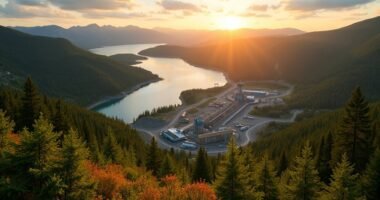
While Ontario’s Ring of Fire may sound like an exclusive club of volcano enthusiasts, it is actually the epicenter of Canada’s latest mining bonanza. The region’s regulatory framework resembles a streamlined express lane. Ontario’s “One Project, One Process” model shaves government review times by half by consolidating federal and provincial environmental assessments. This nimble approach pairs with Ontario Bill 5, granting the province extraordinary powers to bypass certain laws, all in the name of progress. Despite the streamlined processes, ongoing consultation with Indigenous groups underscores the importance of dialogue and transparency in addressing community concerns. With sustainable forest management, efforts are made to maintain biodiversity alongside the mining activities by implementing strategies that safeguard forest ecosystems. With over 15.7 million tonnes of high-grade nickel and mineral claims that seem more numerous than school yard rumors, the Ring promises a rich haul. Ontario has also implemented special economic zones to facilitate projects meeting rigorous standards in the region, further boosting its potential for success.
How First Nations View Mining Initiatives
Amidst the buzz of Ontario’s Ring of Fire—an area not inhabited by dormant volcanoes but by economic promise—significant attention hovers over the views of First Nations.
Like a Sherlock Holmes of socio-economics, the funding supports initiatives catalyzing indigenous engagement, fostering a sense of shared prosperity. Federal support, driving innovation and responsible resource development, ensures that mining projects align with sustainable practices and the interests of Indigenous communities. Ontario’s mining sector is notable for having 12% Indigenous workers, which is a significant step toward inclusive employment practices.
An important aspect of aligning mining operations with Sustainable Development Goals is measuring their contributions to community well-being. Yet, it resembles a game of Jenga: one wrong move, like the controversial Bill 5, might collapse trust, as it sidelines First Nations consultation.
Despite employing 12% Indigenous workers, some First Nations view mining as a sneaky guest overstaying its welcome, demanding Bill 5 be struck down to protect sovereignty and traditional lands.
Addressing Environmental and Infrastructure Challenges
Picture an orchestra of challenges tuning up in Ontario’s Ring of Fire. The sweet notes? Infrastructure promises. The sour undertones? Ecological woes.
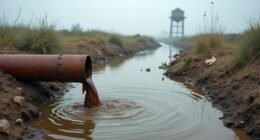
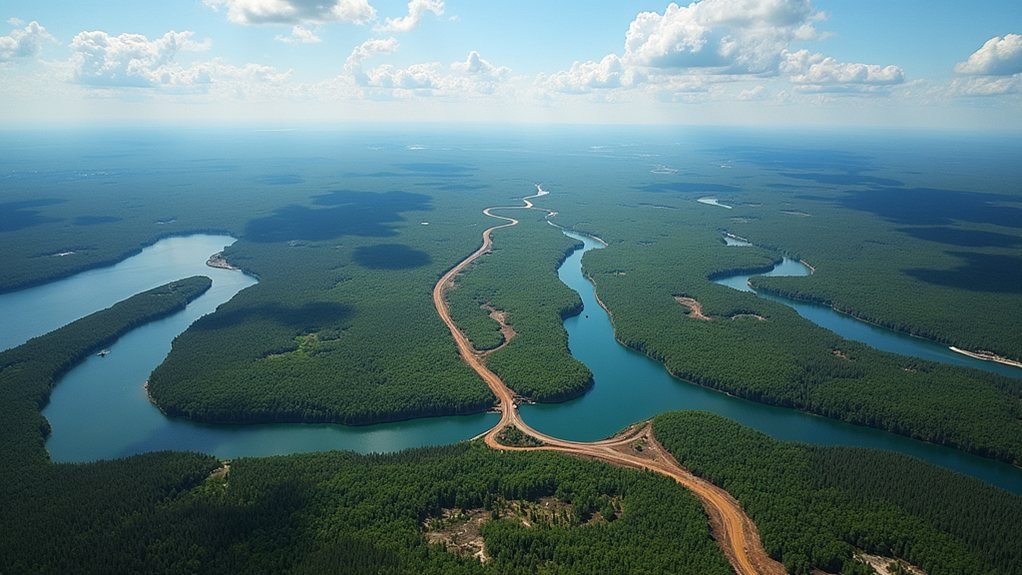
Peatlands, those carbon-crunching champions equivalent to billions of cars, risk flipping their powers, becoming climate villains if disturbed by development orchestration. Peatland disturbances pose threats to ecological integrity and hydrological functions, with major risks including habitat loss and increased carbon emissions. Located in far northern Ontario on Treaty 9 territory, these lands hold significant cultural and environmental value. Linear infrastructure, like a persistent pianist, could disrupt these peatlands, fragment habitats, and heighten wildfire risks, leaving woodland caribou and wolverines homeless. In addition to ecological benefits, it’s crucial to consider energy-efficient production methods for associated industries to mitigate environmental impact further.
While Ontario’s billion-dollar commitment crescendos to $2 billion investments, the melody remains offbeat with regulatory shortcuts. Still, clustering roads and culverts offers hope—it’s like nature-friendly earplugs for a noisy project.