
Quebec’s Plan Nord is like a grand energy buffet, serving up a feast of renewable power through hydroelectric and wind resources, all while keeping an eye on environmental sustainability. With a goal to generate more clean energy and safeguard 50% of its territory by 2035, it’s a bold move for the province. Hydroelectric projects provide 94% of the electricity, making Quebec a key player in Canada’s renewable scene. And that’s just the appetizer—more exciting developments await!
Quick Overview
- Quebec’s Plan Nord aims to position the province as a global leader in clean energy, focusing on renewable resources like hydro and wind power.
- Hydroelectric projects are the backbone of Quebec’s energy sector, generating 94% of the province’s electricity through 62 generating stations.
- The province plans to invest in wind power, increasing capacity from 4,072 MW to 7,736.5 MW by 2030, complementing hydroelectric resources.
- Mining operations in Quebec align with clean energy goals, ensuring sustainable practices while tapping into the province’s rich natural resources.
- By 2050, Quebec aims for carbon neutrality, relying on renewable sources like hydropower to significantly reduce greenhouse gas emissions.
Quebec’s Clean Energy Vision: Exploring Plan Nord
In the grand tapestry of Canada’s energy landscape, Quebec’s Plan Nord stands out like a beacon of hope, aiming to transform the province into a global leader in clean energy.
With 50% of its territory dedicated to environmental protection by 2035, Quebec is not just about numbers; it’s about nurturing nature.
Envision this: 3,500 megawatts of additional renewable energy, including wind power along Nunavik’s coast—like a rejuvenating breeze for the planet! This ambitious initiative also aligns with Quebec’s goal to be a leading producer of clean energy across the nation. Furthermore, the province boasts 3% of the world’s renewable freshwater, which will aid in sustaining its energy production.
Hydroelectric Projects: Quebec’s Backbone of Clean Energy
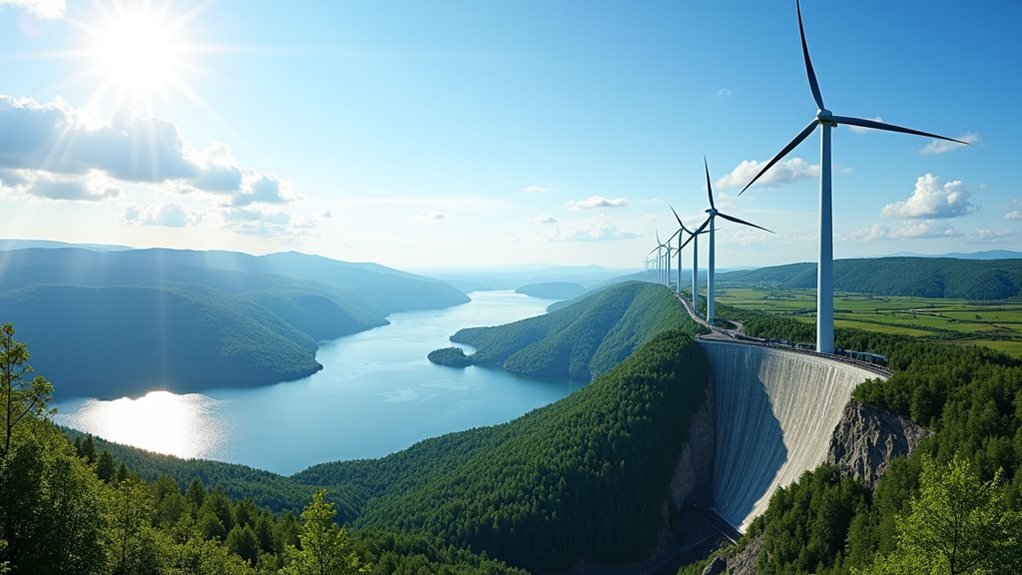
Quebec’s hydroelectric projects are certainly the lifeblood of its clean energy ambitions, pumping out an impressive 94% of the province’s electricity. With 62 generating stations and 37 gigawatts of installed capacity, hydropower is the heavyweight champion of Quebec’s energy scene. The Romaine complex, fresh off a 2023 completion, adds a staggering 1,550 MW. Meanwhile, modernization projects, like the $615 million overhaul of the Rapide-Blanc station, guarantee that Quebec’s energy future remains bright. In addition, Hydro-Quebec has invested approximately C$2 billion in 2023 to enhance the reliability and operability of its assets. These renewable resources provide environmental benefits through significantly reduced greenhouse gas emissions compared to fossil fuel alternatives. As the province aims for carbon neutrality by 2050, every drop of hydroelectric power becomes a vital player in the grand game of sustainable energy. To support this vision, Hydro-Québec has identified four initiatives to meet electricity demand challenges.
Innovations in Wind Power and Clean Energy Tech
While the winds of change are blowing through the energy sector, an exciting transformation is taking place in renewable energy technology, particularly in wind power.
Quebec is ramping up its wind capacity from 4,072 MW to a staggering 7,736.5 MW by 2030. With projects like the Manicouagan and Apuiat Wind Farms, the province is not just catching the wind but harnessing it efficiently. Furthermore, these developments are part of a larger trend where renewables are anticipated to constitute 73% of Canada’s electricity capacity by 2030. Hydro-Québec’s innovative strategies, including using hydro reservoirs as energy storage, guarantee that wind energy is not wasted. Advanced electrical grid technologies are enabling this seamless integration of variable renewable sources while maintaining system reliability. This blend of technology and nature is making wind power the star player in Canada’s renewable energy game, while increased efficiency targets ensure that the growing energy needs of the province are met sustainably.