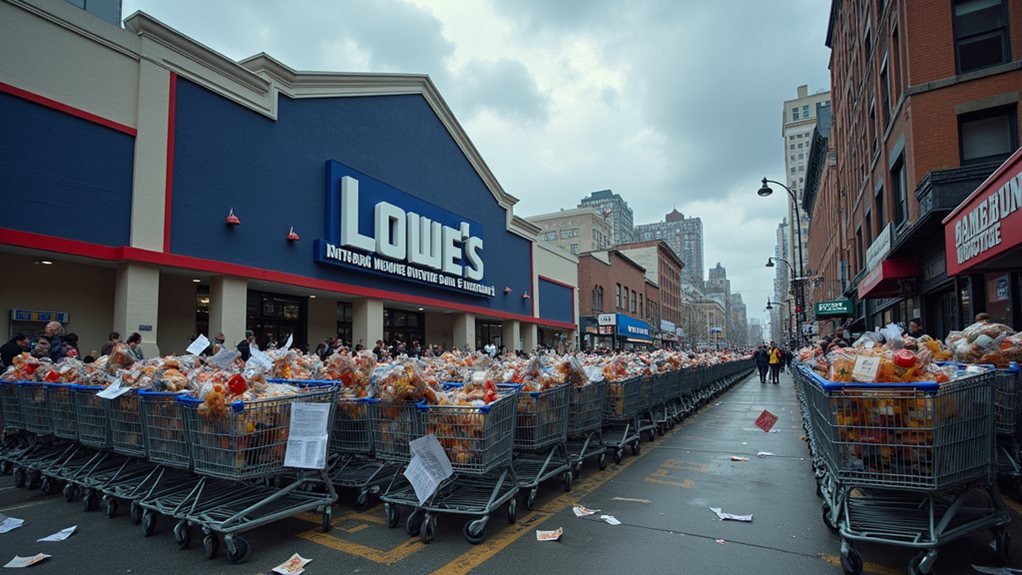

The NYC Comptroller is on a mission to remind Lowe’s that human rights assessments aren’t just for show—they’re essential for transparency and accountability. By calling for an audit of potential human rights risks, they’re spotlighting how such evaluations can protect workers and communities. This isn’t just corporate responsibility; it’s about maintaining a positive reputation in a world where surveillance and data privacy issues loom large. Curious about the implications? There’s more to uncover on this pressing topic.
Quick Overview
- The NYC Comptroller emphasizes the need for Lowe’s to evaluate human rights risks in its retail operations to ensure corporate responsibility.
- Transparency in Lowe’s operations is essential for addressing potential human rights impacts on workers and communities.
- The Comptroller’s demand aligns with broader social sustainability goals, informing corporate risk assessments effectively.
- Surveillance practices at Lowe’s raise concerns about customer rights and potential reputational damage, necessitating careful oversight.
- The NYC Comptroller promotes accountability and transparency, which can guide Lowe’s in aligning with sustainability reporting frameworks.
The Need for Human Rights Assessments at Lowe’s
While it may seem like a stretch to think about human rights when shopping for a new lawnmower at Lowe’s, the recent call from NYC Comptroller for a thorough human rights risk evaluation reveals that, much like the hidden layers of an onion, there’s more beneath the surface than meets the eye. Assessing impacts on workers and communities is a core part of social sustainability and should inform corporate risk evaluations.
The request, prompted by serious concerns over human rights commitments surveillance data practices, emphasizes the need for transparency. In particular, effective oversight of data sharing practices could prevent potential legal and reputational pitfalls.
The call for transparency highlights urgent concerns over surveillance data practices in retail environments.
By evaluating how data is collected and shared, Lowe’s can avoid potential legal and reputational pitfalls. This isn’t just about mowers; it’s about ensuring that every customer’s rights are respected, even in the parking lot.
What Are the Implications of Surveillance on Civil Rights?
As the digital age continues to reshape society, the implications of surveillance on civil rights emerge as a pressing concern that demands attention.
Surveillance can chill political participation, making individuals self-censor their thoughts like a bad writer erasing every line. It disrupts the ability to organize, weakening vital assembly rights essential for democracy. Additionally, marginalized communities face disproportionate targeting, often monitored under the guise of national security. This creates an environment of fear and distrust, eroding free speech and activism. Furthermore, surveillance and policing practices contribute to discrimination, particularly against communities of color, further deepening societal divides.
Fundamentally, surveillance transforms vibrant societies into shadowy domains where civil liberties shrink, leaving citizens wondering who’s watching and why. Governments and institutions must consider environmental justice when assessing how surveillance and other policies unevenly affect different communities.
How NYC Comptroller Promotes Transparency and Accountability
Steering through the intricate world of city governance, the NYC Comptroller stands as a beacon of transparency and accountability, wielding tools that shine a light on public operations much like a flashlight in a darkened room. From public dashboards tracking everything from homelessness to climate metrics, to the Capital Projects Tracker guaranteeing funds don’t vanish like socks in a dryer, the Comptroller enhances oversight. This commitment to transparency is further exemplified by the increased assets to $294 billion, saving taxpayers over $5 billion. Additionally, the Comptroller provides frequent updates through their mailing lists, ensuring that New Yorkers stay informed about major issues affecting the city. The office also helps organizations align reporting with major frameworks such as the Sustainability Reporting standards to improve comparability and accountability.