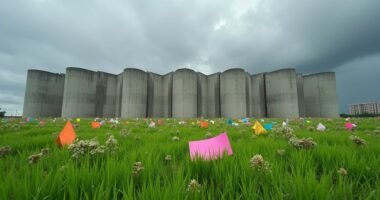

The New Brunswick City Council’s decision to squash plans for a massive AI data center is a revitalizing win for community sustainability. Local leaders and residents cheered as they opted for affordable housing and parks instead, all while sidestepping the looming environmental nightmare of data centers spewing CO2 like it’s going out of style. This shift towards community-centered projects aims to revitalize neighborhoods and promote well-being, hinting at a future shaped by local needs and environmental care. Curious about what’s next?
Quick Overview
- New Brunswick City Council halted the AI data center project, prioritizing community needs over industrial development.
- Residents celebrated the decision, focusing on environmental sustainability and local empowerment.
- Plans shifted toward affordable housing and community parks, including 600 new apartments.
- The community-oriented strategy aims to enhance living conditions and reduce environmental impacts.
- This decision reflects a commitment to sustainable practices and community development over industrial expansion.
How New Brunswick Stopped the AI Data Center Plans
In a dramatic showdown that could rival any big-screen blockbuster, the New Brunswick City Council decisively halted plans for a 27,000-square-foot AI data center, much to the delight of local residents. The council’s decision, announced by President Manuel Castaneda, sparked a wave of applause and chants of “No data center!” from the packed chambers. With hundreds in attendance, concerns over energy demands and land use from predominantly working-class communities resonated deeply. Bruce Morgan, president of the NAACP, captured the spirit, declaring that resources should uplift neighborhoods, not tech giants. Activists emphasized that high energy use and water consumption were critical issues linked to the AI data center. The site will now return to plans for affordable housing and community parks, while the area is targeted for the development of 600 new apartments. This shift aligns with efforts to build sustainable supply chains that endure climate and geopolitical shocks.
Environmental and Financial Risks of AI Data Centers
AI data centers are already projected to emit 2.5 billion tonnes of CO2 annually by 2030, roughly echoing the emissions of 40% of the U.S. today. Mitigating this trend requires policy and technology that reduces the carbon intensity of electricity supply. Pair that with their thirst for energy—176 terawatt-hours consumed in 2023 alone—and one has to wonder if they’re simply digital villains in disguise. AI growth’s carbon emissions are not only concerning but are also expected to increase significantly, posing greater challenges to climate goals. Additionally, the increased pollution levels contribute to severe health risks, particularly in vulnerable communities surrounding these facilities. Water usage spikes, especially in drought-stricken areas, and air pollution from diesel backup generators adds an unwanted twist. As carbon footprints balloon, the financial risks soar, keeping sustainability at bay while the data centers thrive.
Future Development Plans for New Brunswick: Focusing on Community Needs
The conversation around New Brunswick’s development is shifting from the dazzling yet intimidating haze of AI data centers to the tangible needs of local communities. New Brunswick’s shift towards green, community-centered growth echoes the principles of building sustainable and inclusive local communities sustainable development. With plans like the Union Street redevelopment transforming abandoned buildings into vibrant housing, and the Jersey-Sandford area poised for revival, residents are taking center stage. The local government has ambitious goals, aiming for affordable housing to exceed 25% of the stock by 2028. Community funding initiatives sweeten the deal, providing grants for non-profits and infrastructure upgrades that align with financial support available for festivals. Together, these efforts promise a future where parks flourish, and neighborhoods thrive, reflecting the heartbeats of their residents. The recent decision to block data center construction underscores a growing priority for sustainable development that emphasizes community well-being over industrial expansion.