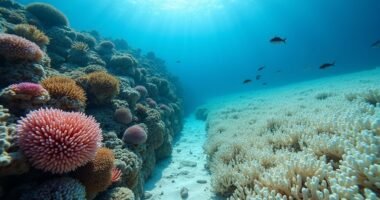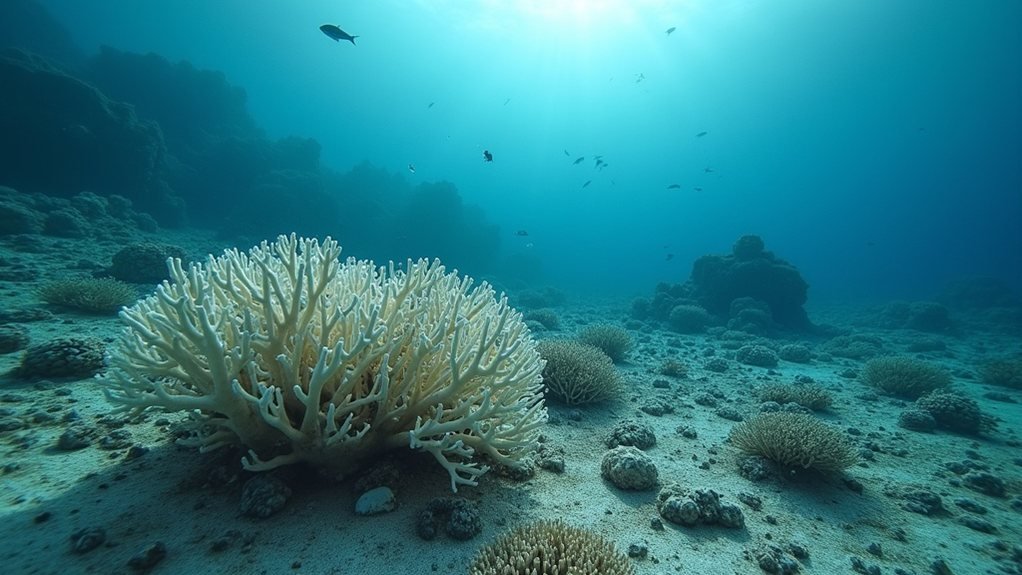

Scientists warn that by 2026, rapid climate change could trigger irreversible damage to coral reefs, which are like the underwater versions of bustling city centers. Over 70% of western Atlantic reefs may stop growing by 2040 due to rising temperatures and pollution. With coral loss impacting marine life, urgent conservation actions are necessary to protect these essential ecosystems. If you think that’s shocking, wait until you hear what needs to be done to avert this crisis.
Quick Overview
- Coral reefs are projected to stop growing by 2040 due to rising ocean temperatures and climate change impacts.
- Ocean acidification and increased coral bleaching threaten the structural integrity of coral reefs.
- Over 99% of reefs may cease growth by 2100 if global temperatures rise more than 2°C.
- Immediate action is crucial to protect high-integrity climate-resilient reefs and expand marine protected areas.
- Without intervention, coral ecosystems could face irreversible damage, leading to a loss of biodiversity and ecological collapse.
The Current State and Impact of Coral Reefs in Global Warming
As the climate warms, coral reefs find themselves in a precarious position, much like a tightrope walker facing increasingly fierce winds.
With over 70% of western Atlantic reefs projected to stop growing by 2040, the situation is dire. Rising ocean temperatures trigger coral bleaching, where stressed corals lose their vibrant colors, leaving them vulnerable to decline. Over 99% of reefs will stop growing by 2100 if warming exceeds 2C, further highlighting the urgency of the crisis. Climate change reduces overall reef growth through coral death and disease, compounding the threats these ecosystems face.
Over 70% of western Atlantic reefs may cease growth by 2040, as rising temperatures lead to coral bleaching and decline.
Coupled with ocean acidification, which weakens coral structures, and local stressors like pollution, these ecosystems are in a race against time. Conservation strategies that promote sustainable fisheries and reduce local pressures can help increase reef resilience.
If current trends continue, many reefs may face irreversible damage, transforming vibrant underwater cities into ghostly remains. The stakes have never been higher.
What Can Be Done Before 2026 to Save Coral Reefs?
A remarkable opportunity lies ahead for coral reefs, and the clock is ticking down to 2026. To save these vibrant ecosystems, global efforts must focus on identifying high-integrity climate-resilient reefs. Expanding marine protected areas can help secure these underwater treasures, while local policies can cut down pollution and destructive fishing. It is critical to recognize that coral reefs sustain over 25% of marine species, highlighting their ecological importance. Additionally, recent years have shown significant learning and progress in coral reef conservation, underscoring the potential for impactful change. Practical restoration methods, such as reef rehabilitation and species reintroduction, have been shown to rebuild ecological function in degraded systems and should be scaled up ecosystem rehabilitation.
Governments are urged to launch national action plans, aligning with sustainable development goals. Mobilizing international cooperation is essential, engaging communities and Indigenous peoples for equitable stewardship. Together, these strategies can create a resilient future for coral reefs, ensuring they don’t become mere memories in the ocean’s vast landscape.
Immediate Actions to Safeguard Coral Reefs From Climate Change
Coral reefs, often dubbed the rainforests of the ocean, are facing a ticking clock as climate change looms ever larger. Immediate actions are essential to safeguard these vibrant ecosystems. Developing a global map of high integrity climate-resilient reefs (HICOR) by 2030 will identify areas most likely to survive. Expanding marine protected areas (MPAs) and reducing local threats like pollution and overfishing are critical. It is vital to recognize that 25% of all marine life relies on coral reefs for habitat, underscoring the urgency of our conservation efforts. Restoration efforts, such as the Mission: Iconic Reefs initiative, aim to boost coral cover considerably. By engaging communities and implementing national coral action plans, we can champion these underwater jewels before it’s too late. Supporting sustainable ocean practices that balance economic growth with ecosystem health can strengthen long-term reef resilience.