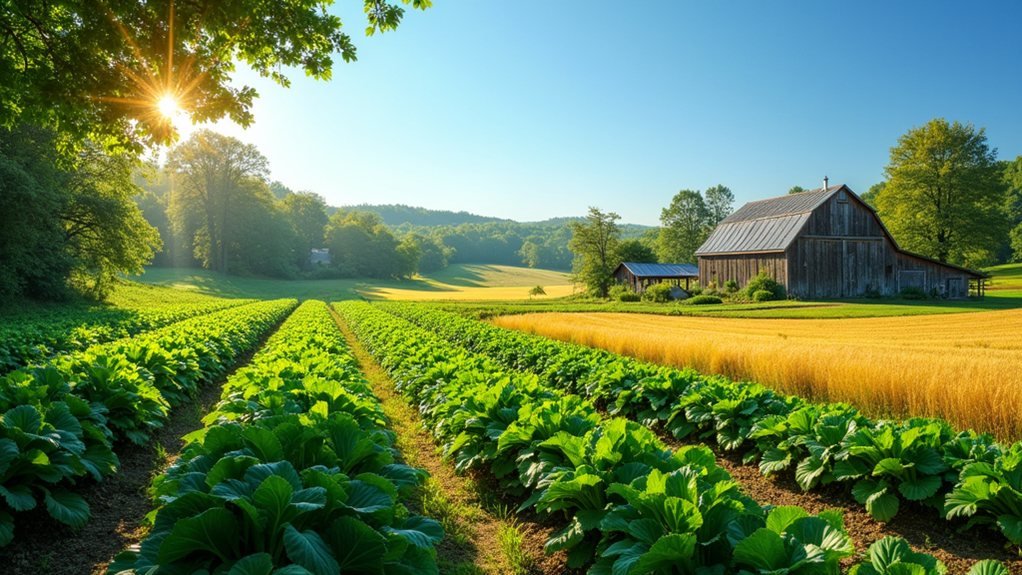

New inheritance tax reliefs are a game changer for family farms, essential for their sustainable future. With up to 100% relief on qualifying assets, these reforms tackle the asset-rich, cash-poor dilemma many farmers face. It’s like finding a golden ticket in a cereal box! As nearly half of U.S. farmland is set to change hands soon, effective succession planning becomes imperative. Spoiler alert: sustainable practices and smart planning are the keys to keeping these farms thriving for generations.
Quick Overview
- Enhanced Agricultural Property Relief (APR) and Business Property Relief (BPR) offer up to 100% relief, supporting family farms against inheritance tax pressures.
- Spousal transfer rules allow couples to pass assets valued up to £2 million at 100% relief, ensuring financial security for family farms.
- Sustainable practices and succession planning are vital for maintaining productivity and environmental goals in family farming operations.
- Resilient supply chains, supported by tax structures, enhance the long-term viability of family farms amidst climate-related disruptions.
- Effective succession planning and gradual management transitions help prepare future leaders, securing the sustainability of family farms for generations.
Enhanced Inheritance Tax Reliefs for Family Farms
As the world of agriculture evolves, so too does the landscape of inheritance tax reliefs designed specifically for family farms, ensuring that they can thrive rather than wither under financial burdens.
The introduction of Agricultural Property Relief (APR) and Business Property Relief (BPR) offers up to 100% relief on qualifying assets, considerably lightening the tax load. This is especially important as farmers often face inheritance tax pressures due to their asset-rich, cash-poor status. The reform is projected to impact farm estates valued over £5 million, further emphasizing the need for tailored reliefs.
The launch of Agricultural Property Relief (APR) and Business Property Relief (BPR) provides substantial tax relief, easing the financial burden on family farms.
For estates valued under £5 million, relief shines like a beacon, while larger estates bear a greater burden.
The new spousal transfer rules further sweeten the deal, allowing couples to pass up to £2 million at 100% relief, keeping family farms in the family and thriving. These tax structures help create resilient supply chains that can better withstand climate-related disruptions while maintaining sustainable agricultural practices.
Strategies for Sustainable Succession Planning
When it comes to the future of family farms, sustainable succession planning is more than just a smart idea—it’s a necessity. Establishing a formal plan 10–15 years before retirement can mean the difference between a smooth changeover and family feuds that rival soap operas. Clear goals help steer decisions like a GPS for the farm, while regular family meetings keep misunderstandings at bay—think of it as team-building, minus the trust falls. Long-term goals are essential for guiding the direction of the farm and ensuring everyone is on the same page. As nearly half of U.S. farmland is expected to change hands in the next 20 years, the urgency for effective planning becomes even more pronounced.
Incorporating food waste reduction strategies into succession plans can further strengthen environmental sustainability while improving farm economics. Gradual management shifts prepare successors, ensuring they’re ready for the big leagues. With these strategies, family farms can thrive, avoiding the pitfalls of chaos and confusion.
Aligning Agricultural Practices With Environmental Goals
Aligning agricultural practices with environmental goals is like finding the perfect recipe for a delicious dish: it requires the right ingredients, a dash of creativity, and a pinch of cooperation.
The agricultural sector, responsible for a staggering 26–34% of global greenhouse gas emissions, must adopt climate-smart practices to reduce its footprint. Techniques like the System of Rice Intensification (SRI) boost yields while slashing water use and methane emissions. Additionally, the livestock production sector is a major source of non-CO₂ GHGs, which underscores the need for improved livestock feeding practices. By embracing crop-specific environmental sustainability indices, farmers can better understand the impacts of their practices and make informed decisions toward improved sustainability.
Soil conservation techniques form the foundation of truly sustainable agriculture, ensuring nutrients remain available for future crop generations. By improving livestock feeding and embracing regenerative practices, farmers can cultivate healthier ecosystems and achieve sustainability.
Ultimately, this harmonious blend of productivity and eco-friendliness could be the game-changer for our planet’s future.