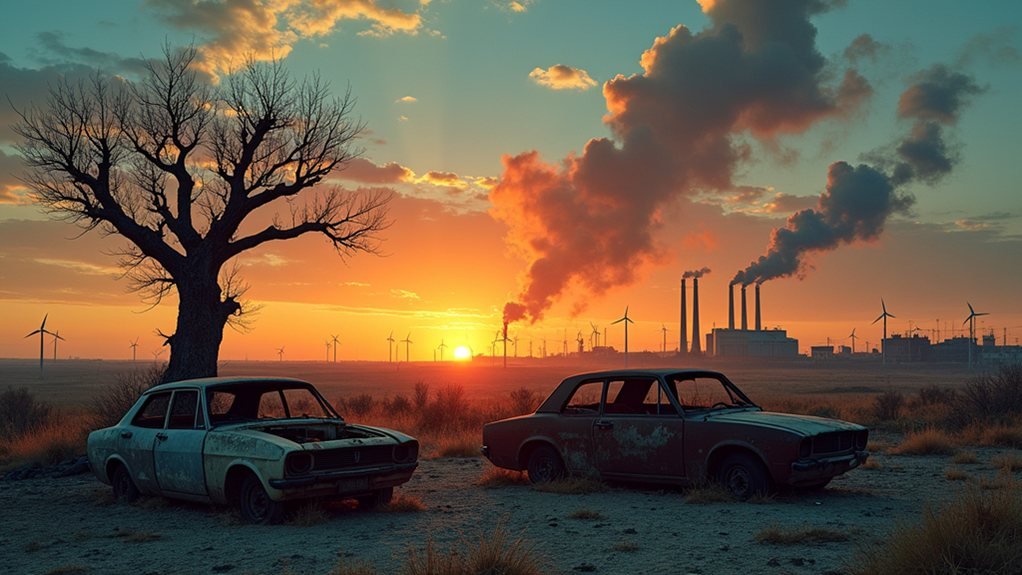

In 2026, the EPA shook things up by repealing the landmark Climate Endangerment Finding, leading to a legal showdown as epic as a blockbuster courtroom drama. This decision pulls the rug from under U.S. greenhouse gas regulation, bewildering industries and delighting some auto manufacturers, while states prepare their own rules like chefs concocting unique recipes. Investors, meanwhile, sit anxiously on the sidelines. It’s a saga filled with unexpected plot twists and turns, surely worth exploring further.
Quick Overview
- The EPA’s repeal of the Climate Endangerment Finding triggers extensive legal challenges from environmental groups.
- Revoking emissions standards impacts regulatory coherence and challenges pivotal landmark cases like *Massachusetts v. EPA*.
- States may establish their own emission standards leading to potential market fragmentation and regulatory divergence.
- Concerns arise over national climate change efforts due to diminished federal control over greenhouse gas emissions.
- Industries face uncertainty amid potential waves of state-level environmental policies and ongoing legal disputes.
Immediate Impact of the EPA Repeal on Greenhouse Gas Regulations
Think of the EPA repealing the Climate Endangerment Finding as the plot twist no one saw coming in the environmental saga. This decision sent ripples through the greenhouse gas regulatory world, revoking significant emissions standards. It’s like pulling the thread on a sweater—everything unravels. The rescindment affected light to heavy vehicles, once under the robust scrutiny of the Clean Air Act, now cruising without oversight. Methane rules fizzled, giving the oil and gas sector room to breathe… and emit. This shift in policy could hinder effective carbon emission reduction strategies across various sectors, challenging efforts to combat climate change. Despite strong bipartisan support for continued regulation, the repeal has led to uncertainty and potential challenges from environmental groups and attorneys general. This move has undermined investors’ confidence in long-term plans and projects, causing industry players to express concerns about potential regulatory chaos. With a wink and a nod, the justification shifted, redefining pollution as a local villain, sparking an air of uncertainty nationwide.
Legal Challenges Ahead: What to Expect
The EPA’s repeal of the Climate Endangerment Finding was like dropping a plot twist bombshell in the perennial saga of environmental policy. The final rule, signed by EPA Administrator Lee Zeldin on February 12, 2026, focuses primarily on legal strategy rather than scientific debate. The stage is now set for a high-stakes legal drama, featuring environmental groups and state attorneys general ready to battle the EPA’s surprise maneuver. They’re arguing the agency’s logic is more tangled than Grandma’s knitting stash—challenging the interpretation of greenhouse gases under landmark cases like *Massachusetts v. EPA*. With the repeal of all GHG emission standards, the stakes are high for regulatory coherence. To effectively navigate this legal landscape, understanding methodologies for evaluating environmental and social performance in the supply chain may provide insights. Expect this showdown to tango through the D.C. Circuit and possibly the Supreme Court. The suits want clarity; they question if EPA’s dance is on the wrong legal stage.
Effects on Auto Industry and State Policies
Imagine this: the auto industry finds itself at a crossroads as the EPA’s repeal of vehicle emissions standards jolts their GPS.
Without federal GHG standards, carmakers are popping the champagne, relieved from compliance costs. The repeal of the Endangerment Finding has significant implications for the nation’s ability to address climate change effectively. Resting on the foundations of the EPA’s reversed authority, previous emissions regulations crumble, leaving gaps that states are eager to fill. Advanced electrical grid technologies could play a vital role in enhancing efficiency and supporting the greater integration of renewable energy sources despite these regulatory gaps.
Picture a road trip with states at the wheel, each charting its own emissions course. The scene could resemble a quirky family reunion where rules of engagement vary from table to table.
States now flex their muscles, free to set stricter emissions rules, while auto manufacturers brace for possible market fragmentation.
It’s like swapping a unified playlist for a mixtape curated by an unpredictable cousin.