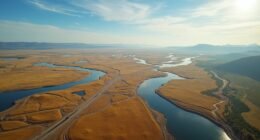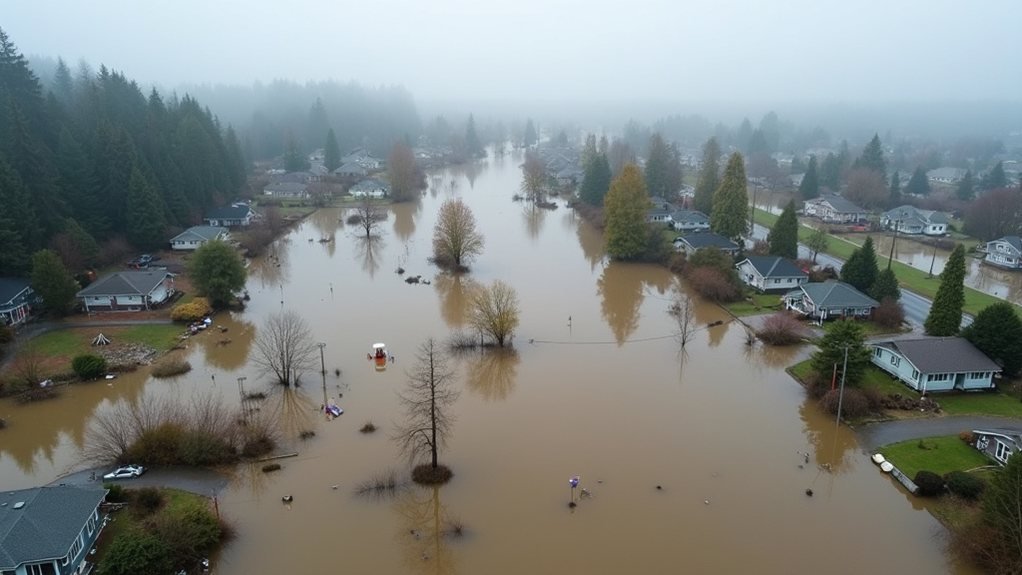

In a dramatic turn of events, Comox declared a state of emergency as torrential rain, rapid snowmelt, and swollen rivers merged into a flood of epic proportions. Picture the ground so saturated it could double as a sponge! First responders sprang into action, using inflatable boats to rescue stranded residents and pets alike. As the community banded together, clean-up efforts surged, highlighting the importance of teamwork. Want to know how they’re planning to tackle future floods? Stick around!
Quick Overview
- Comox declared a state of emergency due to excessive rainfall and rapid snowmelt, leading to overflow of local rivers.
- Environment Canada warned of up to 140 millimetres of rain, exacerbating already saturated ground conditions from a previous downpour.
- First responders coordinated evacuations and deployed inflatable boats for rescue operations as river levels rose dangerously.
- Community members actively participated in search and rescue efforts, demonstrating resilience and teamwork during the crisis.
- Recovery efforts included safety guidelines for evacuees and a focus on debris management to aid community rebuilding.
What Caused the Comox Flooding Crisis?
As Comox Valley residents braced themselves for the deluge, it became clear that a perfect storm of meteorological mischief was brewing. Environment Canada’s warning of up to 140 millimetres of rain in just 24 hours coincided with an earlier 200-millimetre downpour. Add in some unseasonably warm temperatures, and the snow decided it was time to melt en masse, boosting river levels like a soda bottle shaken too hard. Rivers, including Dove Creek and Tsolum, exceeded their banks, prompting evacuation orders. With a combination of heavy rainfall, rapid snowmelt, and high river flows, the declaration of a state of emergency showed Mother Nature’s unpredictable side—resulting in chaos. This was further exacerbated by the flood warning issued for Dove Creek as river levels rose significantly, highlighting the severity of the situation. Improved watershed management and floodplain restoration can reduce future flood severity.
How the Community Responded to the Flooding Crisis
The response from the Comox Valley community to the flooding crisis was nothing short of remarkable, showcasing the resilience and teamwork that defines the area. This cooperative spirit extended to efforts minimizing environmental harm by considering product lifecycles during cleanup and rebuilding.
When the state of emergency was declared, first responders and local agencies sprang into action, coordinating evacuations and deploying inflatable boats for rescue operations. As the evacuation orders were issued, residents were urged to heed safety directives, steering clear of fast-moving waters—think of it as nature’s way of saying, “Stay back!” Even as search and rescue operations intensified, community members remained vigilant, ensuring that safety protocols were followed.
As emergency personnel worked tirelessly, the community rallied together, proving that in times of crisis, unity shines brighter than any floodwater. Their teamwork not only saved lives but also strengthened community bonds.
Recovery Efforts and Future Preparedness for Flooding
While it’s easy to think of flooding as simply a rainy day gone awry, the recovery efforts in Comox Valley reveal a complex tapestry of community resilience and strategic planning. Community efforts also included initiatives promoting composting to reduce waste following the cleanup.
With floodwaters receding, officials coordinated a shift to recovery, providing evacuees with essential safety guidelines and clean-up resources. Homeowners received checklists and health service information, while debris management became a priority. In a remarkable effort, Comox Valley Search and Rescue rescued individuals and animals from the floodwaters, showcasing the community’s dedication to safety. As the region continues to recover, the state of local emergency emphasizes the need for ongoing vigilance and preparedness among residents.
Looking ahead, residents are urged to stay vigilant, especially as river levels can be unpredictable. The Emergency Operations Centre remains a hub for updates, ensuring that Comox is ready for whatever Mother Nature has in store next.