
The Columbia Environmental Intelligence Assessment warns that our planet is on a precarious path towards ecosystem collapse, with severe security risks looming large. Over 73% of wildlife populations have dwindled since 1970, impacting our food and water supplies. This decline in biodiversity isn’t just a nature documentary plot twist; it’s a recipe for global instability. Policymakers need to tackle these threats with urgency and savvy. Curious about what steps can be taken? There’s more to explore on this pressing topic!
Quick Overview
- Columbia’s Environmental Intelligence Assessment emphasizes the urgent need to address ecosystem collapse to mitigate catastrophic security risks.
- Declining biodiversity and resource scarcity can trigger geopolitical tensions, leading to instability and conflict between nations.
- Climate change exacerbates competition for essential resources, requires strategic approaches for effective management, and enhances policy roadmaps.
- Timely interventions based on informed decision-making are crucial to prevent the fallout from environmental shifts and ensure global stability.
- Integrating environmental issues into security frameworks can help nations collaboratively tackle the challenges posed by climate-induced crises.
Understanding Impending Ecosystem Collapse Risks and Their Global Impact
As the world grapples with the weighty challenge of environmental change, it’s almost as if our planet is sending a not-so-subtle RSVP to an impending ecosystem collapse.
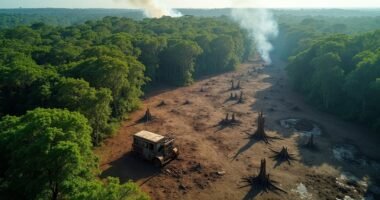
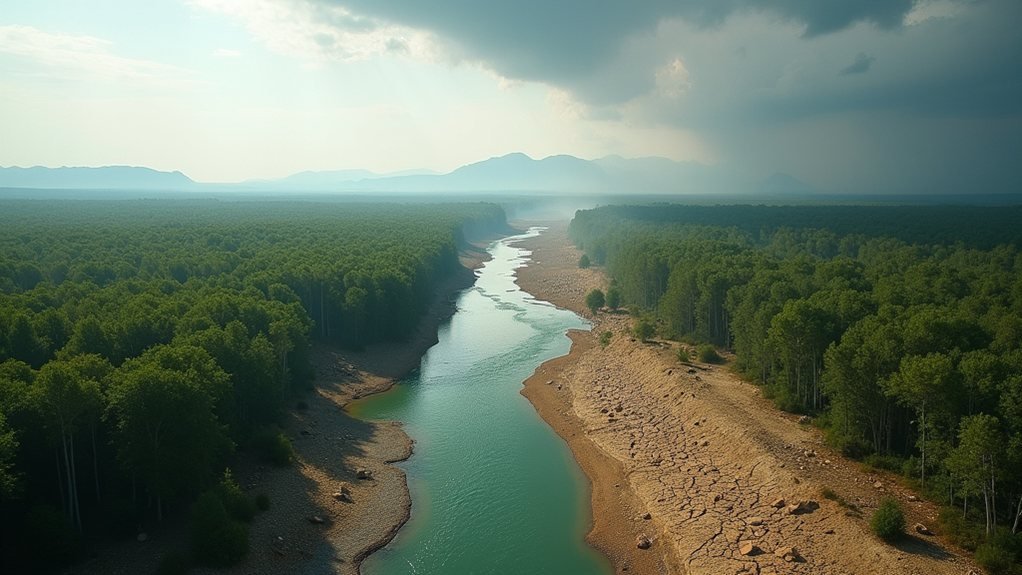
From rampant land use changes to pollution, our actions have pushed nature to the brink. Consider that over 73% of monitored wildlife populations have vanished since 1970. Forecasts indicate possible ecosystem collapse by 2030 or sooner, amplifying the urgency of the situation. The decline of key ecosystems, such as the Amazon rainforest, is likely to exacerbate food and water insecurity on a global scale.
With crop failures looming and biodiversity loss accelerating, we risk entering a new era of food and water insecurity. Policy makers should recognize that coastal and ocean health underpin food security, and invest in marine protection strategies.
As biodiversity dwindles and crop yields falter, we teeter on the edge of a food and water crisis.
It’s not just nature’s drama; it’s a global security thriller, where ecosystems unravel, economies tremble, and our very survival hangs in the balance.
How AI Can Help Us Tackle Climate Resilience and Security?
Picture a world where technology dances hand-in-hand with nature, weaving a safety net to catch vulnerabilities as they tumble from the precipice of climate chaos. This approach also supports tracking and reducing Scope 3 emissions across complex networks. AI enhances disaster preparedness with early-warning systems, predicting hazards before they strike, much like a weather-savvy friend. Its resource optimization capabilities fine-tune urban water usage and agriculture, ensuring resources don’t vanish faster than socks in a dryer. By evaluating vulnerabilities, AI maps out at-risk areas, enabling smart urban planning. In addition, AI plays a critical role in enhancing system-level resilience, which is essential for addressing climate adaptation and mitigation challenges. Earth observation technologies provide crucial real-time data, supporting informed decision-making and effective resource management.
Quick damage assessments via satellite imagery mean timely responses, making sure we’re not left in the lurch when disaster comes knocking.
Integrating Environmental Intelligence in Geopolitics to Enhance Decision-Making
Integrating environmental intelligence into geopolitics opens the door to smarter decision-making, a necessity in our rapidly changing world. This approach combines environmental science with geopolitical analysis, allowing nations to assess the impacts of resource scarcity and climate change. By interpreting multiple data sources—think treasure maps filled with insights—governments can navigate tensions over water, minerals, and land. This integration can be strengthened by incorporating forest management and other strategies into policy roadmaps. Additionally, scenario planning equips them to foresee the potential fallout of environmental shifts, giving a competitive edge. It’s like playing chess with climate conditions as your unpredictable opponent. Resource competition underscores the urgency of this strategic approach as nations vie for essential environmental resources. Moreover, recognizing the implications of carbon dioxide removal technologies illustrates the connections between environmental strategies and geopolitical realities. Ultimately, informed decisions can mean the difference between stability and chaos on the global stage.