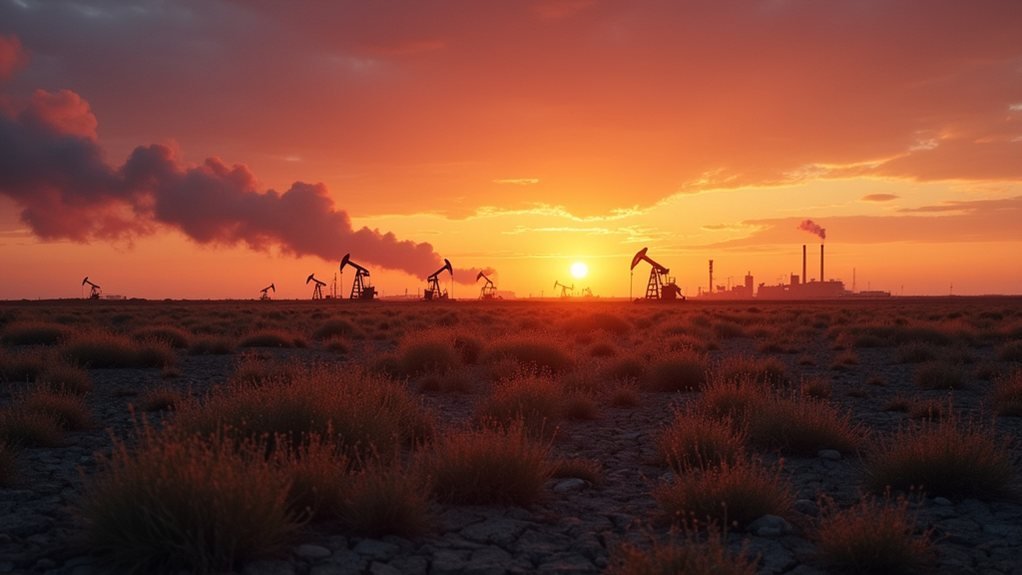

The Canadian oil lobby has shot down Alberta’s Memorandum of Understanding (MOU), labeling it an unrealistic juggling act of economic growth and emission commitments. They argue that the federal methane regulations feel like an unwanted homework assignment and prefer to dodge pollution reduction responsibilities amidst floundering U.S. regulations. Meanwhile, methane emissions are spiraling, compounding health risks like smog and respiratory issues. It’s a complex dance between profits and the planet, and the stakes couldn’t be higher. Curious about the ramifications?
Quick Overview
- The Canadian Association of Petroleum Producers (CAPP) rejected the Alberta MOU, citing unrealistic net-zero GHG commitments by 2050.
- CAPP expressed concerns over federal methane regulations and an industrial carbon tax affecting industry viability.
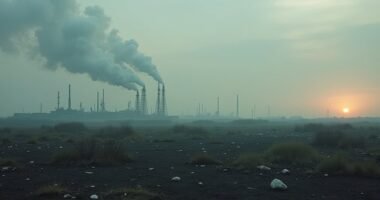
- Methane emissions from the oil sector are rising rapidly, leading to significant health and environmental risks.
- Delayed emissions cuts could exacerbate air quality issues and threaten biodiversity, increasing economic risks for the industry.
- Strong climate policies are essential for economic growth and resilience, contrary to CAPP’s stance on avoiding pollution reduction responsibilities.
Understanding the Oil Lobby’s Rejection of the Alberta MOU: Context and Consequences
While the agreement between Canada and Alberta aimed to position the province as a key player in the global energy landscape, the oil lobby, represented by the Canadian Association of Petroleum Producers (CAPP), wasn’t exactly on board with the plan.
This framing is typical of sectoral influence on climate policy climate policy influence.
CAPP rejected the MOU, voicing concerns over federal methane regulations and an industrial carbon tax. They expressed this by twisting Prime Minister Carney’s remarks, arguing Canada should ease climate ambitions. Both governments commit to net-zero GHG emissions by 2050, which CAPP deems unrealistic. With the US rolling back its regulations, CAPP preferred a path avoiding pollution reduction responsibilities. Ultimately, they deemed the MOU’s carbon commitments insufficient, prioritizing industry needs over environmental progress. The oil lobby’s stance comes even as methane emissions from this sector are rising the fastest.
Consequences of Delaying Methane Emission Cuts: Environmental and Economic Effects
As the world grapples with climate change, the consequences of delaying methane emission cuts become increasingly formidable, like putting off a dental visit until the toothache is roaring.
Methane’s warming potential—80 times that of CO2 over 20 years—means every postponed reduction worsens heatwaves and jeopardizes global temperature goals. Air quality suffers too, with smog and respiratory issues worsening as methane leaks persist. Additionally, ecosystems face biodiversity loss while economic risks mount, with delayed cuts translating into regulatory fines and lost investor confidence. In fact, Alberta has achieved a 52% reduction in methane emissions from the oil and gas sector since 2014.]
Postponing methane emission cuts exacerbates heatwaves and compromises air quality, leading to increased smog and respiratory problems.
In short, procrastination in emission cuts is a dangerous game, and Mother Nature is holding the scorecard.
Why Strong Climate Policies Matter in Today’s Global Economy
Strong climate policies are essential for maneuvering today’s global economy, much like a sturdy umbrella shielding a person from unpredictable rain. They reveal immense economic benefits, projecting up to $20 trillion annually by 2070. The clean energy sector, contributing over 10% to China’s GDP, exemplifies this growth. Shifting to low-carbon solutions not only reduces costs—think cheap solar power in Pakistan—but creates millions of jobs worldwide. Approximately 630 million jobs will be impacted by the low-carbon transition, emphasizing the need for proactive reskilling and upskilling programs. Stricter regulations can slash emissions impressively, showcasing that smart climate action isn’t just necessary; it’s an economic powerhouse. By embracing these policies, nations can thrive while tackling climate change head-on. The success of countries with stringent climate policies demonstrates that targeted measures yield faster reductions in emissions. Additionally, adopting net-zero standards can bolster resilience against economic shocks.