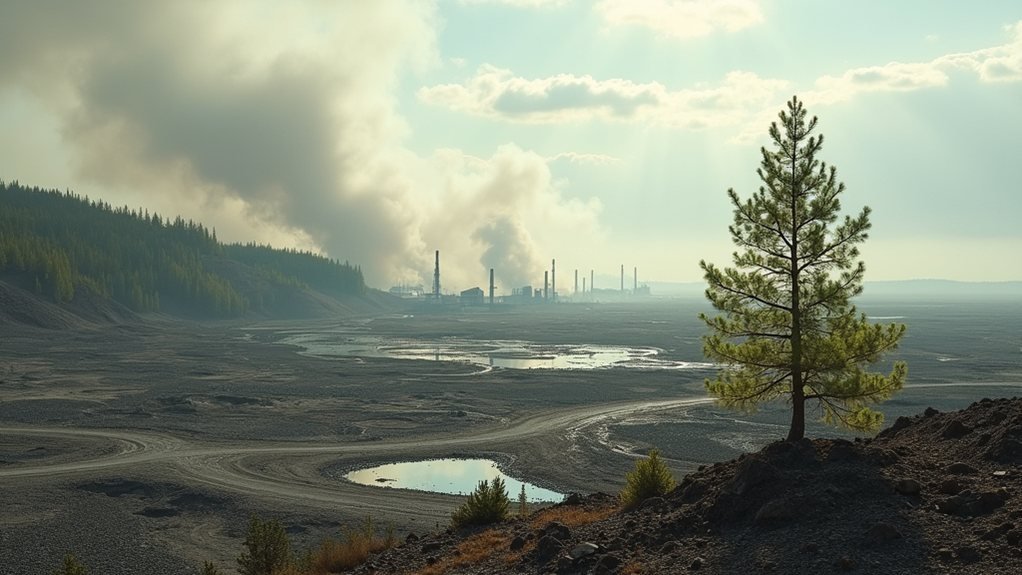

Canada’s decision to scrap the oil emissions cap has sent shockwaves through environmental circles. Critics argue this maneuver resembles a risky chess play, trading long-term climate health for immediate industrial profit. Without stronger carbon pricing or reliance on fancy tech like carbon capture, emissions may only dip 21% by 2030, well short of targets. As green groups raise alarms about democracy and policies favoring fossil fuels, the path ahead looks uncertain. What’s next for Canada’s climate strategy?
Quick Overview
- The scrapping of the oil emissions cap represents a significant shift in Canada’s climate strategy, prioritizing industrial carbon pricing and technology investments.
- Critics argue that this decision undermines long-term climate goals, anticipating only a 21% reduction in emissions by 2030, below target levels.
- Environmental organizations express concern over the lack of democratic input, particularly from Indigenous communities, in fast-tracking fossil fuel projects.
- The oil and gas sector is identified as Canada’s top polluter, raising alarms over potential setbacks in achieving meaningful climate progress.
- Advocates highlight the need for sustainable policies that balance economic competitiveness with environmental protections to ensure a resilient future.
Impact of Scrapping Oil Emissions Cap on Canada’s Climate Goals
While the decision to scrap the oil emissions cap might seem like a hasty retreat in Canada’s battle against climate change, it can actually be likened to an unconventional chess move that aims to reposition the country in a rapidly shifting landscape of environmental policy. This approach also relies on industrial carbon pricing to steer corporate behavior toward lower emissions.
By targeting a substantial reduction in emissions through new strategies like industrial carbon pricing and carbon capture and storage (CCS), Canada is betting on a different approach. The government’s reliance on CCS technologies is viewed as essential for the oil and gas sector’s compliance with future regulations. Additionally, the government’s plan to develop a post-2030 carbon pricing trajectory indicates a commitment to long-term climate strategies.
Even though critics express concerns, the government claims reaching net zero by 2050 remains feasible, painting a picture where strategic choices may decouple climate goals from previous commitments.
Environmental Organizations Critique Canada’s Energy Policy
As the dust settles on recent legislative maneuvers, environmental organizations are raising their voices in critique of Canada’s energy policy, expressing deep concern that it might lead the country further into an entanglement with fossil fuels rather than guiding it towards a sustainable energy future. Bill C-5, enabling fast-tracked fossil fuel projects, has sparked outrage over its lack of democratic input, especially from Indigenous communities. Critics, including Greenpeace Canada and Ecojustice, argue this undermines responsible decision-making, equating fossil fuel projects with “nation-building.” They advocate for genuine progress through renewable energy initiatives, not hasty decisions favoring corporate interests, particularly given the Bill C-5’s potential to bypass essential environmental assessments. Moreover, they highlight that the natural resources contribute nearly 20% of GDP and warn that failing to consider the long-term economic implications of fossil fuel dependency could jeopardize Canada’s investment and innovation in greener alternatives. A healthy biodiversity baseline supports long-term resilience of natural systems and the services they provide ecosystem services.
Future Implications for Canada’s Climate Goals and Strategy
If Canada’s ambitious climate goals were a high-stakes game of chess, it seems the players are fumbling their pieces just as the clock ticks down.
With emissions projected to fall only 21% by 2030—well short of the 40-45% target—confidence in Canada’s climate strategy is waning.
The cancellation of an oil emissions cap signals a shift to technology investments instead of strict mandates, leaving many worried about the future. Experts emphasize that the oil and gas sector has been identified as Canada’s highest-polluting industry, further complicating the outlook. The proposed total cuts of $1.3 billion in environmental spending could hinder critical climate initiatives.
Simply put, without decisive actions, Canada risks losing its grip on meaningful climate progress.
Ironically, the nation might end up outmaneuvered by its own policies, trading ambition for competitiveness. This shift underscores the imperative of climate risk management as a core component of resilient business strategy.