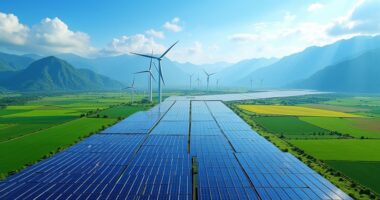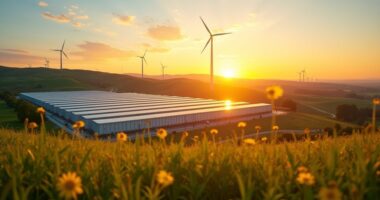
The recent surge in renewable power tax credits is revolutionizing AI data centers, turning them into green energy champs. With incentives like the Investment Tax Credit covering up to 70% of renewable setups, these tech hubs can power their servers with sunshine and batteries, slashing costs and carbon footprints. As data centers gear up to consume nearly half the world’s electricity demand by 2030, the shift to renewable energy isn’t just smart—it’s essential. Curious about what’s next? Stay tuned!
Quick Overview
- Renewable Power Tax Credits significantly reduce costs for AI data centers, enhancing their financial viability and sustainability efforts.
- The Investment Tax Credit (ITC) can cover up to 70% of renewable energy investments, incentivizing clean energy adoption.
- States like Illinois provide rebates for energy-saving measures, promoting sustainable practices among data centers.
- AI data centers are projected to consume 44% of data center energy by 2030, highlighting the urgency for renewable energy solutions.
- Innovative energy solutions and smart technologies are essential for managing increased energy demands and ensuring long-term sustainability.
How Do Renewable Power Tax Credits Help AI Data Centers?
How do renewable power tax credits play a pivotal role in the operation of AI data centers?
These credits are like a financial booster shot, helping data centers cut costs and reduce their carbon footprint. With the Investment Tax Credit (ITC) covering up to 70% of renewable energy investments, it’s a win-win. Imagine powering servers with solar and battery systems while slashing electricity bills—talk about a bright idea! Additionally, the rapid growth of data centers could lead to significant increases in electricity demand, making renewable energy solutions even more essential for sustainability. The adoption of renewable sources offers long-term sustainability benefits that extend beyond mere financial incentives. Furthermore, with data centers expected to account for over half of the increase in electricity demand by 2030, the urgency for renewable energy adoption becomes even clearer. Plus, as tax credits lower costs for energy suppliers, the savings trickle down to data centers. It’s a clever way to mix sustainability with savings, making green energy an enticing option for tech giants.
How Can AI Data Centers Leverage Renewable Energy Incentives?
AI data centers are on the brink of a renewable energy revolution, and the incentives available are the keys to unfastening their potential.
With federal tax credits restoring clean energy investments, these centers can harness renewable sources, dramatically cutting costs and emissions. The recent rollback of Biden-era tax credits may create new challenges, but innovative strategies can still unlock significant savings. States like Illinois offer enticing rebates, turning energy-saving measures into cash rewards.
Federal tax credits enable AI data centers to tap into renewable energy, slashing costs and emissions significantly.
Transitioning to sustainable technologies helps reduce the environmental footprint while ensuring long-term energy security for high-demand computing facilities.
By incorporating onsite storage and smart demand response strategies, data centers can effectively balance energy loads, dodging surges like a pro athlete avoiding tackles. Given that electric utilities forecast a need for 38 gigawatts of new power production by 2028, pairing renewables with innovative policies, AI data centers can not only thrive but also lead the charge toward a greener, more efficient future.
What Does the Future Hold for AI Data Centers?
What will the future look like for data centers that cater specifically to the burgeoning field of AI?
Picture a landscape where AI-specialized data centers sprout up like mushrooms after rain, fueled by a staggering $5.2 trillion investment.
As power-hungry AI servers gobble up 44% of total data center energy by 2030, cooling systems will need to become as smart as the AI they’re supporting. Data centers consuming approximately 3% of the world’s electricity will necessitate innovative energy solutions to mitigate environmental impacts. The demand for AI-related capacity is anticipated to require an additional 156 GW, highlighting the urgent need for robust infrastructure.
The shift from training to inference workloads will redefine infrastructure, transforming centralized clusters into nimble regional hubs.
With demand skyrocketing, these data centers may just become the powerhouses of the digital age—literally and figuratively!