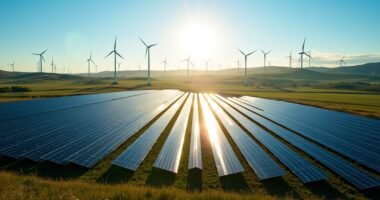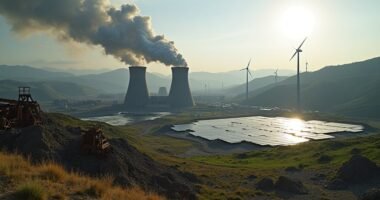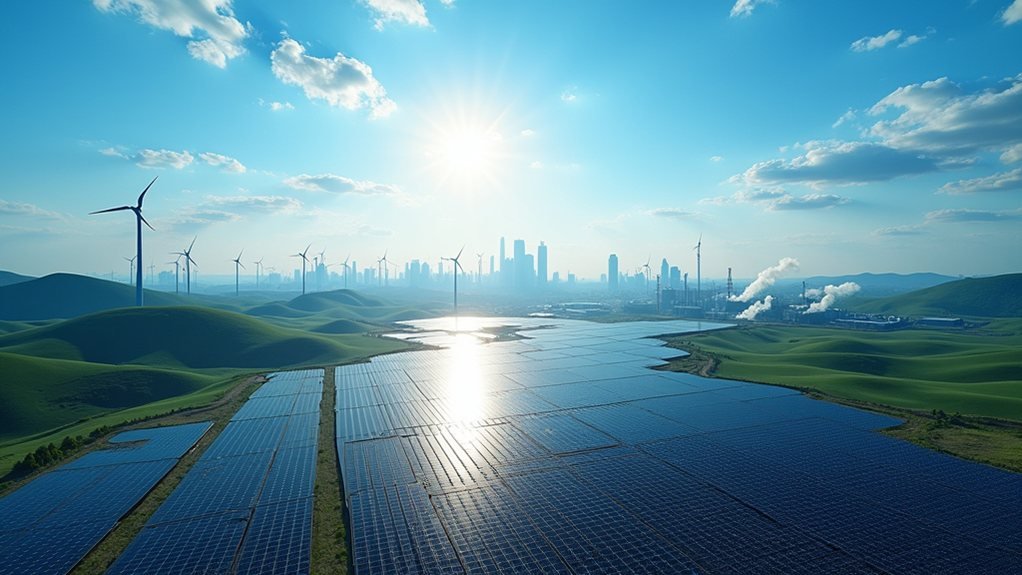

By 2026 and 2027, U.S. electricity demand is set to hit record levels, with artificial intelligence and data centers as the primary culprits. Imagine AI as a digital octopus, extending its tentacles into our power grids, consuming vast amounts of energy. Data centers, akin to small cities, will gobble electricity like it’s going out of style. Meanwhile, natural gas and renewables are in a competitive dance, each vying for a bigger slice of the energy pie. Stick around to uncover more about these power plays!
Quick Overview
- U.S. residential electricity consumption is projected to exceed 1,541 billion kWh by 2026, driven by technological advancements and renewable energy shifts.
- AI technologies, particularly generative AI, may account for 50% of data center power usage by 2030, increasing overall energy demands.
- Data centers, fueled by high-power hardware like NVIDIA GPUs, now consume energy equivalent to 100,000 households, contributing to record electricity usage.
- While natural gas maintains a 40% share of power generation, renewables are expected to reach 27% by 2027, reflecting a shift in energy sources.
- The tech renaissance and electric vehicle adoption are intensifying pressure on the electricity grid, necessitating innovative net-zero strategies for future planning.
What’s Driving the U.S. Electricity Demand Surge in 2026 and 2027?
In the coming years, the U.S. is set to experience an electricity demand surge reminiscent of the days when everyone suddenly decided carrying a flip phone was so 1999.
This rise stems from residential shifts to renewable energy for heating and transportation, with homes projected to consume over 1,541 billion kWh in 2026.
Meanwhile, commercial sectors in states like Texas and Virginia are ramping up usage, pushing 1,520 billion kWh.
Commercial sectors in Texas and Virginia are supercharging their energy consumption, hitting an impressive 1,520 billion kWh!
Add reshoring efforts in heavy industries, and you’ve got a perfect storm for electricity demand—like a high school reunion where everyone’s trying to outdo each other with their latest gadgets!
Just as the transportation sector seeks to reduce its carbon footprint through innovations like sustainable aviation fuel, the electricity grid faces mounting pressure to support cleaner energy solutions across all industries.
Why Are AI and Data Centers Key Drivers of Electricity Demand?
As society grapples with a tech renaissance, it becomes increasingly clear that artificial intelligence (AI) and data centers are not just buzzwords; they are heavyweight contenders in the electricity demand arena.
AI is projected to account for up to 50% of data center power usage by 2030, largely driven by the high needs of generative AI.
Additionally, the rise of power-hungry hardware, like NVIDIA’s GPUs, propels consumption, bringing large data centers to the energy level of 100,000 households.
As data centers expand their electric appetites, they’re on pace to blur the lines between tech annoyance and electrical necessity—quintessentially American!
To address these growing energy demands, many corporations are exploring carbon capture technologies and other innovative solutions as part of their net-zero strategies.
Comparing the Growth of Natural Gas and Renewables in Power Generation
Electricity generation in the United States is undergoing a fascinating transformation, reminiscent of a high-stakes race where natural gas and renewables are neck and neck.
While natural gas maintains a steady dominance, capturing 40% of power generation in 2026, renewables are sprinting ahead with a growing share, rising to 27% by 2027.
Solar power is the star athlete, flaunting a robust annual growth rate of 20%, yet struggles to crack the 10% generation barrier.
With only a few new gas plants on the horizon, this electrifying rivalry showcases the evolving landscape of energy production—who will emerge victorious?
As the energy sector continues to evolve, understanding the advantages of renewables becomes crucial for stakeholders navigating implementation strategies and future planning.
Only time will tell!