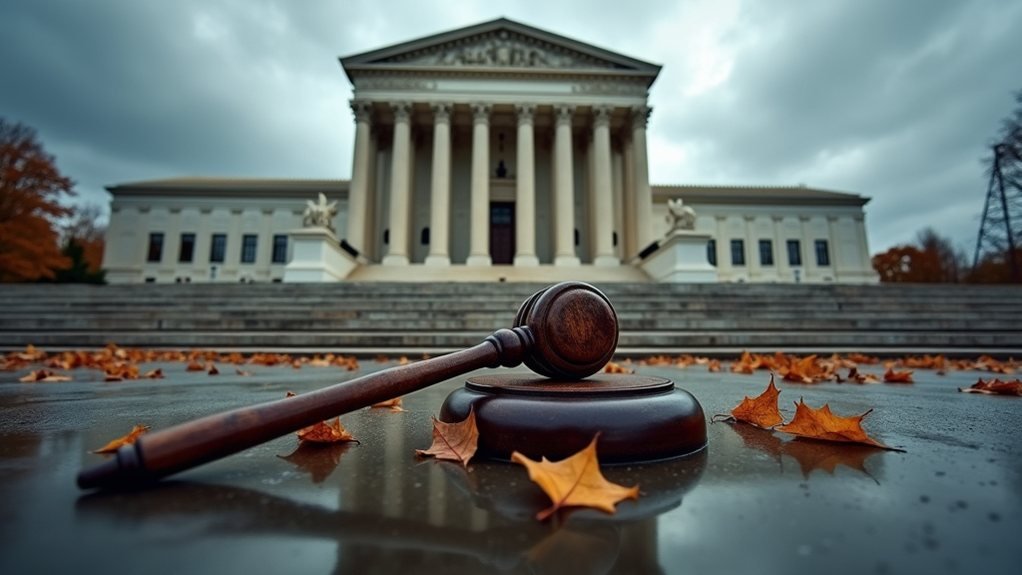

In 2026, the Supreme Court will tackle significant climate lawsuits from Boulder and other cities against oil giants like ExxonMobil and Suncor. These cases spotlight serious claims of public nuisance and civil conspiracy regarding climate change risks. The court’s decisions could either empower state-level climate accountability or stifle it, changing how companies address environmental impacts. It’s a pivotal moment for both corporate responsibility and community resilience. Interested in what these rulings could mean for our planet?
Quick Overview
- The Supreme Court’s rulings in 2026 could redefine the legal landscape for state and city climate lawsuits against oil companies.
- Boulder’s lawsuit against ExxonMobil and Suncor seeks accountability for climate change impacts and may influence future similar cases.
- Jurisdiction and federal preemption are central issues, impacting whether states can pursue claims against fossil fuel companies.
- A ruling favoring fossil fuel companies could deter municipalities and states from pursuing climate litigation, hindering accountability efforts.
- The court’s decisions may shape corporate governance practices regarding climate risk metrics and influence financial implications for local economies.
Boulder Climate Lawsuit Overview
In the spotlight of a climate crisis, the Boulder Climate Lawsuit stands out like a neon sign in a quiet town.
As communities seek long-term resilience, the circular economy emphasizes redesigning products and systems to minimize waste and maximize reuse.
Filed in April 2018 by the City of Boulder, Boulder County, and San Miguel County, this suit targets ExxonMobil and Suncor for allegedly hiding climate change risks tied to their products.
The charges? Everything from public nuisance to civil conspiracy—think of it as legal whack-a-mole. The Supreme Court’s review is anticipated to examine whether federal law prohibits state law climate claims. This case is crucial as Colorado identified as one of the fastest-warming states, highlighting the urgency of the situation.
Boulder’s aim is clear: hold these companies accountable while sparing taxpayers from shouldering the adaptation costs.
Boulder seeks to make these corporations pay, protecting taxpayers from the burden of climate adaptation costs.
With rising temperatures and escalating damages at stake, the stakes couldn’t be higher for Colorado’s communities.
How the Supreme Court Could Shape Climate Accountability?
The Supreme Court is poised to potentially redefine climate accountability with its upcoming decisions, much like a referee making a game-changing call in the final minutes of a tense match. Jurisdiction questions loom large, as the justices will consider whether state lawsuits clash with federal law on climate issues. If they side with Boulder, it could open the floodgates for similar climate suits. A ruling favoring the fossil fuel giants, however, could halt these efforts, stifling state claims. The outcome could hinge on federal supremacy, a foundational principle in how state and federal laws interact on climate issues. Additionally, the Colorado Supreme Court’s ruling could significantly impact how states can hold companies accountable in the future. Ultimately, the court’s choice may shape the future landscape of accountability, as environmentalists watch closely, popcorn in hand. This decision could also set important precedents for future state-law claims against fossil fuel producers.
Supreme Court Rulings and Future Climate Litigation
As the wheels of justice turn, the Supreme Court’s rulings on climate litigation could set the stage for a climate accountability showdown that resembles a high-stakes championship game.
With Boulder’s suit against ExxonMobil and Suncor resting on state law claims, the justices now face key questions about jurisdiction and federal preemption. A ruling in favor of the oil giants might slam the door on countless state-led climate claims, like a basketball player blocking a last-second shot. Additionally, this case comes at a pivotal time as the Supreme Court will hear Exxon Mobil and Suncor Energy’s appeal regarding climate change lawsuits. The consequences of these lawsuits could lead to a de facto global carbon tax on U.S. energy exports.
The implications extend beyond Colorado, potentially impacting the entire nation’s approach to fossil fuel accountability and setting a precedent that could chill future climate litigation efforts. This legal crossroads underscores how climate risk metrics are increasingly part of corporate accountability.