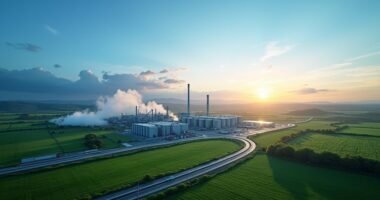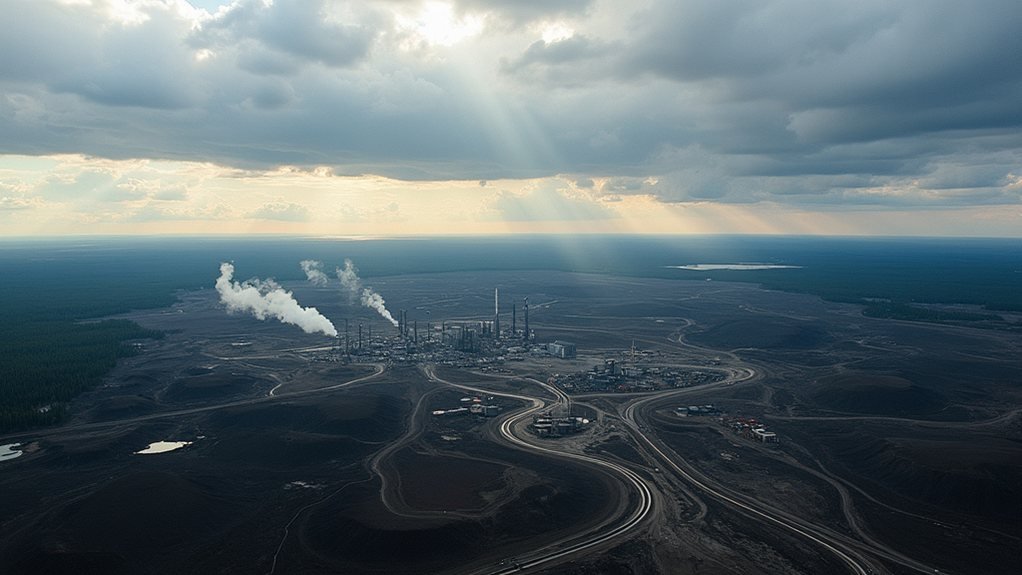

Canada is investing a whopping C$16.5 billion into carbon capture and storage (CCS) to tackle emissions from its oil sands in Alberta. This ambitious project, led by the Pathways Alliance, targets capturing up to 12 million tonnes of CO₂ annually. Think of it as building a giant vacuum cleaner for the planet’s greenhouse gases. While challenges like leaks and regulatory hurdles exist, Canada aims for carbon-neutral oil sands by 2050. Stay tuned for what’s next in this pioneering venture!
Quick Overview
- The Pathways Alliance is leading a C$16.5 billion carbon capture and storage (CCS) project in northern Alberta targeting oil sands emissions.
- The project aims to capture up to 12 million tonnes of CO₂ annually from Alberta’s oil sands facilities, currently emitting 86 million tonnes.
- Government support and collaboration are essential for the successful implementation of the CCS project and infrastructure development.
- Alberta’s innovative carbon capture sector includes the development of carbon storage hubs to enhance efficiency in CO₂ storage.
- The initiative is part of a broader goal for carbon-neutral oil sands by 2050, despite facing regulatory and financial challenges.
Canada’s C$16.5B Investment in Carbon Capture and CCUS
In an ambitious move that could change the game for Canada’s oil sands, the Pathways Alliance is spearheading a C$16.5 billion carbon capture and storage (CCS) project in northern Alberta.
This initiative aims to capture up to 12 million tonnes of CO₂ annually from oil sands facilities, tackling the sector’s hefty 86 million tonnes of emissions. Canada has operated several CCS projects since 2000, storing around 44 million tonnes of CO₂. Picture a giant vacuum cleaner for carbon, transporting captured CO₂ to a central hub in Cold Lake for underground storage. With substantial government support, this project could become the world’s largest CCS network, paving the way for a greener future—one pipeline at a time. Alberta is recognized as a leader in CCUS deployment, with approximately 60 million tonnes of CO₂ stored underground through six commercial-scale projects. A growing body of research highlights the role of storage capacity in determining the long-term viability of CCS projects.
Identifying Key Players and Innovations in Alberta’s Carbon Capture Technologies
Alberta’s carbon capture landscape is buzzing with innovation, much like a beehive in peak season, as key players collaborate to tackle the province’s emissions challenges.
The Technology Innovation and Emissions Reduction (TIER) program, backed by $28 million, fuels projects like Taurus Canada’s anaerobic digestion facility, turning livestock manure into renewable natural gas. Meanwhile, carbon storage hubs are popping up across the province, acting as strategic parking lots for captured carbon. This initiative is supported by the C$16.5 billion commitment from the Pathways Alliance, which aims to establish innovative cost-sharing arrangements for carbon capture infrastructure. The collaboration between the Canadian and Alberta governments ensures that the carbon capture project details are finalized efficiently.
With thirteen proposed hubs in development, Alberta is not just dreaming of a greener future; it’s constructing the infrastructure to make it happen. Buzzing indeed! The province is also advancing carbon storage hubs to enable shared infrastructure and lower costs for multiple emitters.
Assessing Environmental Impact and Future Prospects of Carbon Sequestration
Carbon sequestration stands at the intersection of innovation and environmental urgency, much like a tightrope walker balancing between two skyscrapers.
The Pathways Alliance aims to capture CO2 from Alberta’s oil sands, a move that could mitigate the staggering 89 megatonnes of annual emissions. However, the project faces serious challenges: risks of leaks, groundwater contamination, and increased air pollution complicate its potential benefits. Additionally, regulatory hurdles and financial uncertainties threaten its viability. While the goal of a carbon-neutral oil sands by 2050 sounds appealing, the realities of implementation may leave environmentalists holding their breath—quite literally. Furthermore, this initiative is crucial as Alberta oil sands contribute significantly to greenhouse gas emissions, exacerbating climate change concerns. The project proposes to capture CO₂ from 13 oil sands facilities, which raises questions about the adequacy of existing infrastructure to support such an ambitious undertaking. Life-cycle evaluation of such projects must consider impacts at every stage, including supply chain emissions.