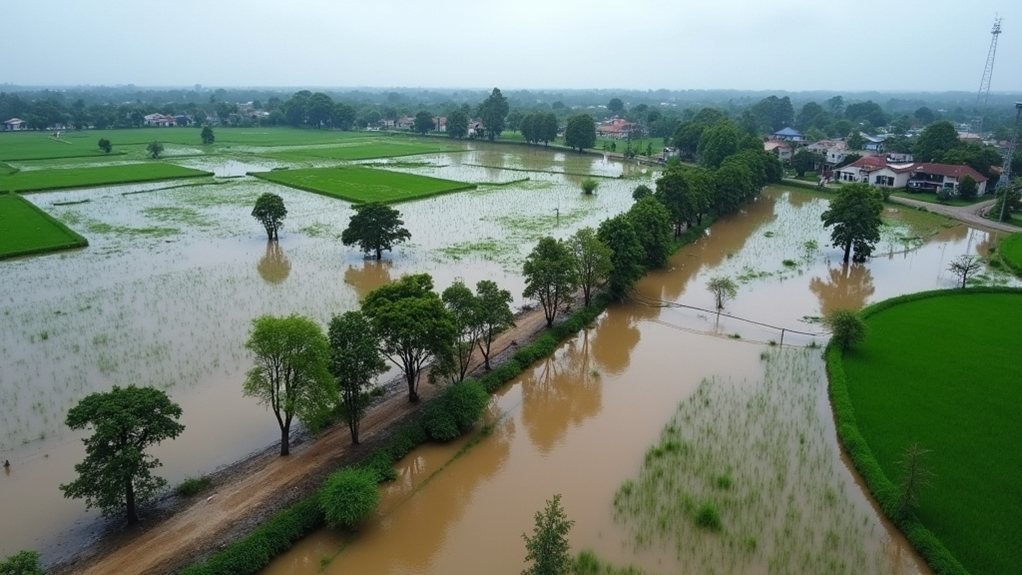

Storm Chandra has swept through the UK, drenching everything in its path with incredible rainfall, resulting in massive flooding. Communities felt the brunt, with homes turning into islands and schools shutting down. Emergency services worked tirelessly, deploying pumps and rescuing residents like modern-day heroes. The storm highlighted the pressing need for sustainable water management and better flood preparedness. With ongoing flood warnings in place, there’s much to unpack about how communities can adapt and respond effectively.
Quick Overview
- Storm Chandra triggered 112 flood warnings and 237 alerts, affecting numerous communities across the UK.
- Significant rainfall was recorded, including 115.1 mm in Devon and 114.8 mm in Katesbridge, Northern Ireland.
- Emergency services coordinated major incident responses, rescuing stranded residents and deploying pumps to drain flooded areas.
- The flooding led to school closures in Tipton St. John and isolation of homes, creating islands amidst rising waters.
- Communities are increasingly focusing on sustainable water management and environmental health in response to climate change challenges.
The Impact of Storm Chandra on UK Communities
Storm Chandra swept across the UK like an uninvited guest at a well-planned dinner party, leaving chaos and disruption in its wake.
With 112 flood warnings and 237 alerts issued, communities braced for impact. Schools in places like Tipton St. John shut down, while homes became islands amid rising waters. The immediate flood risk is extensive, with many facing third river flood in under three weeks. The River Otter reached a record high due to exceptional rainfall that exceeded 60 mm in several locations, and roads were transformed into muddy rivers of despair. Flash flooding caught many off guard, reminding residents that nature doesn’t follow an RSVP.
Communities braced for chaos as schools closed and homes turned into islands amidst rising waters.
As cleanup begins, the scars of this storm serve as a reminder of the ever-changing climate and its unpredictable antics. Local authorities are urging waste reduction and careful disposal of flood-damaged items to minimise environmental and health risks.
Areas Most Affected by Storm Chandra’s Flooding
Across the UK, numerous communities found themselves grappling with the aftermath of an unprecedented deluge, as the relentless rains of Storm Chandra left no stone unturned.
In Southwest England, Somerset declared a major incident, while Devon’s White Barrow recorded a staggering 115.1 mm of rain. Northern Ireland’s Katesbridge shattered January records with 114.8 mm. Yellow weather warnings for rain were also issued across many regions, indicating the severity of the situation. Meanwhile, Wales saw the River Monnow overflow, leading to road closures and evacuations. The West Midlands and Borders weren’t spared either, experiencing moderate-to-heavy rainfall that turned roads into rivers. Over 100 flood warnings were active across England, highlighting the widespread nature of the flooding.
With 112 flood warnings across England, Chandra’s impact was felt far and wide, reminding everyone of nature’s unpredictable fury. Communities are increasingly recognizing the need for sustainable water management to reduce future flood risks and improve resilience.
How Are Emergency Services Tackling Flooding From Storm Chandra?
In the wake of the deluge released by Storm Chandra, emergency services across the UK have swung into action like a well-rehearsed orchestra, each player knowing their part in the symphony of disaster response.
Major incident cells, like the one at Bridgwater Police Station, coordinate efforts among fire services, health teams, and volunteers. Pumps are tirelessly working to drain water from critical areas, while firefighters have become modern-day heroes, rescuing stranded residents. Flood warnings and alerts remain active, indicating that the situation is still precarious. The need for effective emergency response has never been more pressing as flooding incidents continue to rise.
Community support thrives, with volunteers checking on vulnerable individuals. As river levels stabilize, the message is clear: teamwork is the lifeboat in this stormy sea of chaos. Local authorities are also beginning risk assessments to plan short- and long-term mitigation measures.