
Canada’s agricultural sector is facing a double whammy: wildfires and drought. As flames lick crops and smoke clouds obscure sunlight, yields of essential produce like cereals and apples tumble. Even the livestock are feeling the pinch due to hay shortages. With over 70% of farmland parched, communities struggle for water while looking to adapt with new farming techniques. It’s a tough season, but there are strategies that can help. Stick around to uncover how farmers are pushing back!
Quick Overview
- Wildfires have devastated crops, reducing cereal and oilseed yields in the Peace Region to 80-85% of normal levels.
- Severe drought conditions affect 71% of Canada’s agricultural land, threatening food security and water supply.
- Livestock feed shortages are emerging due to critically low hay yields, increasing pressure on farmers.
- Water scarcity is rampant, with rural communities struggling to secure adequate resources for agriculture.
- Implementing adaptation strategies, such as drought-tolerant crops, is essential for sustainable agricultural resilience.
Impacts of Wildfires on Crop Production and Livestock
In the grand tapestry of agricultural challenges, wildfires loom large, casting a fiery shadow over crop production and livestock. Direct burning obliterates standing crops and stored hay, leaving farmers in despair.
In the Peace Region, cereal and oilseed yields plummeted to 80-85% of normal due to a cruel mix of fire and drought. Meanwhile, wild blueberries and apples suffered significant yield reductions, as flames hindered irrigation access. As drought conditions continue to expand across Canada, farmers face increasing pressures on their ability to sustain crop yields. The current wildfire season is unprecedented, with over 135,000 square kilometers burned impacting agricultural productivity across the nation.
Smoke, the unwelcome guest at this agricultural party, reduces photosynthesis and damages crops with phytotoxic pollutants like ozone. With hay yields hanging by a thread, livestock feed shortages loom, threatening food security. Implementing soil conservation techniques could help maintain resilience against these environmental stressors and promote recovery in affected agricultural lands.
Drought Conditions and Water Supply Challenges
While droughts may seem like a mere inconvenience to some, they can wreak havoc on both agriculture and communities, leading to a cascade of challenges.
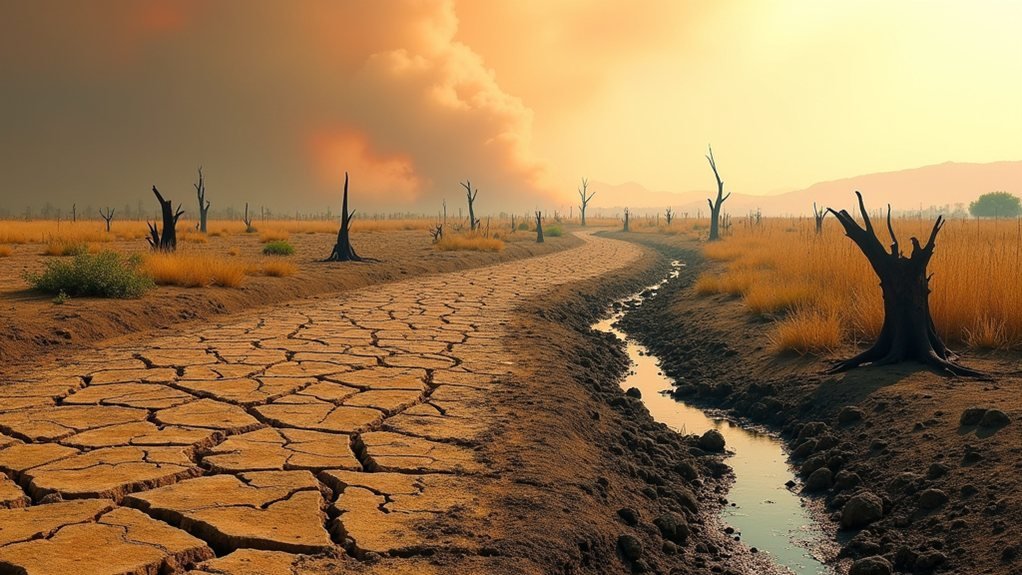
As of July 2025, a staggering 71% of Canada’s agricultural landscape faced severe dryness, with areas like Manitoba declaring agricultural disasters. Over half of Canada is classified as abnormally dry or in moderate to extreme drought, with 53% of the country’s agricultural land affected. Stream flows plummeted to 15-30% of normal in southern Ontario, turning rivers into trickles.
As of July 2025, 71% of Canada’s agricultural land is severely dry, prompting disaster declarations in regions like Manitoba.
Meanwhile, dwindling groundwater levels left rural municipalities scrambling for water.
The situation calls for urgent attention, as farmers and families alike grapple with the reality of empty wells and parched fields, making water scarcity the new villain in Canada’s agricultural story. The current drought conditions are a stark reminder of the urgent need for effective water management policies to ensure future resilience.
Adaptation Strategies for Sustainable Agriculture
As the climate throws more curveballs than a major league pitcher, farmers across Canada are stepping up to the plate with innovative adaptation strategies for sustainable agriculture. By adopting drought- and heat-tolerant crops, they’re batting for reduced yield losses. Cover crops and diverse rotations are like a secret weapon against erosion, while no-till practices boost soil health and water retention. Additionally, precision agriculture using smart tech guarantees every drop of water and ounce of fertilizer counts. With regional adaptation plans, farmers can hit home runs, turning environmental challenges into opportunities, guaranteeing they’re not just surviving, but thriving in a changing climate. Furthermore, these efforts align with Canada’s sustainable development goals, ensuring a resilient agricultural framework for the future.