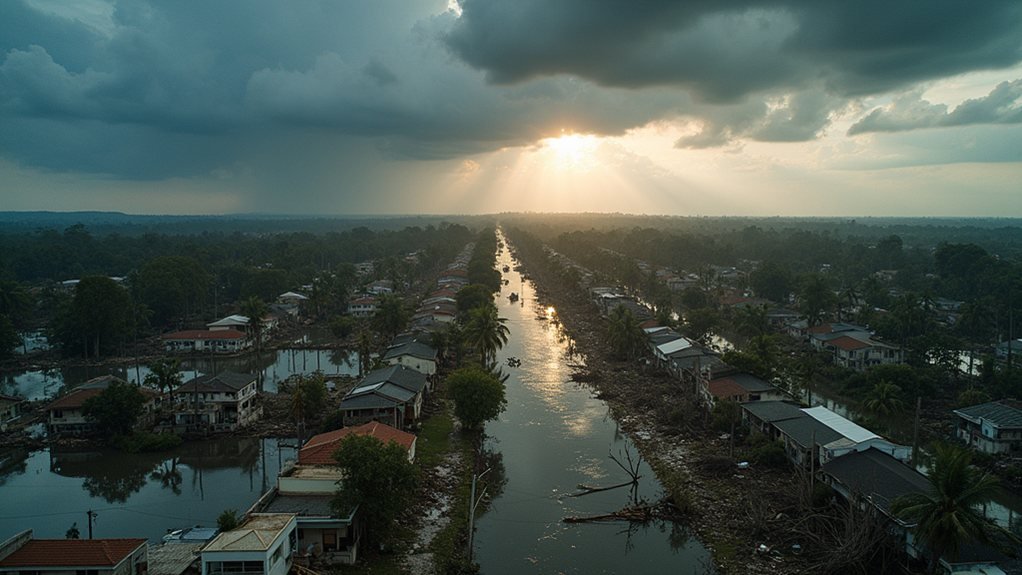

In 2024, Canada shattered its insurance records with C$8.5 billion in insured catastrophe losses, a leap from C$3.1 billion the previous year. The spike was fueled by severe weather events causing widespread destruction and displacing thousands. Insurers are grappling with the mounting pressure of climate change, leading to skyrocketing claims and a need for premium hikes. As they adapt to this chaotic climate reality, strategies to manage risks are evolving faster than you can say “flood insurance!” For more insights on this phenomenon, there’s plenty more to uncover.
Quick Overview
- Canadian insurers reported a record C$8.5 billion in catastrophe losses in 2024, surpassing the previous high of C$6.2 billion set in 2016.
- Insured claims surged by 406%, with over 273,000 claims filed due to severe weather events, including storms and wildfires.
- Four catastrophic events accounted for more than C$7.5 billion in damages, significantly impacting infrastructure and displacing hundreds of thousands.
- The insurance industry faces pressures to raise premiums and reassess risk models due to climate change and escalating disaster frequency.
- Advanced technology and climate risk assessments are becoming essential for insurers to navigate the complexities of underwriting in a changing environment.
Record-Breaking Insured Losses in 2024
In a stunning turn of events, Canadian insurers faced a staggering C$8.5 billion in insured catastrophe losses in 2024, a figure that not only shattered the previous record of C$6.2 billion set in 2016 but also nearly tripled the C$3.1 billion total from just the year before. This calamity saw over 273,000 claims filed, smashing the previous high of 197,000. Four catastrophic events alone accounted for over C$7.5 billion, including a jaw-dropping C$2.8 billion hailstorm in Calgary. Twelve events generated insured losses exceeding C$30 million, illustrating the widespread nature of the devastation. The increased frequency of severe weather events has raised concerns about the insurability of homes in Canada. Climate scientists attribute this devastating trend to the ongoing effects of greenhouse gases trapping heat in the atmosphere and intensifying weather patterns. It’s like Mother Nature decided to throw a wild party, leaving insurers scrambling to clean up the mess and recalibrate their risk assessments.
Impact of Severe Weather Events
Severe weather events can feel like nature’s way of reminding humanity who’s really in charge, and the impacts of these phenomena are nothing short of staggering.
In 2024, hundreds of thousands faced displacement due to storms and floods, with insurance claims skyrocketing by 406%. The extreme cold snap tragically claimed lives, particularly among the unhoused. The most destructive season in Canadian history for insured losses has left communities reeling, with the Jasper wildfires marking the second-costliest wildfire disaster in Canadian history.
Infrastructure buckled under the strain, with roads collapsing and power outages affecting over 550,000 customers. Communities grappled with psychological stress as repeated disasters took their toll. Urban planners are increasingly turning to natural solutions to mitigate flooding and reduce stormwater runoff in vulnerable city areas.
From burst pipes to overwhelmed emergency services, the effects ran deep, shaping lives and livelihoods across Canada.
Challenges and Responses in the Insurance Industry
As the insurance industry faces the mounting pressures of climate change and escalating disaster frequency, it becomes clear that maneuvering these choppy waters is no small feat.
With catastrophic losses nearing C$8B in 2024, insurers are feeling the heat. Premium hikes are the go-to response, a bit like raising prices on sunscreen during a heatwave. Premium rate increases are necessary for underwriting profitability and solvency. Annual insured losses from natural disasters have skyrocketed, forcing companies to reconsider their risk models and pricing strategies.
Insurers are feeling the pressure as catastrophic losses approach C$8B, prompting premium hikes akin to sunscreen price surges in a heatwave.
Tightening reinsurance capacity means carriers are rethinking their strategies, like deciding which toppings to skip on a pizza. Forward-thinking companies are incorporating climate risk assessment into their long-term business planning to better anticipate future challenges.
Meanwhile, advanced tech helps refine risk assessment, making underwriting feel a bit like playing chess—strategic, complex, and occasionally baffling.
The industry is adapting, albeit under significant strain.